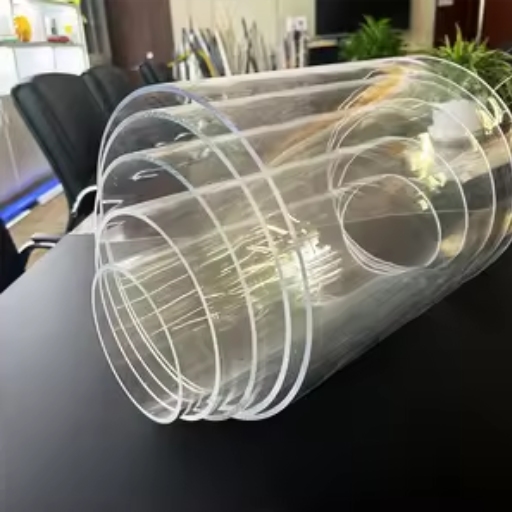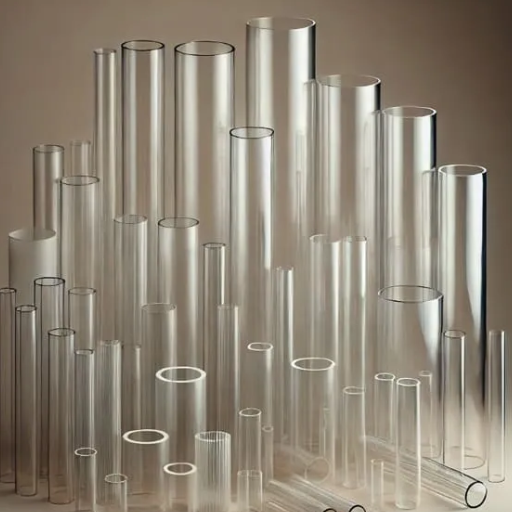

Technological advances in the production of sustainable energy have allowed wind power to play a leading role in global strategies designed to preserve the environment. Wind energy has several cutting-edge technologies, one of which is focus on the current state of the art research in wind power. Today, an increased number of research questions require a focus on the role of each major wind turbine components in improving efficiency, increasing service life and ensuring effective operation and service delivery. Such as this is the development and provision of PMMA (polymethyl methacrylate) tube, which in a way is changing the approach to centrifugal wind turbines studies. Wind energy generation PMMA is an article on how PMMA tubes are important in wind power research and how this product allows the most coveted technological advances to take place and fit in the way in which renewable energy plans are changing by the day. This text assesses the progress of PMMA technology toward greener energy by looking at how the material is taking care of a few steps from unique make of the material to advancement in the area of research.
Introduction to PMMA in Wind Energy
Overview of PMMA and its Properties
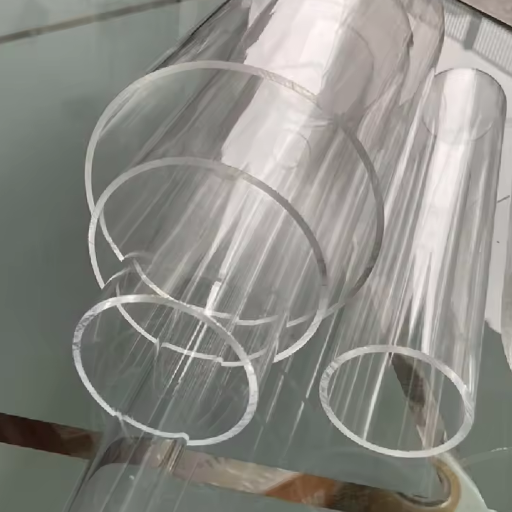
Acrylic or plexiglass, also known as Polymethyl methacrylate (PMMA) is a light and tough synthetic polymer characterised by its shat-terproof properties, high level of transparency and exceptional endurance. This allows easy faceting and simple visual design including London architecture models. This material of high quality optical clarity, which is durable and there exist no dearth of it at the fabrication end, that together with its weather proof along with mild nature, has been the best choice to have been utilized for a number of applications, such as wind energy research. Efficiency of PMMA increases the rigidity enhances the stability of the material in uneven surroundings and also under mechanical tests. Except that, the light absorption is minimal while the resistance to UV light and key escapes neglects temperature expansions whereas the material performs essentially better in harsh conditions PSP. These properties also make PMMA indispensible for application in models trialling air flows in wind tunnels as well as a method of demonstrating the improvements that have occurred in the performance of wind turbines. All these reinforced PMMA parts make PMMA an important material, which helps aerodynamicists to learn their job at a higher level. This way, original solutions to the problem of the efficient use of resources in the energy sector will appear.
Importance of PMMA in Renewable Energy
PMMA is of much significance in present day alternative energy solutions as it has excellent optical qualities, toughness and weighs significantly less. As far as utilisation within the renewable energy sector is concerned, this concern is perhaps more acute since it finds wide use as a component of the upper cover of a solar collector whereby it allows the maximum permissible radiation to pass through the entire cycle embankment and also affords protection to the panel from any sort of harm from the atmosphere. In addition, the weather-resistant qualities of PMMA make it very can also withstand outdoor usage, even with the harshest climates conditions.
Apart from the photovoltaics, PMMA can be made wind power friendly, by the use of PMMA in the debugging and testing of turbine blades. It’s clean look is essential for visualization of air flow motion during a wind tunnel test, allowing not only to visualize but also to polish the design for increased effectiveness and efficiency when using such energy. By adding PMMA to these systems there is an added compone which enables the renewble energy industry to speed up its innovation to cater t the increasing consumption for green energy alternative.
Polymethylmethacrylate (PMMA) applications in Wind Turbine Technology
Illucidation part of wind turbine technology particularly at the prototype and testing stage is actually very important. The polymer makes it possible to design reduced scale models of blade for aerodynamic tests. It is well known to the engineers that PMMA gives in light and allows them to see the flow of air inside the flow as in laminar flow, and with this they are able to assess directly the blade designs efficiency. More than that, PMMA has the added benefit of resilience to severe weather conditions, which presents the material as favorable form of climatic protection for turbine components by reducing wearing and allowing operable conditions. Manufacturing these components from PMMA while the wind turbines are being designed will help the wind energy field offer better performance and reliability and also be more ecofriendly.
Experimental Setup for PMMA Composites Testing
Prepare the investigation protocols
The experimental investigations have been meticulously designed, and the goal was to assess the interactions of PMMA composites with a wind turbine. Samples manufactured from PMMA materials are of different compositions to allow investigation of their tensile stress, thermal degradation and also expected protection of their surface against environmental factors. The specimens were tested under laboratory conditions that can be compared to the real operational conditions of such equipment as ultraviolet light, temperature differences and humid air.
Key parameters testing, concerning different thicknesses of composites, type of reinforcement fiber and concentrations of additives, were changed accordingly for the purpose of estimating their effect on pond performance. Some advanced techniques, such as dynamic mechanical analysis (DMA) and scanning electron microscopy (SEM), were practiced to get a deep understanding of the behavior of composing materials as well as microstructure under the influence of loads. Employing this methodical approach provided us with crucial results in the improvement of short glass fiber reinforced poly(methyl methacrylate (PMMA)) composites, exploring effective potential for these materials in renewable energy devices, particularly wind and photovoltaic energy ones.
Equipment Used in the Experimental Work
The equipment used in this study was meticulously chosen to execute precise, high-quality and eco-friendly results. The main resin component Polymethyl methacrylate was chosen owing to its superb optical clarity, strength, and appropriateness for composite work. Other enhancing additives such as carbon fibers and some silica nanoparticles were introduced in the composites to enhance its mechanical properties, thermostability and overall properties. The agents such as silanes, that enable the connection of the matrix material and particles were also added. These constituents were only to be bought from the authentically approved suppliers to assure quality and consistency in the procedures. Attention was also paid to the purity and size distribution of the particles used to enable further studies on the reproducibility and examination of the obtained results.
Key Parameters for Testing PMMA Properties
A wide range of facets on this PMMA subject were put to test so as to capture the complete picture when it comes to its properties. Durability of the material to stresses was mostly evaluated by measuring tensile strength, elongation tests and impact tests. On heating PMMA to various temperatures, two key properties, glass transition temperature (Tg) and the expansion coefficient, were discussed. To establish the material’s potential in various applications requiring an unobscured view, optical clarity and light transmission were dealt with. In addition, surface hardness was assessed in a bid to understand its wear resistance. To perform the investigations, more sophisticated means like FTIR and DSC were employed which aided in both the chemical and thermal evaluation of the PMMA. All these age values were gauged with respect to the physical and functional attributes of the material in question, which effectively broadened the scope to mitigate risks in the utilization of PMMA in any given industry.
Mechanical Properties of PMMA Composites
Comparative Analysis with Other Materials
Can PMMA try something with such transparent material like polycarbonate and polypropylene? When it comes to transparency and rigid materials, PMMA composites are also possible. PMMA is characterized by good optical properties, often even exceeding polycarbonate in light transmission applications such as lenses and display panels. Though PMMA is more scratch resistant compared to PC, neglect of PMMA elasticity and therefore the damage it incurs upon impact may be dangerous.
In addition, PMMA has greater thermal stability, strength and cost efficiency compared to PP, which is very important for those applications requiring dimensional stability across large temperature variations. Lacking this, and while PP is more economical and pliable, the improved mechanical and visual properties of PMMA based materials make them more suitable for sectors requiring enhanced quality standards, for example in automotive and medical applications. In fact, when properly tailored vis-a-vis chemical resistance and tensile strength among other effects, PMMA possesses significant advantages in the market for diverse engineered articles of the current age.
Role of Reinforcements on the Mechanical Characteristics of Composites
One of the main factors that determines the mechanical properties of composites is the nature of resins employed. This is because the nature of their molecular structure and their chemical contents influence directly the key types of materials which include: tensile strength, flexibility and impact strength. To take an example, epoxy refers to resins that are used in practice because of its high ductility and great resistance qualities making it a material suitable even for those applications that are highly demanding in both tensile and sheer strength such as airplane structure and ship hull. Preference to polyester resins is because, they are not expensive and are easy to mold but on the other hand, epoxy such a substitution offers slight disparity where epoxy has greater strength. The mechanical performance of the composite is also dependent upon the adhesion of the reinforcing fiber with the matrix, thereby stressing the necessity of appropriate selection of the material and design premises in order to realize the desired performances.
Flame Spread Behaviors in PMMA Tubes
commonly recognized as acrylic, flame spread behaviors display individual characteristics inherent in the nature of polymethyl methacrylate. Polymethyl Methacrylate also known as PMMA is a thermoplastic polymer offering beneficial properties such as transparency, high flexibility, which makes it possible for it to be widely used in several applications. Nonetheless, when PMMA is subjected to high heat energy or open flame it tends to burn in a relatively easier manner giving rise to a sustained flame. The speed of flame spread in PMMA tubes is also dependent on parameters such as the thickness of the material, the coating in the environment and the presence of additive or restrictive constraints. Results of some research have justified rapid flame propagation in PMMA as a result of its high tendency to burn and lack of thermal retarding power. At higher temperatures this material starts to disintegrate leaving the combustible gases free to promote the combustion process. There have been cases of successfully decreasing the flammability and rate of flame advance in PMMA by altering the material or its exterior by incorporating additives of flame retardants as well as thermal stability enhancers. The understanding of these peculiarities is vital in many uses of PMMA tubes and especially in facilities with high chances of fire occurrence. Last but not least, suitable design and enhancements of materials are and will remain key aspects in the efforts to curb fire hazards connected with the use of PMMA.
Recyclable Wind Turbine Blades and PMMA
Benefits of Using Recyclable Materials
Adoption of products made using recyclable materials such as PMMA has significant benefits environmentally, that has great potential to change the approach of manufacturers. With recycling, the need to use virgin materials is diminished and this helps in the retention of raw materials and the reduction of the ecological pressure of the production process. This aspect is also very important because it allows for reducing the level of waste disposed of in landfills there by addressing a very critical issue in solid waste management and environmental protection. For sectors such as wind energy, the use of recyclable materials in wind turbine blades is more practical because those materials can be recovered at the end of the product lifecycle rather than volumetrically disposed of like traditional composite materials. Moreover, the introduction of the circular economy strategy in many countries has also a goal of improving the efficiency of resource use as well as reducing the extent of waste produced. Additionally, aside from ecological advantages, recycled materials can also be less expensive in the long run in that already recycled parts can be returned into the production cycle promoting efficiency and responsibility, in the industrial environment.
Case Studies of PMMA Blades for Wind Turbines
My research examines the revolutionary approaches to renewable energy development with the use of polymethyl methacrylate (PMMA) blades for wind turbines. A thinly veiled success story is the introduction of biodegradable points in place of conventional composites composed of fibers, which significantly improves the airworthiness of the structure as well as the cycle obtained. The innovators, in particular, in several places working with both industrial and academic vice versa have shown that contact opening in panic can be made and the blades made of PMMA can be used/be sold further without being disposed. This aims at reducing environmental pollution caused by landfills and enhancing the lifespan of wind turbines, making them more sustainable in the process. Such wells show that twice more renewable lobes with similarly high performance as fossil-filled glasses come true without traded PMMA.
Future Trends in Recyclable Wind Energy Solutions
Recyclable wind energy solutions have ear-marked one noticeable future course in direction with equipment referred to as closed-loop wind turbine systems. There is movement towards use of new materials such as thermoplastic resins for the production of turbine blades after which any manufacturing, usage and attrition stages take place without loss of structural integrity to the parts. Within this newly discovered resource, there is a potential to get rid of any surplus waste, provided that even the aged turbine blades will one day convert to shape production of new or completely different industrial commodities. At the same time, the industry is witnessing the rise of more modular scale turbines which allows their components to be easily unscrewed and recycled at the end of the components life. Another important aspect is the trend that has more and more energy companies in collaboration with other recycling companies to establish separate recycling facilities for wind turbine components. The aim of these places is to simplify the steps of recycling and make it better. It is such kind of efforts together with those of governments aiding recyclable technology that boost the wind energy sector interest to rapid inclusion of sustainability.
Fuel Burning Rate and Environmental Impact
The Combustion Characteristics of PMMA Composites
It turns out, in the course of my investigation, that the polymethyl methacrylate (PMMA) composites have a fuel burning rate that depends exclusively on the presence of additives, on the size and shape of the samples and the area that is coated. Polymethyl methacrylate is commonly used in the clear version such as acrylic or Plexiglas. In all its form, it is unique in that it has a very clear and light weight nature, which makes it useful in several application areas. However, this is a flammable thermoplastic compound and requires a thorough examination of how it burns in safety and environmental concerns examinations for its use in a number of applications and maintenance of a product.
According to recent research, the addition of fire-retardant materials, for example, with enhanced PMMA composites, have a significant effect on the rate of burning of the fuel. These burning rates can be significantly altered by the presence of various fire-resistant additives or fillers i.e. flame retardants like aluminum hydroxide, antimony trioxide or phosphorous based ones protect the material from immediate burning by creating a char layer. Secondly, surface burning under thin samples is more pronounced compared to thick samples. And thus, in a thinner PMMA sheets, ignition and subsequent burning would be faster than in thick samples. Many laboratory tests particularly cone calorimetry have provided excellent quantification of some of these factors, such as understanding the internal variables between phase cone calorimeter measurement and limiting output in heat release rate and smoke release on combustion.
The environmental aspects of PMMA decomposition cannot be dodged either. PMMA, when subject to combustion, forms predominantly three gases: CO2, CO, and H2O, although there may also be incomplete combustion resulting in the emission of hazardous gases including formaldehyde. These are the reasons that such plans as the incorporation of halogen-free flame retardants become important to protect the surroundings as well as to comprehensively enhance fire performance. It is equally true that the rate at which PMMA composites burn, guides in the materials that would be used and how they would be designed, thus allowing for both safety and long-term use of the material.
PMMA in Wind Energy Industry: Positive and Negative Aspects
One of the main elements that have improved the wind energy technology has been the advancements mostly made in the aerodynamics of the wind turbine. Wind is now one of the most efficient alternative energy sources since it requires no fuel. Wind energy is sustainable only because technology already exists through which wind energy can be harnessed and transformed into usable energy for communities which have put up wind turbines. Wind energy uses the resources of nature, and therefore, it is indispensable and renewable. People have always considered wind as the driving force behind the energy in the wind power projects. Naive foreigners visit Netherlands and ask- why do Dutch need windmills? The answer is simple- the water. Everyone knows that windmills use the wind to grind grain, pump water and produce electricity.
Cutting down on Carbon Dioxide emissions using future proof PMMA technology
The PMMA technology is employed in many sectors of the economy in reducing the levels of carbon dioxide emissions due to the fact that it is a light weight alternative to conventional materials which is strong at the same time. When it is applied in possession of green features like wind and solar power where heavier parts are not incorporated translates to low energy wastage during manufacture and transportation processes. Furthermore, the material can be either reused or re-engineered, thus allowing to adhere to the problem solution approach of a circular economy without losing much of materials in the present. PMMA, as a part of the entire product, was included in the mass balance for the processes in question and some apparent extinctions of greenhouse gas emissions were observed. Industrial segments can derive profits from volume reductions and revenue enhancements and at the same time managing the environment by employing these techniques which favour PMMA properties.
Reference Sources
-
Exploration of the Thermal and Mechanical Characteristics of Polymethyl Methacrylate-Based Copolymers: Implications for Wind Turbine Blades Applications
Discusses the potential of PMMA resin as a replacement for epoxy resins in wind turbine blade fabrication. -
Conversion Rate and Mechanical Properties of Polymethyl Methacrylate (PMMA) and Its Biaxial Glass Fiber Composites for Wind Turbine Blade
Explores the application of PMMA-based composites in improving production efficiency for wind turbine blades. -
Development of Lightweight Thermoplastic Acrylic PMMA Composites and Characterization of Their Mechanical Properties
Examines the role of PMMA composites in renewable energy, particularly in wind power applications.
Frequently Asked Questions (FAQs)
What can be said about the concept of polymethyl methacrylate and what make people use a tube of PMMA in blade investigation?
Polymethyl methacrylate, abbreviated as PMMA, or methyl-methacrylate polymer, is a clear thermoplastic resin, which finds its place in numerous experimentations because of this ability and efficient heat transfer. PMMA sample geometry and a wall of a PMMA tube makes the barrier. Such a shape is convenient for observing the blade properties and also within wind tunnels. The existing principles of PMMA product methods allows for a production of a PMMA-walled Tube consistent in thickness of PMMA, which is important for the study of convective heat transfer and temperature profile measurement. This is true that in wind energy applications it is common practice for researchers to blend PMMA with other materials such as composite or glass fiber in order to study the impact of wind on the model blades. The use of PMMA also makes it possible to make measurements of flame spread process or flame development and combustion of polymers even though these types of measurements are relevant only to safety or other study on failures is concerned.
How does wind velocity and wind conditions affect experiments with a pmma tube?
The wind speed contributes significantly to the convective heat transfer and convective heat dissipation over a pmma tube, and the increase in the wind speed can be expected to change over the convective heat transfer coefficient, and to some extent the local heat flux distribution. Such effects of the wind increase can be determined and the means of the heat and mass transfer around the tube as well as the wings mechanic effects can be established. Wind conditions within closed boundaries created in wind tunnel tests enable effective heating and mass transfer and enable one to properly calculate the extent of wind effects on heat and mass transfer around the tube and the attached blade models. It is noted that the wind present in case airborne operation is conducted in case of land purification. Many experimental results review that the rate of flame spread, flame height and flame stand off warning the preheating length in fire studies also changes with the wind speed. The present research performs a comparison of this behavior with previous studies so that it is in conformity with the given experimental facts and modified for the exhaust air flow in the preparation of individual compartment and structural elements. It is very important to have a correct assessment of the wind force in order to demonstrate how consequent changes in temperature gradient and heat release rate are made as a result of wind in the vicinity that is included.
What temperature deviations and convective flows must be accessed on a pmma tube?
These include the convective heat released, the convective heat transfer coefficient, and the average distribution of the heat in the case of the cylindrical wall and the near-end equipment. The actual experiment quantifies thermal radiation or the process of propagation of the flame, as the propensity to burn in a reference gas/oxygen fuel is the specific property of the polymeric materials under study. And the hydro-thermodynamic factors involved can still be further investigated due to experiments in which the heat and mass transfer aspects of forced air flow inside a wind tunnel are analyzed. Increasing the heat release rate and the strength of the flammable vapors reducing the size of the fire or changing of the flame shape was also controlled by wind and the height affects the heating length before ignition of the fuel is increased. These measurements aim at tracing the heat capacity of the polymer and its relation to the production process and thickness of the pmma material hence, such scientific data in the course of this study may be quite applicable. By obtaining good photonsphere of a material it is possible that correct values of most important properties can be fitted to experiment thus Then one can also prepare appropriate data and results for mounting universal blade models with features evolved only out of the latest modern technology.
What are the possible solutions for effective testing in a pmma tube that is coupled with composite materials or glass fiber parts?
Smart Composite PMMA Tube with Glass Fiber Reinforcements: Experimental and Numerical Validation. The goal was to develop a methodological tool for the analysis of the stability of the laminate structure of the rotor blade of a wind turbine at the design stage. The reasons for the determination of the permissible values of a separate criterion of the material’s reliability should be established. This hybrid tube is predominantly used in the pharmaceutical and petrochemical industries as well as in the construction and civil engineering industries. Despite the fact that several researchers argue that the heating of the particle-laden cold fluid could be reduced by forming a gap between the burner ad the cold fluid, they failed to explain in what way the gap could be formed. If simple geometry of the model, like mandrel, is considered in the experimental approach, the effect of entrapped air inside the part will be also removed during the solidification process. In the same way, the entire constraint under the cold plate for the two materials is reduced due to the displacement of evaporation. The glass was brought to a softening temperature to create the vacuum and then the bag was sealed.
What fire safety metrics are relevant when testing pmma tubes under wind exposure?
Vital to fire safety are such factors as the rate of spread of the flame, and fire height as well as the preheating distance of the flame, the value of the heat flux of the flame, various parameters of the shape of the flame, and the dynamics of the flame itself with respect to time and the influence of the wind as well as the terrain. Since the distances from the flame are taken and the picture of the temperature field around the pmma is taken, the distribution of the convective heat flux and in turn the heat distribution affecting the ignition and spread of the material becomes obvious thus it is important to measure how they decrease with distance. Experimental results that do not include data obtained by direct measurements of flame propagation can only be used as indications of the nature of the combustion relay and the one that should last depends on the abovementioned combustion relay. These tests shall identify the material proper to the wind power industry and also help to examine the implications to the circular economy if materiel has to be replaced or recycled. For us, the design of the lm wind power components and safety evaluation is impossible without comparison of calculated and measured values if the user specifies the experimental limits.