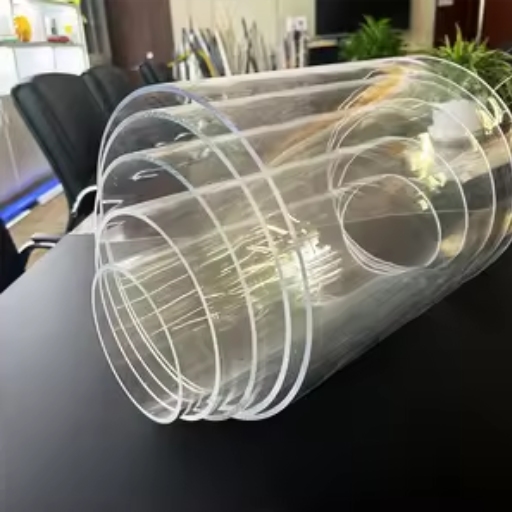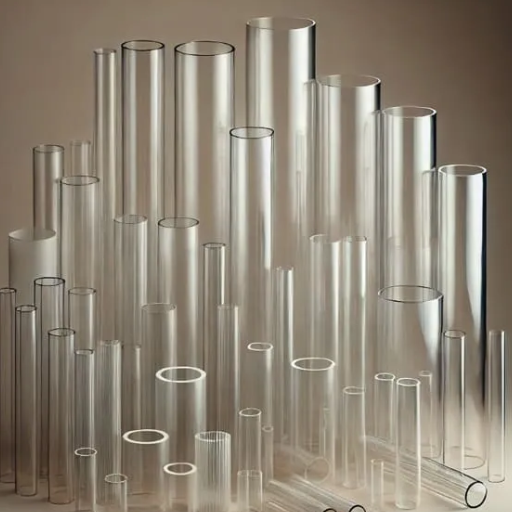

The world needs to develop renewable energy sources because it helps fight climate change while wind energy serves as the primary method to achieve this worldwide energy transition. The progress of technological development requires advancement of the materials which power these technological breakthroughs. The acrylic tube represents a present-day engineering achievement which has the capacity to revolutionize our methods of wind energy collection. The material demonstrates its capacity to transform renewable energy systems through its lightweight properties and its durable construction and its role in improving turbine performance. The blog post will examine how acrylic tubes contribute to the development of wind energy systems by presenting their advantages and their practical uses and their future potential for environmentally friendly electricity production.
The Role of Acrylic in Wind Energy Applications
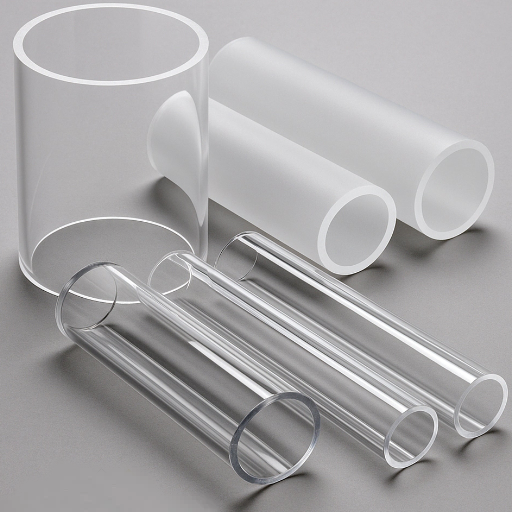
Understanding Cast Acrylic Tubing and Its Benefits
Modern wind energy applications widely use cast acrylic tubing because its superior characteristics and multiple uses make it an essential material. The tubing provides outstanding clarity together with optical properties which enable accurate monitoring and inspection of all wind turbine components. The material exhibits exceptional UV radiation protection together with its ability to withstand extreme environmental conditions, which makes it suitable for permanent outdoor installations in renewable energy systems. The material’s lightweight nature decreases total system weight, which results in easier installation, while also making maintenance tasks more straightforward. The mechanical strength of cast acrylic tubing enables it to withstand high-stress applications while maintaining its durability and stability. The system performance and efficiency of wind energy infrastructure receive substantial improvements from these features, which create pathways to develop more sustainable power generation systems.
How Transparent Acrylic Enhances Wind Energy Solutions
Transparent acrylic materials serve as essential components for enhancing both design aspects and operational capabilities of wind energy systems. The materials provide complete transparency which enables operators to observe turbine internal parts for monitoring purposes and to identify equipment issues through the detection of wear and damage and misalignment problems. The systems achieve better reliability because the increased visibility helps maintenance teams to work more efficiently while the systems maintain their operational capacity.
The lightweight properties of transparent acrylic enable turbine structures to operate with less energy requirements which results in better energy production performance while maintaining structural integrity. The material protects wind energy systems from extreme environmental conditions because it withstands both ultraviolet radiation and temperature changes. The advantages of transparent acrylic material demonstrate its vital role for developing contemporary wind energy technologies which drive progress in eco-friendly energy generation.
Material Comparison Guide
| Feature | Acrylic Tubes | Traditional Glass | Traditional Metal |
|---|---|---|---|
| Weight | Lightweight | Heavy | Moderate to Heavy |
| Impact Strength | Superior Impact Resistance | Brittle / Low | High but Prone to Dents |
| Corrosion | Corrosion-Proof | Resistant | Requires Treatment/Coatings |
| Sustainability | Energy-Efficient Production | High Energy Production | High Carbon Footprint |
Design and Customization of Acrylic Tubes
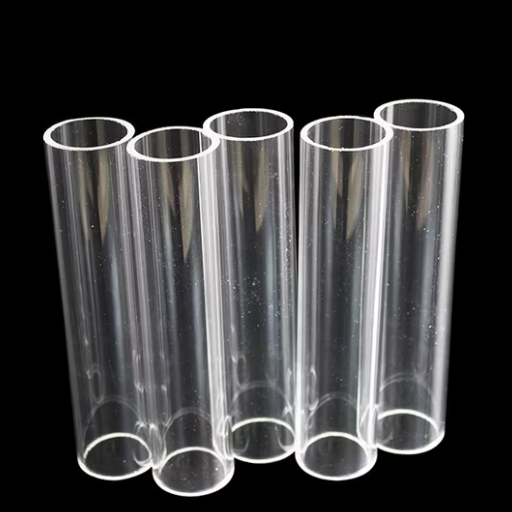
Customization Options for Wind Energy Applications
Acrylic tubes provide complete customization capabilities which wind energy applications require. The tubes can be customized to match different turbine designs which need to be operational at their best. The UV-resistant coatings provide a solution that protects against extended sunlight exposure which occurs in wind farm operations. Acrylic tubes can be treated with tinting or frosting methods to create safety and operational benefits by decreasing glare. The advanced machining methods provide exact material shaping which enables turbine component assembly. The customization options for acrylic tubes enable them to meet all modern wind energy system requirements while exceeding both technical and environmental standards.
Designing Clear Cast Acrylic Tubing for Optimal Performance
The creation of clear cast acrylic tubing requires designers to identify critical performance attributes which need to be maintained through their design work. The tubes provide optimal efficiency through their ability to transmit light because they maintain high optical clarity which makes them suitable for solar energy systems and visual display applications. The material provides essential UV protection which helps maintain its original color while extending its useful life through protection against long-term sunlight damage.
Extreme environments require organizations to sustain both thermal stability and impact resistance because they create safety problems during operation. Innovative coatings and treatments can increase surface hardness which reduces the likelihood of damage while maintaining transparency. The ability to customize shapes wall thicknesses and diameter dimensions enables businesses to create solutions which meet their project needs across renewable energy architecture and engineering fields. The new developments in clear cast acrylic tubing provide operational benefits while increasing sustainability through their extended product life which decreases the need for replacement parts.
Mechanical Properties: Durability and Flexibility
Acrylic demonstrates exceptional mechanical characteristics which include its ability to withstand heavy use while maintaining its original shape. The material serves various demanding applications because of its exceptional impact resistance which enables it to endure both rough treatment and extreme environmental conditions. Acrylic sheets provide a safer and more durable solution because they withstand impacts which would break glass of the same thickness. The material demonstrates high flexibility which enables it to be shaped into different forms without experiencing any breaks this quality becomes essential for custom fabrication tasks. The tensile strength of acrylic maintains structural stability when stress is applied because it ranges from 6,000 psi to 10,000 psi and its lightweight design allows for simple handling and installation. The combination of these factors establishes acrylic as an essential material for industries which demand strong yet flexible and high-performing products.
Manufacturing Process of Acrylic Tubes
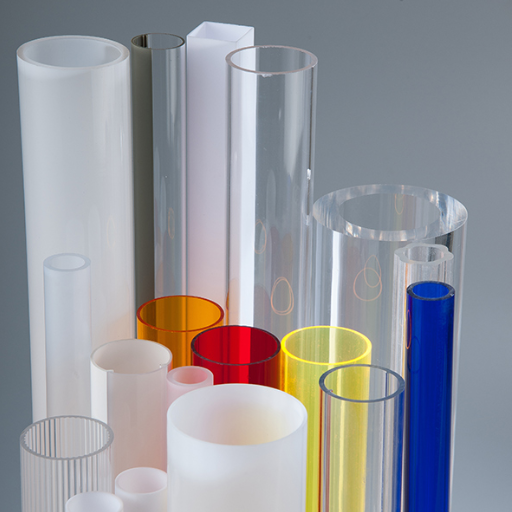
Cutting Techniques for Precision in Acrylic Tubes
- Laser Cutting: Achieves precise results through a focused beam of light to slice through the acrylic effortlessly, delivering smooth and precise cuts without causing cracking or chipping.
- Manual Methods: Using acrylic scoring knives, hand saws, and band saws with fine-toothed blades for smaller, detailed tasks.
- Finishing Steps: Applying masking tape along cutting lines and ensuring constant speed to prevent fractures and maintain accurate measurements.
The combined methods enable different fabrication requirements to be fulfilled through their application.
Custom Acrylic Shapes Creation Through Molding Processes
- Vacuum Forming: Uses heated acrylic sheets pulled over molds to create detailed shapes for automotive and architectural needs.
- Injection Molding: Injects molten acrylic into molds for high-volume production with consistent quality.
- Compression Molding: Uses severe pressure to compact heated acrylic into a mold for strong custom components.
Quality Control in Acrylic Tube Production
The process of ensuring quality control in acrylic tube production requires ongoing testing and monitoring procedures which assess three essential product characteristics. The process begins with the inspection of raw materials to prevent impurities from affecting the end product. Manufacturing processes depend on advanced machines and exact calibration methods to achieve consistent results in material thickness and diameter and surface finish. Testing protocols usually require laboratories to conduct impact resistance tests and UV stability tests while performing visual inspections to identify defects such as air bubbles and scratches. The implementation of strict quality assurance procedures enables manufacturers to produce acrylic tubes which meet the requirements of multiple industries that include aerospace and medical equipment manufacturing.
Sustainability and Environmental Impact of Acrylic
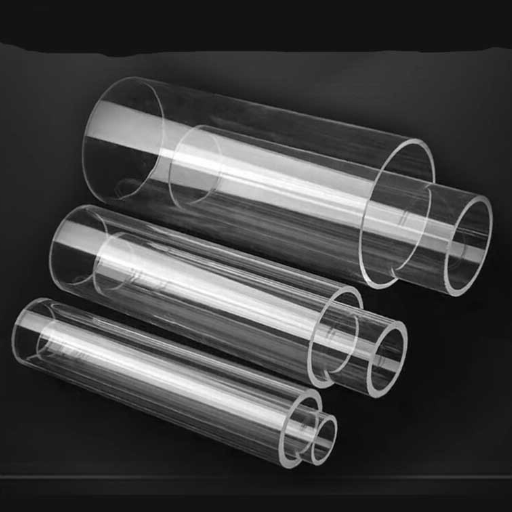
The Importance of PMMA in Sustainable Energy Innovations
Polymethyl Methacrylate (PMMA) is a material that in many respects promotes green energy. This energy-efficient material, known as PMMA, has qualities of being lightweight as well as being robust, making it ideal for the use in solar panels. It also serves as the roof of the Photovoltaic Cell, also known as the PV cell. It is equipped with solar cells that are protected against all forms of weather by a PMMA cover, which lets all heat to pass while keeping away the harmful external factors that can harm the cells. Moreover, due to the ability of being repellent to Ultra Violet radiations, the panels are not chipped, maintaining their original condition and performance. Thus, the life and reliability of the structures and a frequent replacement is avoided.
PMMA plays a crucial role in the design of LED energy-efficient bulbs apart from solar power. The facility of the polymer to uniformly spread light most certainly enables greater effectiveness and visual suitability of the devices facilitating less power consumption. Additonally, it is important to note that PMMA is eco friendly, and represents the positive trend in society towards less wastage and more conserving ways of approach energy production and consumption as well. Such features of the third largest plastic material have its use in the renewable energy sector, for the development of new technologies.
Evaluating the Environmental Benefits of Acrylic in Wind Energy
The wind energy sector benefits from PMMA and other acrylic materials because they help create sustainable solutions. The lightweight design of their wind turbine blades creates operational efficiency because it enables blades to rotate more freely which decreases their power consumption. The durability of acrylic combined with its protection against UV damage enables longer operational periods for turbine parts which decreases the need for maintenance and material replacements. Manufacturing emissions and waste production decrease through this process as time progresses. The recyclable nature of acrylic materials explains their environmental benefits because it enables materials to undergo reprocessing which supports circular economy programs. The wind energy industry achieves performance optimization through acrylic materials while maintaining its commitment to environmental sustainability goals.
Recycling and Lifecycle of Acrylic Materials
Recycling of acrylics involves more sophisticated techniques which helps in the effective recovery and reuse of the materials with less damage done to the environment since most of them are plastic-based. Among these methods include mechanical recycling in which worn off acrylic products are captured, cleaned, chopped up, and converted into pellets which could be put used in making new products. Chemical recycling methods have also found their way into the market. This innovation breaks the acrylic into its monomer causing it to loose all the mechanical properties and giving it good quality for reuse. Acrylics are thermoplastic material and require very high temperature or thermal stresses to initiate the degradation process they are normally used for long periods of between twenty to sixty years, then the material is available for recycling or simply for replacement. Recycling as a science is pervades with a lot of knowledge which contributes to the development of recyclers who are undertaking studies and in the design of new recycling techniques for the many growing recycling centers around industries such as construction and renewable industries, hence making the use of acrylic a very sustainable options. This is partly because the production of any material is, in most cases, linear, which is why most efforts to maximize its utilization focus on material reuse and hence recycling.
Challenges and Solutions in Using Acrylic Tubes for Wind Energy
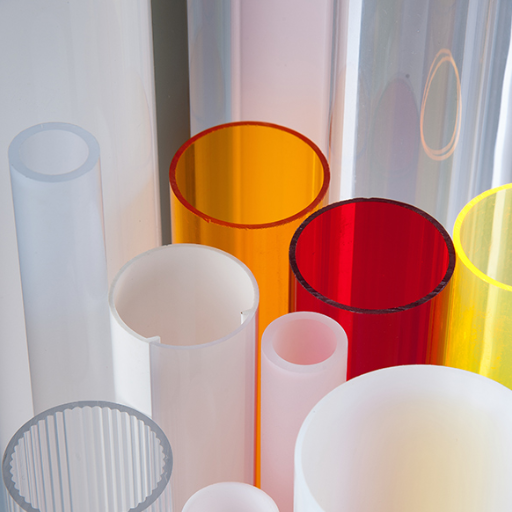
Acrylic Barriers in Severe Outdoor Contexts
For wind energy facilities that are heavily installed in the hostile surrounding environment, Engineers face a challenge but also a joy: acrylic designed for such hostile installations offers a unique set of properties, which make it uniquely suitable for the above-mentioned application. Acrylic barriers have built-in protection against UV rays that prevents their degradation or yellowing even after extensive exposure to sunlight. This is even more crucial in placement as exposure of the barrier to the sunlight may limit its efficiency in the benefits with time. It is also essential to note that acrylic and its unique properties make it unlikely to be damaged even by the most intense elements such as strong winds, a downpour or even snow, like those in wind turbine plants. Furthermore, Considering materials that may suffer from corrosion or which may be damaged by extreme conditions, such as these, acrylic stands out in the chart of materials attribute as it is temperature resistant and will not weaken, erode, or flake – reducing maintenance, repair and replacement cost.
In my opinion, the key to unlocking the potential of barriers made of acrylic material is the utilization of advanced coatings and treatments enhancing the weathering quality of the material. For instance, the coatings which push the reflectance resonance maximum away from the visible light spectral region can effectively reduce the glare levels and hence ensure visibility within an operational system. This can be further prevented by scratch-resistant or hydrophobic coats from misusing the surfaces of the barriers through controlling a flow of the aggressive media such as sand particles or water. Concurrently, the barriers may retain their effectiveness and beauty over the years. It should be noted that advancement in the technology of production utilizing acrylic has reached a point where the thickness and appearance can be adjusted, hence the most effective means of protecting a barrier can be made depending on the specific environment for example, increased strain situations such as salinity in coastal areas or direct sunlight in arid areas.
To counter extreme temperature or any microcracks that might arise in the future, the deployment of good stiffening sealing materials and fixing bonds becomes necessary in order to work with quality. As a material possessing superior qualities in this area, acrylic when combined with the aforementioned technical solutions would enable the development of durable remedies which not only safeguard the wind energy equipments but also seek to lessen the impact through reduced disposal and reduced unseen manufacturing processing. Being able to benefit from these far reaching advancements effectively makes acrylic panels absolutely viable given the exacting environmental requirements in this regard in the renewable, energy sector.
On Thickness of Acrylic Materials in Wind Engineering to Meet Durability Requirements
Getting the size of acrylic material correct helps maintain durability as well as safety in wind applications. Thick acrylic plates will be more floor tolerant compared to the structural applications and are therefore recommended most especially in high-wind or harsh weather conditions. But at the same time it is also necessary to find the optimal balance between long-term performance and effectiveness of the material. Technology Advances in Acrylic production also goes a step further ensuring that the thickness produced has no negative effects on the strength requirement resulting in real sturdy and light practical measures that are cheap compared to other strengthening measures. For example, reinforced or multiple sandwiched acrylic sheets can have the same attribute level after its thickness has been reduced as a result allows for easier installation and is cheaper. Respectively the correct thickness selection according to given specifications and requirements, as well as the aggressive or moderate expected environment is very important when it comes to long-term wind applications.
Innovative Solutions to Common Acrylic Challenges
Tackling those issues that are faced when working with thermoplastic materials such as acrylic, requires a blend of progressive scientific discoveries and strategic uses of the resources available. One of the many appreciable inventions that have been made is the creation of scratch resistant films, which enhances the life of acrylic surfaces by reducing or eliminating the wearing down of the material particularly in the events of high friction environments or outdoors. Furthermore, the molecular-weight of stabilizing technologies has evolved to help reduce the yellowing discoloration and damage due to long sun exposure heating ensuring minimal visual sight loss in acrylic objects over the consciousness of an individual. Thermoforming has seen an increase of techniques which further aid in the ability for the organic molecule to shape into various reasons of interest while maintaining the mechanical integrity of the construction material. There are also innovative adhesive products that have been developed especially for acrylic and is largely cut out many complications associated with bonding adhesive and enhanced the joints. These breakthroughs are indicative of the fact that, with constant reinvention, acrylic will be able to work toward modern performance requirements as it will clearly demonstrate.
Reference Sources
Frequently Asked Questions (FAQs)
Does cast acrylic tube hold up under UV exposure and varying temperatures?
In general Acrylic tubes such as cast plexiglass cut to size have good clarity and excellent UV resistance in comparison to many other plastics, lending clear acrylic to wind energy apparatuses as a common material for transparent front covers and guards. It may look better for a longer time under not very harsh conditions compared with some extruded sheets or rods, however especially under prolonged UV exposure without any protective coating, surfaces degrade. It may impact the hardness of the material in the following way: acrylic is well, very hard considering its weight and has a good dimensional stability, but subjected to extremes of temperature, the material will be at a lower temperature and it will be more cold and hence more brittle or very high temperatures will tend towards a lower degree of stiffness and tensile strength. Acrylic is also used to make this resin tough and is sometimes used in combination with UV-stable resins or a thin polycarbonate (PC) shield to increase the lifespan of such equipment in aggressive environments. A maximum and minimum operational temperature should be considered in design to ensure efficiency and long life of the product.
What choices are offered for the length, diameter, and outer diameter of an acrylic turbine tube?
Acrylic tubes come in a variety of different lengths and widths, and options for outer diameter (OD) and wall thickness can be made to suit the needs of piping, housings, and components. It is possible for them to use the vacuum forming or the casting technique that allows the manufacturing of cylindrical parts or short pipes used as casings, and in some cases the required length and application is achieved by tailored, cut-to-length use. Selection of the walls section and provided axial and hoop loading plays a significant role for subsequent installation and operation particularly in the case of structural or pressurized applications, where additional aluminum or composite stiffeners are even used. While one can choose the standard ranges and sizes, to acquire components from suppliers one needs to consider the type of acrylic (whether cast or extruded) and any additional machining or applications, like accurate slot drilling or boring. Work together with the group of engineers to ratify the qualification of the defined bore and outer surface against pressure vessel, chamber, and shield serving.
Is it possible for acrylics tubes to serve as pressure vessels or containment cylinders in wind turbines, for example?
Acrylics are sometimes employed in low-pressure containment or as transparent housings. Nevertheless responsibility rests with the fact that the polymer’s tensile strength is moderate, and when it comes to much higher pressure applications, users need to turn to material which can endure the stresses like aluminum or composite pressure vessel and use acrylic for either an internal inspection window or a chamber component. In such cases of use, special attention should be given to assessment of the structure considering the fact that external loads are present, exposure to impact is not excluded for a vessel of such application, and the designs can be worn out because of internal or external influences, including exposure to the sun or the weather etc. The pressure containment system shall also be detailed for sealing with end caps and embossed seals or integrated PC components in order to keep away any unintended leakages. Service life repletion is enhanced by checking and repairing fitted structures while combined assemblies that interface acrylic with reinforcing foam or structural aluminium members may provide a trade-off between sight and strength.
Which out of Acrylic, Polycarbonate, Plexiglas and Polymethyl Methacrylate is better for wind turbine applications?
Acrylic (Polymethyl Methacrylate otherwise known as Plexiglas) is chosen for its clear appearance and with its ability to resist yellowing, along with this, the material is enjoying great growth in development of new products. Due to all these factors, Polycarbonate (PC) is much tougher and more bendable in impacts, but also tends to be more easily scratched. Plexiglass and cast cast acrylic tubing are more optically clear and craze resistant in the long run than some of the extruded polymers however patience often breaks down because of acracking. Yet polycarbonate may be preferred in such applications in which impact resistance is needed out of the box. For structures located in different climates, a UV stabilized acrylic that offers good transparency is lightweight thereby easy to handle yet durable, while fillers or manual additives will not work again an alternative. Optimal material parameters shift between dimensional stability, internal forces and working loads, and allow one to safe-wisely substitute acrylic minimized-shielding composites or increased high-strength aluminium. Additionally, the choice of materials also alters storage, working (round / bars, tube, sheets), and other maintenance processes that’s why the engineers often ask for the specification of the resin grades and definition of the protective coatings right away.
Which properties of the acrylic tube should be considered by the engineers in parallel and perpendicular to the tube’s axis under tensile and compressive loads and why?
Evaluating the effectiveness of an acrylic tubing in operation requires considering its tensile resistance and flexural rigidity in addition to the possibility of an axial load. Unlike metals and many composites reinforced with fiber, the strength of acrylic is somewhat lower due to the material, known as acrylic, which aims to offset tensile deformation in the material. For this reason, applications that carry serious structural loads often emanate the use of various forms of reinforcement such as aluminum stiffeners or even composite overwraps to prevent creep or domino effect and strengthening. Acrylic is an advantageous construction material since it is lightweight, it helps in saving weight of the entire system. Nevertheless, the load effect due to CAD modeling have to be taken into consideration, if any shematic sketch involves, for instance, pavement or moving machinery design. In Sections where thermal management utilizes insulation or foam support, the ability of accessories to introduce any strength-decreasing areas or crack generations should be checked. The use of thermal control insulation around the connections between elements needs further testing in the real environment as the maximum operational performance shall be ensured.
What are the proper steps to be taken when it comes to setting acrylic tubes into place in the context of erected wind power structures?
For the time being, when the acrylic tubes are to be installed, do so while in soft slings or supported in some other way to prevent any bi-part material related defects or damage. Sometimes some sharp corners can cause the material to squeeze and become loose or break and hence, ensure that the abdomen does not apply too much pressure. When sticking and blocking the tubes, they can be adhesives of the same material, thermally compensating solutions, or removable caps preventing liquid closure formations. Maintenance procedures carried out from time to time include the inspection of surface crazing, yellowing, owing to ultraviolet radiation, and aggressive cleaning of lenses without any damage of the polymer clarity. As a measure of enhancing long term realization of the acrylic options by the dpwners or installation contractors would be using such coadings as antireflection, protective linings, or even composite acrylics supplemented with a layer of polycarbonate over the key areas with some mechanical vibrations or impacts expected. Such measures ensure that the institutions are prepared for possible failure of components in a particular year and they prevent them from suffering total shutdown.