

Tubular photobioreactors represent the pinnacle of microalgae cultivation technology, offering a closed, highly controlled environment that maximizes photosynthetic efficiency. By balancing engineering precision with biological needs, these systems enable the sustainable production of high-value compounds for biofuels, medicine, and nutrition.
Tubular photobioreactors are at the leading edge of developing technologies for the cultivation of algae and microalgae, promoting a controlled environment for optimizing their growth and productivity. These systems, honed upon exacting engineering principles and biological principles, guarantee efficient light penetration, gas exchanges, and nutrient support centrals for the production of biofuels, pharmaceuticals, and sustenance for efficient feed supplies. The article delves into the technical nuances behind tubular photobioreactors and the ways they are improved by design, mechanisms for operations, and integration with innovation in industries. If you are a scientist, engineering professional, or environmental and sustainability expert, this book will aid you in understanding the deep reasoning towards altering the microalgae system.
Introduction to Photobioreactors
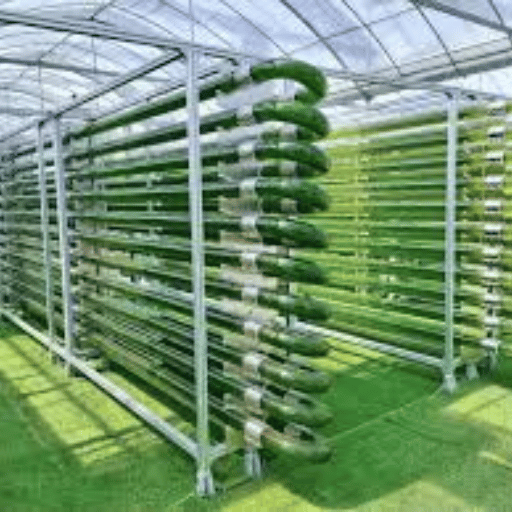
Photobioreactors are specifically created systems used to cultivate microorganisms (such as microalgae) with the help of light energy as the primary source of energy. These systems encompass defined regimes in which light intensity, temperature, carbon dioxide concentration, and nutrient availability are temperature controlled in order to achieve the maximum biomass. Photobioreactors are much more sophisticated than open pond systems, providing higher system efficiency, which would greatly limit the infusion of contaminants. This also makes them much easier to scale up, which makes them indispensable for anyone interested in biofuels, pharmaceuticals, and other sustainable production industries. This modular, flexible design guarantees a consistent growth rate that is defined and measurable, which directly supports countless applications in the research and industrial processes’ context.
Definition and Purpose of Photobioreactors
Photobioreactors are controlled, closed systems specially designed to grow microorganisms such as microalgae in a specific environmental condition for better optimization of photosynthetic productivity with the help of regulation of light intensity, temperature, gas exchange, and nutrient supply. Variables are needed to be kept constant in order to make photobioreactors consistent, facilitating the generation of efficient biomass production essential for biofuel development, pharmaceutical compound synthesis, and advancement of sustainable biotechnological solutions.
Types of Photobioreactors
Photobioreactors can be classified into closed and open systems, each having specific operational applications. Closed photobioreactors such as tubular and flat-plate PBRs are designed to protect from contamination as precisely grown under controlled conditions. Tubular PBRs are made of transparent tubes for maximum light exposure, whereas flat panel PBRs save space due to their compact nature. With its cost advantage underpins it, open PBR, say raceway ponds, is more prone to environmental variability and contamination. The selection would normally hinge on a number of considerations, that could base on scale of production, type of organism to be pursued for study, as well as cost of construction involved. It is generally considered that closed systems are appropriate for the production of high-value products, while open ones are preferred for high biomass yield.
Importance in Algae Cultivation
Cultivating algae is of utmost importance to several industries because of its versatility and sustainability. Algae producing highly valuable compounds like biofuels, pharmaceuticals, and nutritional supplements, is believed to be an important means of solving worldwide problems related to energy needs, food security and carbon sequestration. It can grow very rapidly, showing very high photosynthetic efficiency besides being able to grow in marginal and non-arable land with far less freshwater. This thus makes algae very suitable for industrial use as the renewable biomass. Therefore, it would indeed be of exceptional importance to understand how it brings mortgages into carbon sequestration for climate alleviation via algae. For these reasons, progress made in developing efficient growth practices is crucial with the view of harnessing the full potential that algae can provide in solving pressing environmental and economic challenges.
Design Specifications of Tubular Photobioreactors
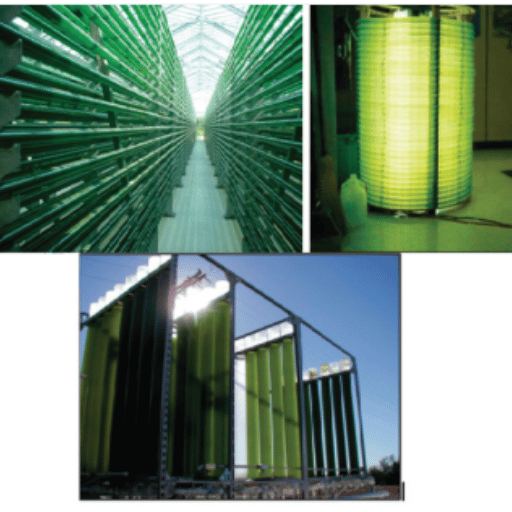
Tubular photobioreactors are designed with a network of transparent tubes where the cultivation medium flows, ensuring optimal exposure to light for photosynthetic activity. Key specifications include:
- 1
Material Selection
Typically constructed from borosilicate glass or durable transparent plastics to ensure high light transmittance and resistance to UV radiation. - 2
Tube Diameter
Generally ranges between 2 to 10 centimeters to maintain an efficient surface-area-to-volume ratio and uniform light penetration. - 3
Flow Dynamics
Designed to maintain laminar or slightly turbulent flow to prevent sedimentation and ensure nutrient distribution.
Material Selection: Plastic Tubes vs. Borosilicate Glass
| Feature | Plastic (Polycarbonate) | Borosilicate Glass |
|---|---|---|
| Cost | Lower initial investment | Higher initial investment |
| Durability | Prone to UV degradation | High resistance to UV & heat |
| Transparency | Good (declines with age) | Excellent and stable |
Several pivotal considerations are needed when choosing between plastic tubes and borosilicate glass in tubular photobioreactors. Plastic tubes, such as polycarbonate, are relatively cheaper, lighter, and easier to process. However, they are generally less durable over time, especially when exposed to UV radiation and high temperatures, leading to degradations and a shortage of operational life. In contrast, borosilicate glass is the best because it is resistant to thermal and chemical stresses, giving it high levels of durability and good optical transparency, thereby allowing smooth light penetration for photosynthesis. Even if it costs more on all counts and is heavier, borosilicate glass is the only suitable material for high-precision, reliable, and hardy end-user applications. The final decision must be according to the operational requirements, budgetary constraints, and concerns related to environmental interest for the use of photobioreactor aeration.
Light Transmission Efficiency in Tubular Designs
Tubular photobioreactor designs offer superior light transmission efficiency due to their superior surface-area-to-volume ratio, maximizing the exposure of the culture medium to light. This is made even more impressive by the cylindrical geometry which ensures uniform light penetration, minimizing shadow effects that might limit the photosynthetic activity. The use of advanced materials like anti-reflection coatings or high-transmittance glass on their walls can push light absorption efficiency higher and limit optical losses. A prominent feature is the correct orientation of the tubes and their spacing to eliminate shading and distribute light properly, foremost during running scaling operations or outdoor deployments.
Configuration of Tubular Photobioreactors
Several primary parameters governing performance and efficiency in tubular photobioreactor systems include tube diameter, length, layout, and hydrodynamic parameters. Diameter should be such that light absorption and optical characteristics are maintained efficiently with light penetration. The diameter normally ranges from 5 to 10 cm while there is adequate light absorption in less dense cultures. Likewise, sufficient tubing length is associated with lower pressure losses and mechanical disturbance on the culture while maintaining near-efficient $CO_{2}$ and nutrient transfers. Horizontal, serpentine, or spiral layouts, each having specific advantages, will help any system operate, depending on space availability and operations. Water flow, on the other hand, should be controlled such that the proper turbulence is achieved for mixing of culture and gas exchange, to prevent formation of biofilm, but not to cause excessive damage to the cellular structure. Therefore, achieving efficient designs suggests a set of parallel disciplines, i.e., biological, engineering, and environmental considerations, specifically targeted for a given application.
Operational Mechanisms in Tubular PBR Systems

The tubular photobioreactor operates by moving the liquid medium containing the microalgal culture through transparent tubes. The cycle is designed for uniformity of exposure to light, prevention of sedimentation, and efficient gas exchange. Carbon dioxide comes into the system as a carbon source, whereas the oxygen produced due to photosynthesis is expelled to prevent cell processes from being blocked. Exogenous controls are maintained at optimal levels of pH and temperature to promote growth. Pump systems and airlift mechanisms, moving the fluid flow, are commonly used to minimize shear stress on cultured organisms and sustain high productivity.
Closed System vs. Open System Dynamics
Closed systems are entirely closed and do not admit any external pollutant, and hence, it serves ideal control for growth conditions like the nutrient supply, temperature, and gas exchange, where high-value products require sterile and optimized surroundings to guarantee that the product outcomes are standard and repeatable. On the other hand, the open systems, for example, ponds or raceways, do not enjoy such ideal conditions but are cheaper. These systems should be used for the bigger product output and commercial economic gains, although they are much exposed to contamination and changes in the environment, which might have a direct impact on the productivity and the consistency of the product. Proper selection of the system depends on the purpose of the production, the cash outlay, and the requisite purity of the product.
Flow Patterns and Their Impact on Microalgae Growth
There is a substantial contribution from flow patterns in an operating system in influencing the vital factors for microalgal growth. Laminar flow ensures that exposure to light and nutrients remains uniform, with minimal risk of damage to microalgae by shear forces. Turbulent flow, on the other hand, essentially overcomes such disadvantages by ensuring adequate mixing of nutrients and drainage of waste gases, both of which encourage higher growth rates, though at additional costs and higher chances of cell damage. The type of flow, therefore, should integrate with the biological best-suited characteristics of the target species of microalgae and the operational goals of maximizing biomass production or achieving specific metabolite yields. The dynamics of flow should be optimized from the earliest stages to ensure equal distribution of resources and consistent overall system productivity.
Temperature Control and Its Effects on Biomass Production
Temperature control is a critical factor in influencing microalgae biomass production by affecting cellular metabolism and enzymatic activities directly. The optimal temperature range varies by species but most microalgae will do well between 20 to 30°C. Deviation from this range could induce metabolic stress with a loss in growth rate and biomass yield, as higher temperatures stimulate enzymatic activity while exposing the cultures to thermal degradation and photoinhibition, while lower temperatures slow metabolism hindering productivity. Hence, proper temperature regulation, as in water-jacketed photobioreactors or temperature-controlled chambers, is essential to guarantee consistent, high-rate biomass production.
Microalgae Cultivation Techniques
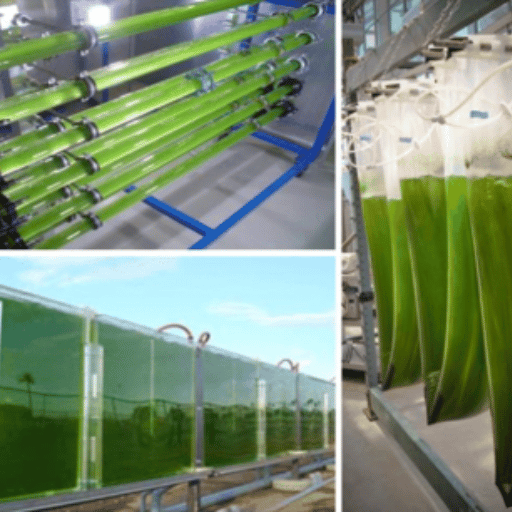
Algae cultivation can be classified into three major methods: open pond, closed photobioreactor, and hybrid systems. Open pond cultivation, generally flowed as raceway ponds, provides natural sunlight and is less expensive but is handicapped by problems related to contamination and is therefore not the best solution for high algae productivity. On the other hand, the closed culture system modulates the bio-optical water depths and aquaculture environ-dimensions to keep under control the environmental mainstream needed, which provides greater protection in yield while reducing contamination possibilities but is high on capital and operation expenses. The choice of methods completely depends on biomass output desired, cost considerations, and genetic architecture of the specific strains involved.
Optimal Conditions for Spirulina and Other Microalgae
Controlling critical factors precisely that result into optimum growth conditions for Spirulina and other microalgae includes photoperiodicity, light intensity, growth medium temperature, and nutrient composition. Light intensity and photoperiod play critical roles, with many species needing light at 100-200 µmol photons $m^{-2}$ $s^{-1}$ for their photosynthesis to do well. Temperature is vital for growth, with the optimum for growth ranging from 25°C to 35°C; however, various cultures may need different levels of heat. Material composition, particularly availability of main nutrients, nitrogen, phosphorous, and micronutrients, can have a direct influence on biomass productivity and composition. Spirulina thrives better at a pH range of 8.0 and 11.0, it being a medium alkali-loving alga. A proper-aeration system ensures efficient mixing of the culture and, therefore, gas exchange and prevents settling of cells. By envisaging and maintaining the biophysical parameters about the midpoints of their functions, the maximum yields and quality biomass of microalgae can be obtained.
💡
Pro Tip
For Spirulina, maintaining a high alkaline pH (8.0-11.0) not only optimizes growth but also serves as a natural barrier against most competing microalgae and contaminants.
Strategies for Maximizing Algae Production
Precise environmental and operational controls are crucial for achieving optimized algae production. This may involve maintaining specific light intensities determined by the algal species, analysing nutrient compositions with optimized expected nutrient concentration, and controlling temperature within the proper range for algal growth, considering they need certain humors to maintain metabolic reactions. Passing advance biological monitoring—the real-time data transmission—the very moment the system detects that pH levels did not reach the appropriate reading, they would be able to alter their nutrient-altering air sensors, correct any nutrient alterations at that time, and neutralize any soluble gas-related alterations. This is how selecting a higher-cost magnificent bioreactor or raceway pond can improve mixing, gas exchange, and light harvesting and fight its compromising effect on continued growth. Up to scaled plant stage, biological and environmental discoveries take advantage of wastewater reuse as a source of total nutrients, followed by the sparging technology for providing $CO_{2}$ to reach a $CO_{2}$ limitation. Bark brings it more advanced: to reap large and valuable algae yields.
Monitoring and Managing Algae Culture
An integrated approach encompassing a highly sophisticated set of tools and adaptive control schemes leads to the successful monitoring and management of algae cultures. Key factors such as pH, temperature, dissolved oxygen, and nutrient concentration are to be measured continuously to suit the culturing conditions. Real-time monitoring systems would be much more effective if they were working alongside the automated feedback control systems to ensure these factors do not slant away or fall inside a pre-defined threshold. Periodic evaluation of biomass densities, specific growth rates, and contamination levels are critical beforehand to increasing any productivity losses. Further, high light intensity and continuous carbon dioxide delivery with right concentration mean better photosynthetic efficiency, directly correlating with more biomass yield. A technical and proactive management repeatedly monitoring such practices increases technological awareness, guaranteeing improved success and profitability for any algae cultivation system.
Reference Sources
- ALGOMA Algal Biotechnology LLC: Scalable, low-energy photobioreactors for biomass production.
- LinkedIn: Key Trends Fueling Laboratory Photobioreactor Market.
- ScienceDirect: Photobioreactors for Mass Cultivation of Microalgae.
Frequently Asked Questions (FAQs)
What are photobioreactor tubes?
Photobioreactor tubes are transparent or translucent tubes utilized in photobioreactors to produce algae or microalgae by providing an optimal and closely monitored environment.
What materials are photobioreactor tubes made of?
Material is usually Plexiglass, acrylic, or borosilicate glass, with a very high light transmission and durability factor therein.
What benefits does the use of photobioreactor tubes give?
Controlled light exposure, the risk of contamination reduction, and the possibility for efficient algae growth, on a scale, also sustainable.
What types of algae are grown in photobioreactor tubes?
Due to their low maintenance, various microalgae like Spirulina, Chlorella, and Haematococcus can be cultured and used in the manufacture of biofuels, food, and medicine.
How does the photobioreactor system work?
It feeds nutrient-rich waters to the algae along with $CO_{2}$, and subjects the whole mixture to light which forms a perfect environment for photosynthesis and growth.