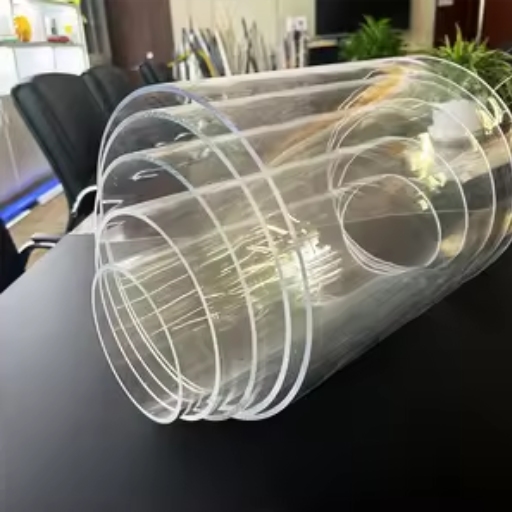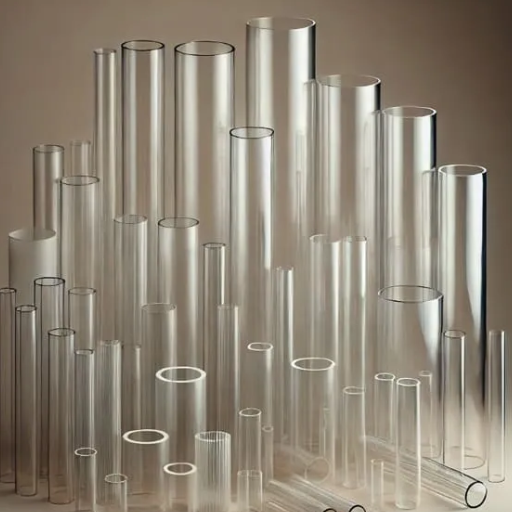

Today, acrylic serves as a foundational material throughout countless sectors, valued for its robustness, flexibility in application, and striking appearance. Still, have you taken time to explore how this transparent, low-density polymer comes into existence? The transformation from basic chemical compounds into finished acrylic panels destined for use in displays, water tanks, and home furnishings involves a captivating journey. This entire workflow demonstrates an extraordinary marriage between scientific understanding and precise execution. Within this comprehensive analysis, we’ll walk you through each stage of acrylic production, investigating the meticulous steps involved and unpacking the factors driving this material’s continued strong market demand. Whether your interest stems from technical curiosity or you’re exploring possibilities for future projects, this resource offers complete insights into how acrylic gets manufactured and where it finds application.
Introduction to Acrylic and Its Properties
Acrylic presents itself as a multifunctional polymer material celebrated for its see-through quality, toughness, and featherweight characteristics. It operates as a durable glass substitute, offering enhanced protection against shattering while allowing similar levels of light penetration. Standing out among acrylic’s key features is its remarkable ability to resist challenging weather patterns, making it suitable for both interior and exterior use cases. What’s more, it accommodates melting, sawing, and molding into nearly endless shapes, creating broad opportunities for artistic expression and practical utility. These combined qualities position acrylic as the top choice throughout many industries ranging from architectural work to decorative crafts, where performance meets visual appeal.
What is Acrylic?
Acrylic represents a multifunctional, lightweight, and sturdy polymer material sourced from acrylic acid or similar chemical derivatives. Its clear appearance, solid construction, and ability to handle extreme environmental conditions stand as key drivers of its widespread deployment in areas like signage production, window manufacturing, furniture creation, and decorative item design. Its adaptable character allows for simple shaping into various forms, enhancing both functional performance and visual attractiveness.
Properties of Acrylic Plastic
Acrylic polymer boasts an impressive array of properties that account for its wide acceptance across multiple fields. Chief among these features is its exceptional clarity, providing glass-like transparency while weighing substantially less than conventional glass. Acrylic shows significant strength, and physical impacts, surface scratches, and ultraviolet exposure don’t diminish its useful life, making it perfectly suited for outdoor applications where durability counts. Additionally, its workability through cutting and heat-based shaping methods gives designers tremendous creative freedom. The material’s performance in harsh weather and resistance to aggressive chemicals strengthen its reputation for reliability across diverse uses.
Durability and Strength of Acrylic Materials
Acrylics earn strong recognition for their impressive strength and lasting quality. Thanks to their high impact resistance, they avoid breaking like glass does, creating inherently safer conditions. Furthermore, acrylics demonstrate excellent resistance to scratching and sun damage, ensuring they preserve their clarity and structural integrity over extended timeframes even in challenging conditions. Their performance under severe weather and chemical exposure reinforces their trustworthy reputation throughout different industry sectors.
Raw Materials for Acrylic Production
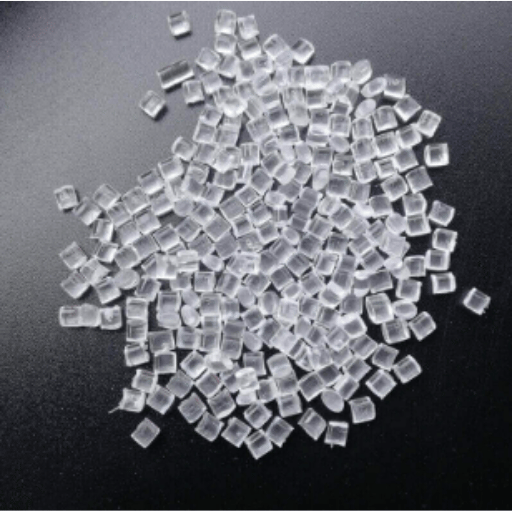
The core components used for making acrylic originate from petrochemical sources. Methyl methacrylate (MMA), which exists as a liquid monomer functioning as the primary building block of acrylic polymer, stands as the most frequently used ingredient. Other critical materials include initiators and stabilizers that assist in the polymerization process and maintain the quality and transparency of the end product. These components undergo strict quality control measures to ensure production of acrylic products that are strong, clear, and versatile.
Primary Raw Materials Used
Acrylic production relies heavily on methyl methacrylate (MMA) as the core raw material, supported by initiators and stabilizers. MMA serves as the primary monomer, initiators drive the polymerization forward, and stabilizers maintain product durability and optical clarity. Careful management of these materials ensures the quality and performance of the finished acrylics.
Importance of Quality in Raw Materials
The quality of raw materials has a direct impact on acrylic products’ performance, lifespan, and visual appeal. Only high-grade methyl methacrylate (MMA) is used to provide the ideal combination of clarity and strength together with reliable initiators and stabilizers that maintain consistency throughout production and beyond. Working with quality materials reduces waste generation, extends product longevity, and ensures that products meet industry standards, making quality a critical factor in acrylic production.
Impact of Raw Materials on Final Product
Raw material quality significantly shapes the final product’s characteristics like transparency, strength, durability, and uniformity. High-quality materials like pure methyl methacrylate (MMA) are the main reasons products achieve the best optical properties and strongest structure. Properly stabilized materials reduce the number of defects and make products strong enough to withstand environmental or mechanical stress, meeting industry standards. Thus, choosing the right raw materials is critically important for acrylic to achieve excellence in quality and performance.
The Manufacturing Process of Acrylic
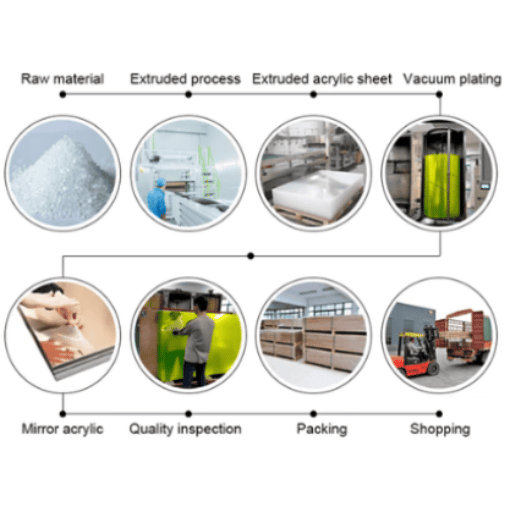
The opening step of acrylic manufacturing is polymerization, which is a chemical process that converts monomers (mainly methyl methacrylate) into long-chain polymers using initiators. This typically happens in controlled laboratory environments where temperature and conditions are monitored to achieve consistent quality and output. The next step after polymerization is shaping the plastic into required forms like sheets, rods, or other configurations. After that, the acrylic undergoes curing which strengthens the product and adds stability. Then to complete production the acrylic goes through cutting, polishing, and inspection to meet quality standards and prepare the acrylic for its intended use. This process gives manufacturers the durable and versatile acrylic materials that can be applied in different industries.
Overview of Acrylic Manufacturing Methods
Two main techniques are used in the acrylic production process: casting and extrusion. Casting is a method where liquid acrylic is poured into molds to create high-quality acrylic sheets, which are best suited for applications requiring optical clarity and durability. By contrast, extrusion is a method that heats and pushes acrylic through a die to create sheets or other shapes where the whole process is faster and more cost-effective. Either way, both techniques have their own advantages and therefore, companies can choose the one that best fits the application requirements such as strength, flexibility, or production speed.
Extrusion Process for Acrylic Sheets
The extrusion process involves heating acrylic pellets until they melt and then pushing the liquid acrylic through a die with the desired shape to produce continuous sheets or profiles. This technique is highly effective, providing uniform thickness, and allowing the production of large quantities at lower costs. Although extruded acrylic is less rigid and not as clear as cast acrylic in optical properties, it works well for applications where cost, uniformity, and ease of fabrication are the main priorities.
Casting Process for Cast Acrylic Sheets
The casting method for cast acrylic sheets involves mixing liquid methyl methacrylate (MMA) with catalysts and pouring the mixture into glass molds. Following this, the molds are heated and pressurized in a controlled way to trigger the polymerization process, which turns the liquid into solid acrylic sheets. This method creates sheets with excellent optical transparency, high rigidity, and weather resistance, making cast acrylic ideal for premium and specialized applications.
Types of Acrylic Sheets
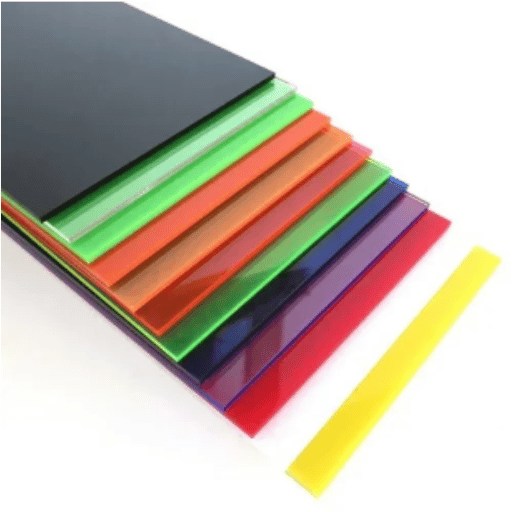
Acrylic sheets are divided into various types based on their specific applications and purposes:
1. Clear Acrylic Sheets
These are the most commonly used sheets which have remarkably high transparency and excellent light transmission making them the perfect choice for uses like display cases, windows, and signs.
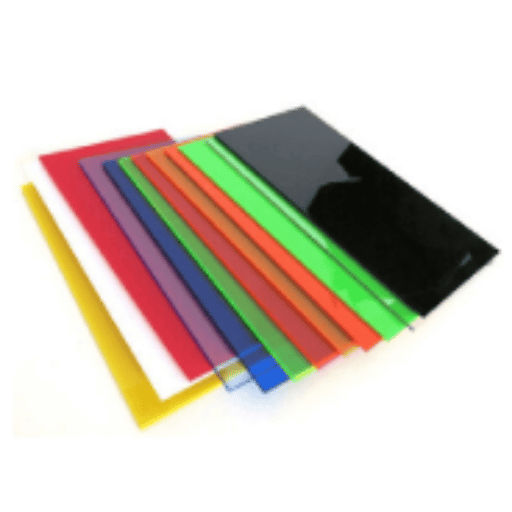
2. Colored Acrylic Sheets
These sheets come in a wide range of colors and textures and are primarily used for decoration, signage, and artistic projects.
3. Frosted Acrylic Sheets
These types of sheets create a diffused light effect, providing privacy and elegance at the same time. They are commonly used in building partitions and lighting fixtures.
4. Mirrored Acrylic Sheets
They are lightweight and more impact-resistant than glass, and therefore they are typically used for creating decorative mirrors, interior design, and retail displays.
5. Textured Acrylic Sheets
These feature interesting surface patterns and are therefore selected for decorative applications, privacy screens and unique projects.
6. UV-Resistant Acrylic Sheets
They are the most durable of all acrylic sheets, engineered to handle intense sun exposure making them ideal for outdoor use like skylights, greenhouses, and signage.
Every type has distinct features that meet different functional and aesthetic requirements, enabling the full range of uses in many industrial areas.
Differences Between Extruded and Cast Acrylic
The continuous process used in manufacturing extruded acrylic, resulting in sheets of uniform thickness and lower price, makes it highly suitable for applications where consistency is essential, like signs and displays. However, it can be less durable and more prone to cracking when exposed to stress or during machining.
On the other hand, cast acrylic is made by pouring liquid acrylic into molds that provide it with exceptional optical clarity and strength compared to others. This type is preferred in projects needing detailed cutting, engraving or bearing heavy loads like aquariums and high-end displays. While it costs more, it delivers quality and versatility for the most demanding applications.
Uses of Acrylic in Various Industries
Acrylic is a material that has gained recent recognition across various industries due to its qualities like versatility, durability, and beauty. The construction industry uses acrylic sheets for windows, skylights, and sound barriers, which offer both excellent weather resistance and visibility. The automotive sector, meanwhile, uses acrylic to make light covers, instrument panels, and windshields because of its lightweight and high-impact resistance. In the retail and advertising sectors, acrylic is the material that produces display cases, signage, and point-of-sale stands that capture customer attention most effectively. In the medical sector, acrylic is the material that creates incubators, lenses, and protective barriers thanks to its sterility and transparency. Additionally, acrylic is an excellent choice in indoor plants, furniture design, and art installations where both practicality and beauty are important. Certainly, its adaptability has made it a preferred material in various applications.
Applications of Acrylic Sheets in Everyday Life
Acrylic sheets have become recognized today as an essential material in different applications and across various industries because of their lasting quality and versatility. They are often found in home interior design shown in attractive furniture pieces, shelves, and dividers. Furthermore, acrylic is widely used in retail displays as cases, promotions, and customer protection screens. The construction industry is another area where acrylic sheets are very popular through using them to make products like skylights, windows, and sound barriers. Along with this, hospitals also gain from using acrylic as it is the primary material for medical devices and sanitary barriers. Acrylic’s UV resistance and transparency features are perfect for outdoor signs and advertising boards while hobbyists and artists love acrylic for mixed media and art displays. This trait has confirmed the position of acrylic as a plastic that has various everyday applications.
Reference Sources
Acme Plastics – What is the Process of Acrylic Sheets Manufacturing?
Describes the process of manufacture for both cast and extruded acrylic sheets. Source
Plastic Land – The Science Behind Acrylic
Provides the details of the making process for cast acrylic sheets including polymerization and durability factors. Source
YouTube – Acrylic Glass Explained
A video journey showing the manufacturing process of acrylic glass from the raw materials to final applications. Source
Frequently Asked Questions (FAQs)
What are acrylic sheets composed of?
Acrylic sheets are made of a substance called polymethyl methacrylate (PMMA) which is derived from acetone.
What are the major manufacturing methods of acrylic sheets?
The major methods include cast acrylic (pouring liquid acrylic into molds) and extruded acrylic (melting and pushing acrylic through a die).
What are the differences between cast and extruded acrylic sheets?
Cast acrylic is stronger and has superior optical clarity while extruded acrylic is more affordable and easier to shape.
What is the sequence of operations in the cast acrylic sheet manufacturing process?
The raw material methyl methacrylate (MMA) is poured into a mold, polymerization under controlled conditions happens, and then curing produces solid sheets.
What is the sequence of operations in the extruded acrylic sheet manufacturing process?
Acrylic granules are melted and pushed through a die to form the sheet shape, followed by cooling and cutting to the required size.