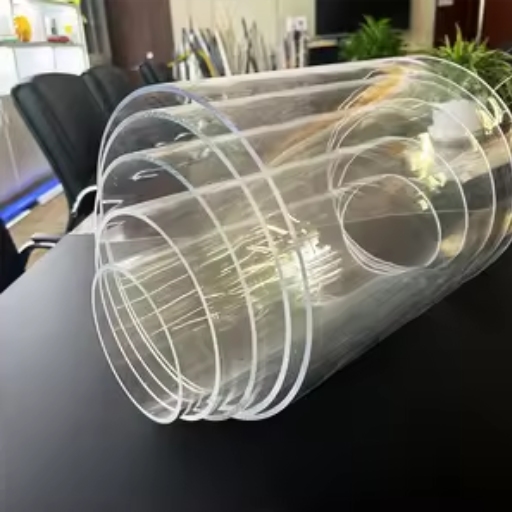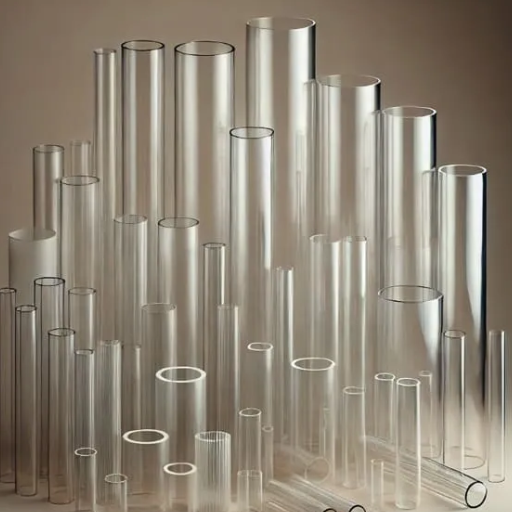

Acrylic sheets come in different varieties, and not all of them are the same. For instance, two popular types of acrylic sheets – extruded acrylic and cell-cast acrylic – appear similar but are actually very different in behavior, aesthetics, price, and most importantly, their use. Whether you are an experienced craftsman, an interested hobbyist, or someone looking for some specific material, delving into the differences between these two acrylates is necessary for choosing the right option. The following sections will provide you with information on the extruded vs. cell-cast acrylic types, their characteristics, potential advantages, and suitable uses. Therefore, it helps you in choosing the correct one for your needs.
Introduction to Acrylic Sheets
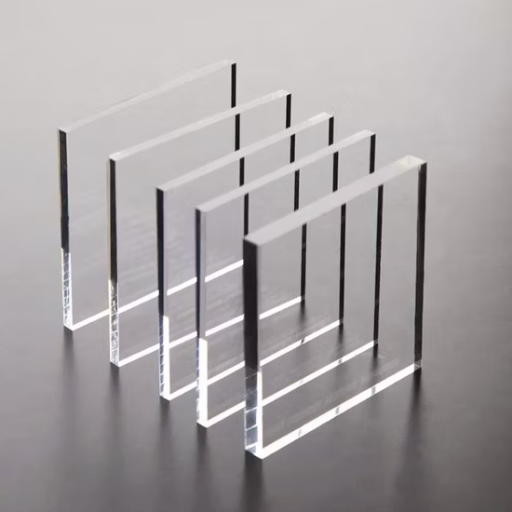
Acrylic panels exhibit several beneficial properties of plastic, including strength, clarity, and light weight, and as such, can be used in many ways. Because of their strength, acrylic sheets are used in place of glass due to their low cost and high strength. These sheets have different thicknesses and dimensions, which can be further fabricated as desired. Acrylic sheets are used in signage, windows, display cases, protective barriers, and so on. Due to such high design flexibility, it is possible to use the components in any professional or do-it-yourself projects.
What is Acrylic?
Acrylic, which is also called polymethyl methacrylate (PMMA), is one of the most popularly used thermoplastic materials for its damage resistance, clear transparent optics, and multipurpose uses. It was invented around the 1930s and began to be used as a transparent material lighter than glass but almost 17 times more impact resistant. Fabrication by forming, cutting, and other methods, such as heating, laser cutting, or other shaping techniques, is what makes acrylic suitable for many purposes. It is used in many applications and structures, such as buildings, houses, cars, and outdoor advertisement posters. It is also used for various devices like aquariums, protection equipment, enclosures, and exhibits in shops and hospitals. Its ability to resist UV rays and weather also provides more flexibility in its use both indoors and outdoors. Owing to its long-lasting nature and recyclability, acrylic is also considered eco-friendly in applications where possible.
Types of Acrylic Sheeting
Acrylic sheeting types include clear, colored, frosted, mirrored, anti-static, non-glare, UV-filtering, abrasion-resistant, and impact-modified varieties.
| Type | Key Feature | Use |
|---|---|---|
| Clear | Transparent | General visibility |
| Colored | Tinted shades | Decorative projects |
| Frosted | Diffused light | Privacy screens |
| Mirrored | Reflective | Decorative mirrors |
| Anti-static | Static-resistant | Electronics covers |
| Non-glare | Reduces glare | Display cases |
| UV-filtering | UV protection | Outdoor signage |
| Abrasion-resist | Scratch-proof | Protective panels |
| Impact-modified | Higher strength | Industrial uses |
Overview of Extruded and Cell-Cast Acrylic
Extruded and cell-cast acrylic stand as two popular types of acrylic materials, each having specific features that serve particular applications. Extruded acrylic is made through a continuous extrusion process and therefore enjoys consistent thickness and lower production costs. This type of acrylic is suited for applications that require an inexpensive and uniform material, including signage, displays, and do-it-yourself projects. It is easier to cut and shape, but tends to scrape and crack more than cell-cast when stressed.
On the flip side, cell-cast acrylic is created in a batch process, resulting in higher molecular density and better optical clarity. This acrylic is resistant to chemicals, scratches, and impacts, making it suitable for more demanding applications such as aquariums, optical lenses, and heavy-duty protective panels. Although pricier than extruded acrylic, it is chosen for select applications owing to its durability and quality.
The buyer will need to decide between extruded or cell-cast by considering factors such as price, durability, clarity, and the application it will have. Both materials are excellent, and when utilized correctly, could serve a wide array of needs.
Manufacturing Processes
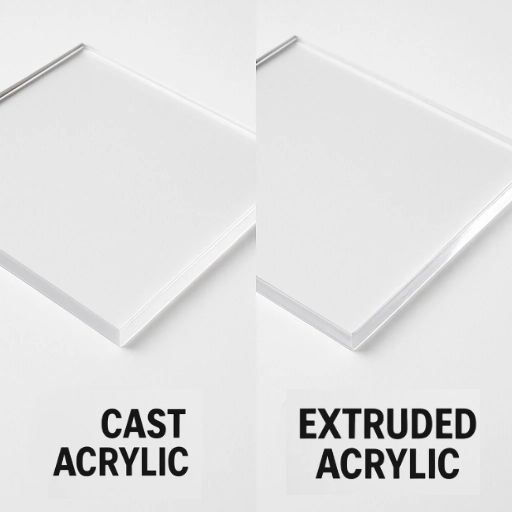
Extrusion Process of Acrylic
Extrusion of acrylic means melting and shaping polymethyl methacrylate (PMMA) into continuous sheets, rods, or tubes. This process starts with raw PMMA resin pellets, which are dropped into the hopper and subjected to gradual heating through various controlled stages within the extruder. The resin is then squeezed into a die of whatever profile is desired, be it flat sheets or other geometric profiles. The extruded material is finally cooled down and cut into the desired sizes.
Extruded acrylic, produced with high efficiency, is therefore less expensive compared to cell-cast acrylic. It can have thicknesses and sizes very closely controlled; thus, extruded acrylic is usually preferred for applications where uniformity is most important. According to recently drawn industry data, precision in thickness tolerances of up to ±5% can be obtained in the extrusion of acrylic sheets.
With this extrusion process, additives may be used to enhance UV, scratch, and impact resistance. The masses of today recycle as much as 30 percent of the waste into the production chain without degrading the quality of the material itself. Furthermore, with innovations in die design, the ability to customize shapes and textures has been expanded, giving extruded acrylic a wider range of applicability in signage, display, and industrial components. The highly scalable production method assures that manufacturing can be streamlined, thereby making extruded acrylic a cheaper and more versatile option for industrial, institutional, and consumer applications.
Cell-Casting Process of Acrylic
Cell casting is traditional and highly controlled for acrylic sheet manufacturing. In contrast to extrusion, casting involves pouring in liquid MMA monomer between two sheets of top-grade glass that serve as the mold. The mold is sealed and polymerized by subjecting it to controlled heating and cooling cycles so that the resulting acrylic is solid. The sheets are then trimmed, quality-checked, and polished to maintain clarity and consistency.
Such acrylic sheets are known for their utmost optical clarity, strength, and resistance to weathering, which includes exposure to UV rays and chemicals. Cell-cast acrylic, therefore, finds use for higher applications such as building aquariums, museum exhibits, and precision optical instruments. While the industry states that cell-cast acrylic has a tolerance of approximately ±0.1 mm in thickness variation, this allows it to be much more dimensionally stable compared to extruded acrylic.
Moreover, the cell-casting process enables the creation of thicker acrylic sheets—several inches in thickness—which the extrusion method cannot achieve. Generally, cell-cast acrylic is chosen for demanding applications because of its sturdiness and aesthetics, despite being a bit more expensive due to its tedious process.
Key Differences in Manufacturing Techniques
The key differences in the manufacturing techniques of extruded and cell-cast acrylic lie in scale, industrial equipment, and production outcomes.
| Key Point | Extruded Acrylic | Cell-Cast Acrylic |
|---|---|---|
| Scale | Large-scale | Small-scale |
| Equipment | Automated | Manual molds |
| Thickness Control | Uniform | Variable |
| Durability | Moderate | High |
| Optical Quality | Consistent | Enhanced |
| Cost Efficiency | High | Lower |
| Production Speed | Fast | Slower |
| Application Suitability | General use | Specialized |
Material Properties Comparison
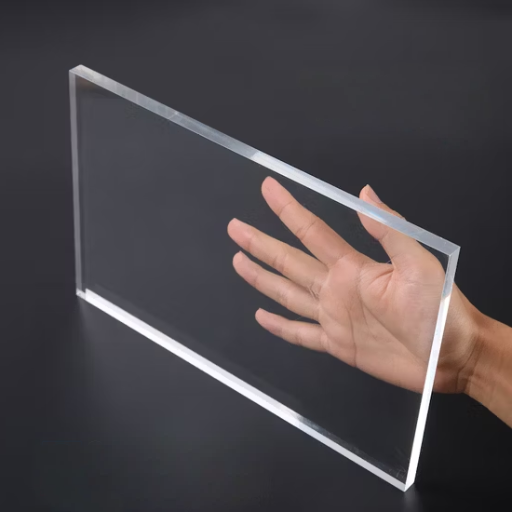
Optical Clarity in Cast vs. Extruded Acrylic
When placing one side against another for optical clarity, several factors distinguish the differences. Cast acrylic usually has better optical clarity due to its manufacturing process, which enables better light transmission and results in a smoother surface finish. This enhanced clarity would classify it as one of the acrylics used where aesthetics are of primary concern, such as in display cases, aquaria, and optical lenses.
Extruded acrylic, on the fi other hand, offers good-to-fair clarity but may present minute distortions or irregularities arising out of the automated process. These industry sources mention that both cast and extruded acrylics have a light transmission rate of around 92%. Still, the surface quality of cast acrylic usually results in very few imperfections that obscure clear vision.
Another critical distinction lies in resistance to optical stress. When machining with extruded acrylic, the material tends to develop stress marks and distortion, whereas cast acrylic provides better optical integrity. Cast acrylic offers a sharper and cleaner finish for applications that involve finer workmanship, like engraving.
Impact Resistance of Cast and Extruded Acrylic
In terms of impact resistance, the factors to consider are the conditions under which each material is employed. Both are durable, and both give glass a run for its money in terms of impact resistance; however, there might be some variance in their performance under stress.
Usually, cast acrylic is more rigid and more resistant to impact than extruded acrylic. Hence, for applications where durability is of utmost priority, it is ideal for use in protective barriers, aquariums, or heavy-duty displays. Cast acrylic can withstand more stress without cracking, making it preferred in cases with increased wear and tear.
On the other hand, extruded acrylic, while it is still impact-resistant, is just not as resistant to different impacts. It would readily develop cracks across its surface or develop cracks when subjected to forceful or prolonged stress. Experimental data show that extruded acrylic is about 10 to 15 percent less impact-resistant compared to cast acrylic. In this scenario, extruded acrylic stands out as a reasonably priced option for applications that place a low impact on the acrylic, such as indoor signage and light enclosure work.
In any case, industry guys say the real impact resistance of acrylic, whether cast or extruded, largely depends on its thickness. For instance, a 3-mm thick cast acrylic sheet could typically resist an impact force up to 24 MPa, which is slightly lower than that of an extruded acrylic sheet. These differences must be well grasped so that a proper material may be chosen for a specific project. Considering the demands of applications, including thickness, stress conditions, and environmental exposure, would help ensure that acrylic materials are most suitable for each location.
Thermal Characteristics of Acrylic Sheets
Acrylic sheets are very well regarded for their thermal properties, while they serve different applications. Acrylic melts at approximately 160°C (320°F) and softens at a lower temperature, around 100°C (212°F), a stage called the glass transition. Technically, acrylic can be thermoformed into different shapes during the transition without any compromise on its inherent strength. Acrylic also has low thermal conductivity and functions as an insulator. This property is beneficial where temperature control is desired or energy efficiency is prioritized. On the other hand, prolonged exposure to very high or fluctuating temperatures may trigger thermal expansion, thus causing stability issues in precision work. By considering and controlling these thermal characteristics, acrylic sheets can be used as a dependable material in engineering, construction, or decorative assignments.
Common Applications
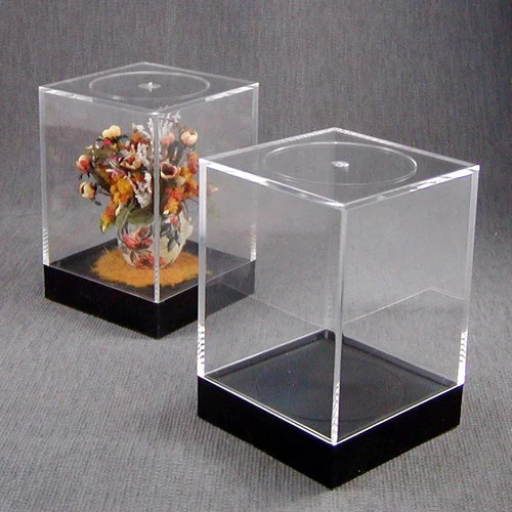
Usage of Extruded Acrylic in Industries
- Signage and Display – Extruded acrylic is generally applied in illuminated signage, point-of-purchase displays, and exhibition panels because it is an extruded material possessing lightweight properties and excellent light transmittance.
- Automotive Industry – Used for vehicle windows, dividing panels, and protective shields, it offers durability and clarity.
- Furniture and Interior Design – Extruded acrylic sheets are used for modern furniture, partitions, and decorative elements because of their versatility and aesthetic appeal.
- Medical Equipment – This material is used to make protective barriers, instrument covers, and parts of medical devices due to its hygienic qualities and ease of cleaning.
- Construction – It is used for skylights, windows, and facades when strength and transparency are required.
Applications of Cell-Cast Acrylic
- Signage and Displays – Cell-cast acrylic from Dow is generally used to make bright, durable signs, point-of-sale displays, and advertising displays due to its great optical clarity and ease of fabrication.
- Aquariums and Terrariums – Due to its very high impact resistance and transparent nature, this material is the best-made material to manufacture aquarium tanks and terrarium enclosures.
- Optical Lenses – They are used in camera lenses, telescope lenses, and other optical devices where utmost purity and scratch resistance are required.
- Automotive Industry – From vehicle or automotive light lenses to the interior elements and windshields for motorcycles and other vehicles, cell-cast acrylic offers a very attractive lightweight option.
- Art and Display Cases – A medium that is often used to frame artworks or create display cases that protect items while providing clarity for viewing.
Comparative Analysis of Applications
Each type of acrylic is suited to different applications based on the physical properties that set them apart. Being cheaper and more consistent in thickness, extruded acrylic finds applications wherever large quantities are needed at a reasonable price, such as in signage, display stands, and plain furniture. Being lightweight and easy to form, it can be used for almost anything.
With high performance, cell cast acrylic shows greater strength, clarity, and chemical resistance. Optical-grade acrylic is the improper choice for aquariums, protective barriers, and artistic display cases where durability and optical requirements are prioritised. In contrast, when compared with extruded acrylic, it is costly yet offers a better visual appearance and longer lifespan, thus justifying its use in top-tier applications.
Therefore, the decision between extruded and cell-cast acrylic depends on the specifics of a project, balancing minimized costs against the highest available standards for desired performance and appearance.
Advantages and Disadvantages
Pros and Cons of Extruded Acrylic
✓ Pros
- Economical: Extruded acrylic tends to be less expensive than cell-cast acrylic and is, therefore, the preferred option for many applications.
- Consistent: Because of its process, the acrylic sheets are produced with uniform thickness and clarity. This is important if the project requires precision.
- Easier Fabrication: Compared to cell-cast acrylic, extruded acrylic is easier to cut, bend, and mold. It is suitable for high-volume production.
- Light in Weight: This property makes it easy to handle during installation, especially for large applications.
✗ Cons
- Reduced Scratch Resistance: Compared to cell-cast acrylic, extruded acrylic is more susceptible to scratches and surface damage.
- Lower Optical Quality: Slight optical distortions could occur due to its production process and might be perceptible for specific applications.
- Less Chemical-Resistant: It becomes susceptible to chemical reactions when exposed to a solvent or harsh cleaning agent.
- Durability Trade-Offs: Also, while being flexible, it may not be as durable as cell-cast acrylic under heavy impact or stress.
Summary: Hence, extruded acrylic offers an excellent compromise for projects requiring the lowest cost and fast manufacturability. However, it may fall short in demanding applications that demand either premium or very durable qualities.
Pros and Cons of Cell-Cast Acrylic
Cell-cast acrylic is a pattern of premium acrylic that offers several distinct advantages and drawbacks over extruded acrylic:
✓ Pros
- Superior Optical Clarity: Cell-cast acrylic offers excellent optical clarity, making it ideal for applications such as display cases, aquariums, and optical instruments.
- Greater Durability: With a higher molecular weight, this type of acrylic withstands impacts and other pressures much better.
- Chemical Resistance: The cell-cast acrylic is usually less reactive with solvents and harsh chemicals; therefore, it is suitable for forging applications that require more rigid stipulations.
- Customization Potential: The way cell-cast is made is quite different from extruded acrylic, which can provide better thickness consistency and is easier to customize in terms of shapes, cuts, and designs.
✗ Cons
- Higher Expense: Cell-cast acrylic is usually much costlier than extruded acrylic, which may not suit projects sensitive to expenses.
- Lower Availability: It may be of limited availability in certain regions or specialized applications due to its complex production method.
- Variations in Production: Minor inconsistencies can occur between batches, which may affect projects focusing on high precision.
Summary: Cell-cast acrylic works well for applications where quality and durability are the top priorities, even if it is a bit more expensive. It is versatile and thus extremely popular for architectural, artistic, and industrial designs.
Choosing Between Cast and Extruded Acrylic
Considerations about the project dictate my choice between cast and extruded acrylic. Given superior optical clarity, strength, or chemical resistance, I would require a cast acrylic. If costs are favorable or the acrylic is easy to fabricate, then perhaps extruded acrylic will be selected. Both have certain advantages, so the better I understand the application, the better I can make a choice.
Reference Sources
-
What is the Difference Between Cast and Extruded Acrylic (Acrylite)
- Provides a detailed explanation of the manufacturing processes and applications of cast and extruded acrylic sheets.
-
Cast vs Extruded Acrylic – 3 Important Differences (American Acrylics)
- Highlights key differences in durability, cost, and applications between cast and extruded acrylic.
-
Comparison of Pyrolysis Properties of Extruded and Cast Polymethyl Methacrylate (ResearchGate)
- An academic study comparing the pyrolysis properties of cast and extruded PMMA, offering insights into their chemical and thermal behaviors.
-
Cast Acrylic vs. Extruded Acrylic: A Comprehensive Comparison (Simply Plastics)
- Discusses the quality, manufacturing scale, and cost differences between the two types of acrylic sheets.
- Top Acrylic Sheet Manufacturers and Suppliers in China
- Guide for Laserschneiden Acryl
Frequently Asked Questions (FAQs)
What is the difference between cast acrylic and extruded acrylic?
The primary difference between cast acrylic and extruded acrylic lies in their methods of manufacture. Cast acrylic is produced using a process that allows for thicker sheets with better optical qualities. In contrast, extruded acrylic is made through an extrusion method that results in a continuous sheet. While extruded acrylic can be less expensive, it may have somewhat less optical clarity and impact resistance. For somewhat high-grade testing requiring high transparency or detailed shapes, cast acrylics are often preferred.
How does the cell casting process affect the quality of cell cast acrylic?
The process of cell-casting involves pouring the liquid acrylic resin into a suitable mold to cure and produce solid sheets. It yields a product that is well known for its optical characteristics, tensile strength, and surface finish. Cast acrylic is quite durable and maintains optical clarity over time, making it preferable for applications that require high transparency.
Are extruded acrylics suitable for outdoor applications?
Extruded acrylics get accepted for outdoor applications since UV radiation does not affect them, and they are weather-resistant. Therewith, extruded acrylics provide good impact resistance but are inferior to cast acrylics in terms of optical clarity and durability. Therefore, cast acrylics are given priority for projects with high transparency or intricate designs exposed to the elements.
What are the optical properties of cast acrylic as compared to extruded acrylic?
Cast acrylic generally possesses better optical clarity and surface finish than extruded acrylic. Because of this, cast acrylic sheets are appropriate for situations where superb visual quality is essential, such as display cases or museum exhibits. In contrast, extruded acrylic is usually used in applications with fewer demands.
What thickness of sheet should I go for to accomplish an acrylic project?
Generally speaking, the thickness of an acrylic sheet chosen depends on the nature of the application itself. Structural applications requiring high-impact resistance call for thick cast acrylic sheets. In less demanding decorative or lightweight applications, thin extruded sheets can be used.
What are some of the benefits of choosing continuous cast acrylic as opposed to extruded acrylic?
Continuous cast acrylic comes with special advantages, including superior optical clarity and a wide range of colors. This kind of acrylic is custom-made for a particular thickness and size, making it suitable for applications where high quality and precision are essential; extruded acrylic, however, might be limited by its thickness range and uniformity.