
What is PEEK? PEEK is a high-performance, semi-crystalline thermoplastic. PEEK is short for polyether ether ketone, and it is used when ordinary engineering plastics can’t reliably handle the combined effects of heat, load, chemicals, wear, or repeated sterilization. It can be molded, machined, extruded, or additively manufactured, but it’s expensive and demanding to process. That makes PEEK a material to justify against a real failure mode, not a default upgrade for every plastic part.
This guide explains what PEEK is, how its thermal limits differ, which grades are available, why processing history matters, and what evidence a buyer should request before approving a grade. If you’re comparing more common transparent plastics instead, Turbo Plastic also has practical guides to what type of plastic acrylic is and whether Plexiglass is polycarbonate.
What is PEEK plastic?
Within the polyaryletherketone, or PAEK, family, PEEK combines repeating aromatic rings with ether and ketone groups. This structure helps the polymer keep useful mechanical properties at temperatures where many commodity plastics soften, creep, or degrade. Because PEEK is a thermoplastic polymer, finished material can be reheated and shaped rather than permanently cross-linked like a thermoset.
In catalog language, PEEK is a high-performance polymer and is sometimes called a “super engineering plastic.” That label is descriptive, not a grade or standard. The physical properties and chemical properties of PEEK still have to be tied to a named product, conditioning method, and test. Commercial PEEK products can differ substantially even when the base polymer name is the same.
The polyether ether ketone chemical structure explains the family name, while polyether ether ketone uses depend on the finished grade and process. Viewed as PEEK in chemistry terms, it is a polymer identity rather than a complete engineering specification. Precision design decisions still require the grade, test method, and service conditions.
The phrase “high performance” needs qualification. Resin name alone doesn’t define a finished part. Crystallinity, molecular weight, fillers, fiber orientation, machining stress, molding conditions, and the test method all influence the result. The mechanical properties of PEEK therefore belong to a specific grade and process. Unfilled injection-molded material, a carbon-fiber-reinforced grade, and a printed carbon-fiber PEEK part shouldn’t inherit the same design values.
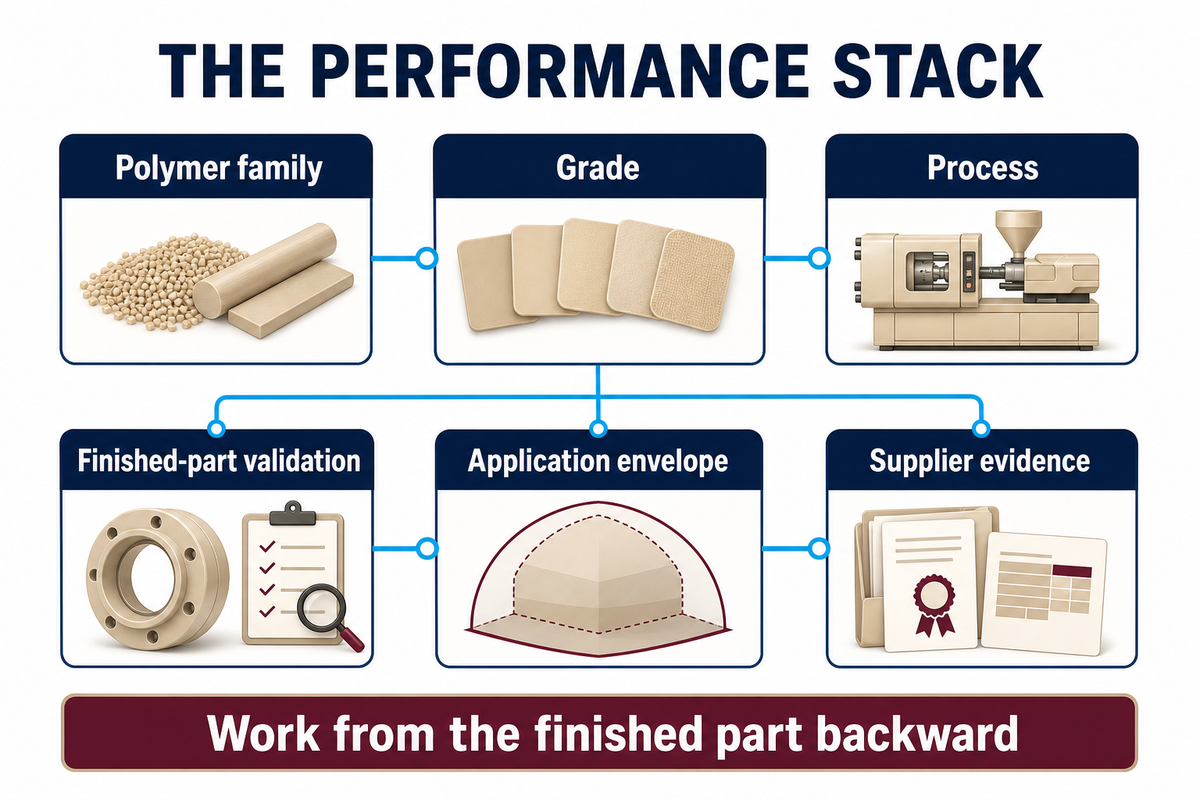
One useful way to understand the material is The Performance Stack:
| Layer | Question it answers | Why it matters |
|---|---|---|
| Polymer family | Is the chemistry suitable for the environment? | Broad heat and chemical resistance begin here. |
| Grade | Is it unfilled, reinforced, bearing-modified, or application-qualified? | Fillers and formulation change stiffness, wear, conductivity, and compliance. |
| Process | Was the part molded, extruded, machined, or printed correctly? | Crystallinity, voids, orientation, and residual stress can change performance. |
| Finished-part validation | Did the actual geometry pass the required test? | A resin datasheet is not a part certificate. |
| Application envelope | Do heat, load, chemicals, and service life justify PEEK together? | Combined requirements help prevent expensive over-specification. |
| Supplier evidence | Are current data and traceability available for the exact grade? | Evidence must follow the quoted formulation, not the family name. |
| Quality controls | Are drying, contamination, and process controls documented? | Process discipline protects crystallinity and part-to-part consistency. |
| Part geometry | Do walls, radii, tolerances, and fiber direction change the risk? | Geometry converts resin behavior into finished-part performance. |
| Validation plan | Have representative parts passed the actual duty cycle? | Testing closes the gap between a datasheet and field service. |
Engineering note: Work from the finished part backward. A polymer name can narrow the search, but the duty cycle, grade, process, geometry, and validation record decide whether the component is fit for service.
How heat-resistant is PEEK?
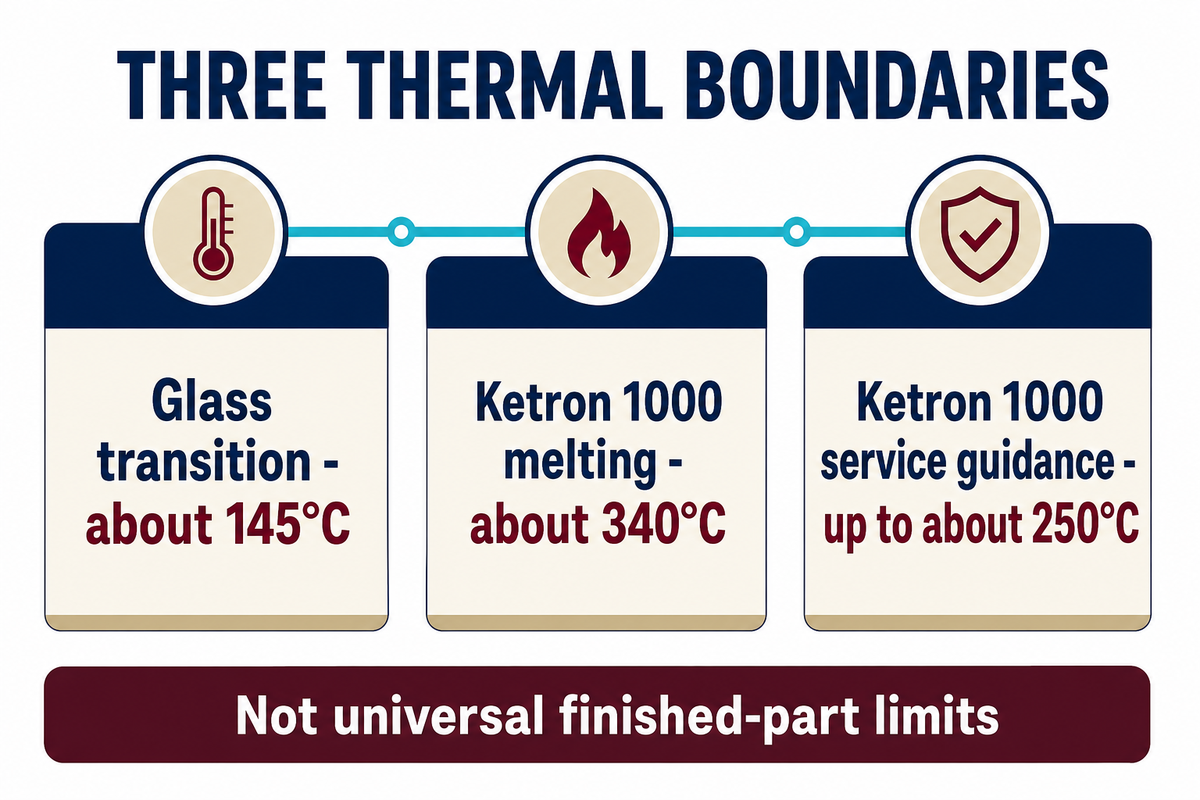
Designers often summarize PEEK with one temperature, but three boundaries answer three different questions. Glass transition marks a change in amorphous-chain mobility. Melting temperature marks loss of the crystalline structure. Continuous-use guidance is a supplier or application-specific judgment made below melting and under stated conditions.
| Thermal boundary | Representative cited value or guidance | What it does not prove |
|---|---|---|
| Glass-transition temperature | About 145°C (293°F), shown as a generic PEEK reference on the cited MCAM page | It does not mean the part suddenly fails at 145°C. |
| Melting temperature | About 340°C (644°F) for Ketron 1000 | It is not a safe continuous operating temperature. |
| Supplier continuous-service guidance | Up to about 250°C (482°F) for the cited Ketron 1000 product | It does not replace load, life, geometry, atmosphere, and safety-factor checks. |
The cited Mitsubishi Chemical Advanced Materials page presents 145°C as a generic PEEK reference, while it explicitly names Ketron 1000 for the 340°C melting temperature and 250°C continuous-service guidance. The same product page lists a typical tensile strength of 115 MPa (about 16,700 psi) for the named Ketron 1000 grade. These are useful reference points, not universal values for every PEEK formulation or finished component. As a separate regulatory boundary, 21 CFR 177.2415 specifies a minimum midpoint glass-transition temperature of 142°C (about 288°F) for the PAEK resins within that rule. The precision of each thermal claim depends on the test and stated scope. For design work, request the exact grade datasheet and long-term data at the actual stress, temperature, and exposure time.
What are the main advantages of PEEK?
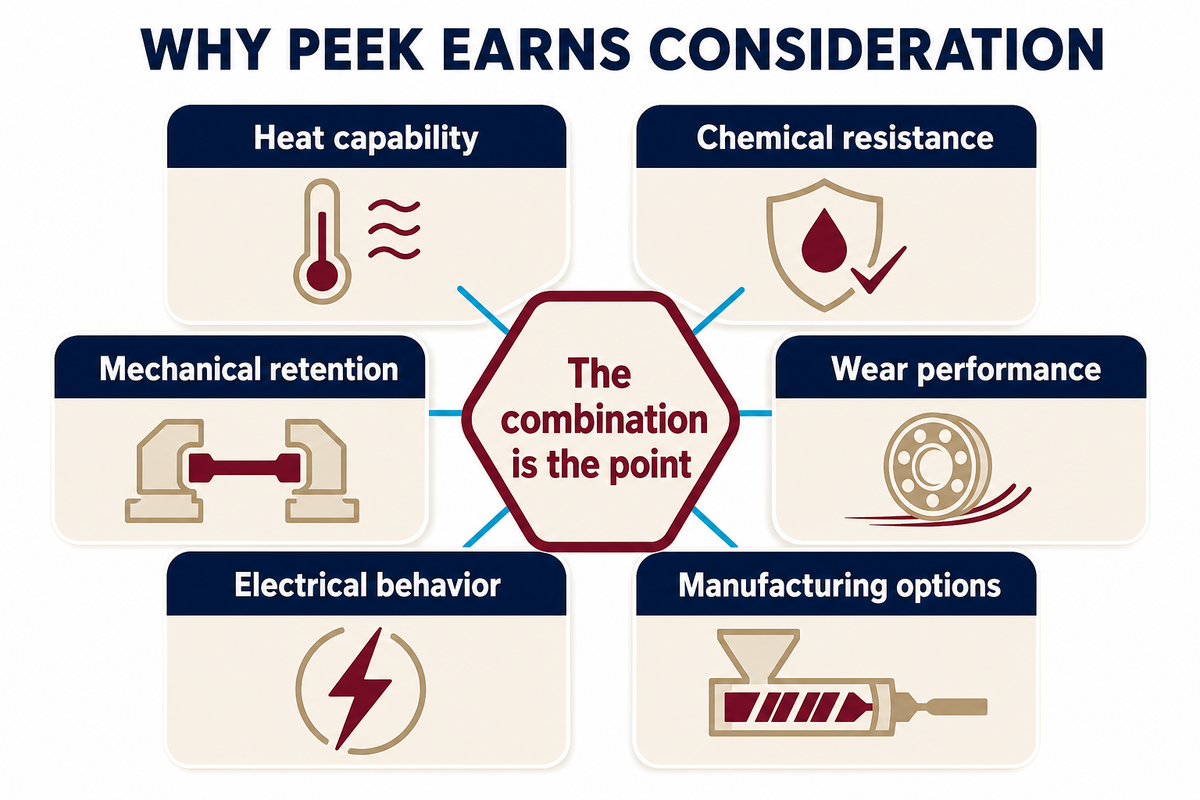
Several overlapping requirements make PEEK compelling in demanding applications. Replacing metal may require lower mass, mechanical strength, and electrical insulation. Seals, bearings, or valve components may need low wear plus chemical stability. Medical or laboratory components may need repeated sterilization, while aerospace or automotive applications may require dimensional stability and flame behavior from a specifically qualified grade.
- Heat capability: selected grades retain useful performance at temperatures beyond common engineering plastics.
- Chemical resistance: PEEK resists many fuels, oils, hydrocarbons, and process chemicals, subject to the actual reagent, concentration, temperature, and time.
- Mechanical retention: it can combine stiffness, fatigue resistance, and creep control under demanding conditions.
- Wear performance: bearing-modified grades can support sliding applications where friction and wear are central design concerns.
- Electrical behavior: unfilled grades can provide insulation over a broad service envelope.
- Manufacturing options: stock shapes can be machined, while suitable grades can also be injection molded, extruded, or printed.
The combination is the point. PEEK offers those features in one material and therefore serves many applications, but if a part needs only one property, a less costly polymer may satisfy the requirement.
What are the disadvantages and failure risks?
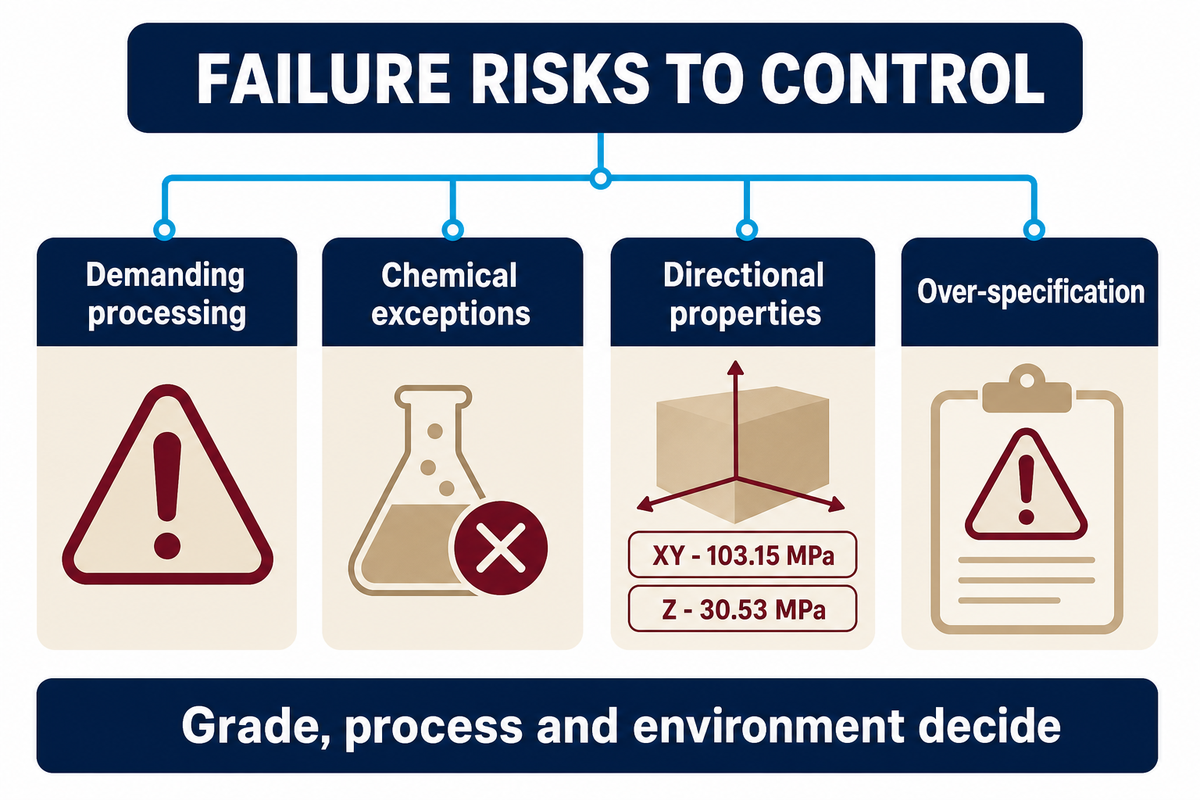
PEEK’s first disadvantage is cost, but the more important risk is paying for the resin while missing the system that makes it work. High processing temperatures, heated tooling, contamination control, drying, and appropriate equipment can make production more demanding than molding a conventional thermoplastic.
Chemical resistance also shouldn’t be treated as absolute. Strong acids and other aggressive media can attack PEEK, while concentration, temperature, mechanical stress, and exposure duration can change the result. Check a grade-specific compatibility source, then test the actual environment when failure matters.
Other limits include anisotropy in reinforced or printed parts, notch sensitivity in some geometries, limited color options, and a higher risk of over-specification. One 2025 study of a material-extrusion carbon-fiber PEEK system illustrates the orientation problem: reported XY tensile strength was 103.15 MPa and modulus was 8.73 GPa, while Z-direction strength was 30.53 MPa and modulus was 1.95 GPa. Z failure was associated with layer delamination. Those numbers describe that material-process-test combination, not every printed PEEK part.
Which PEEK grade and supply form should you choose?
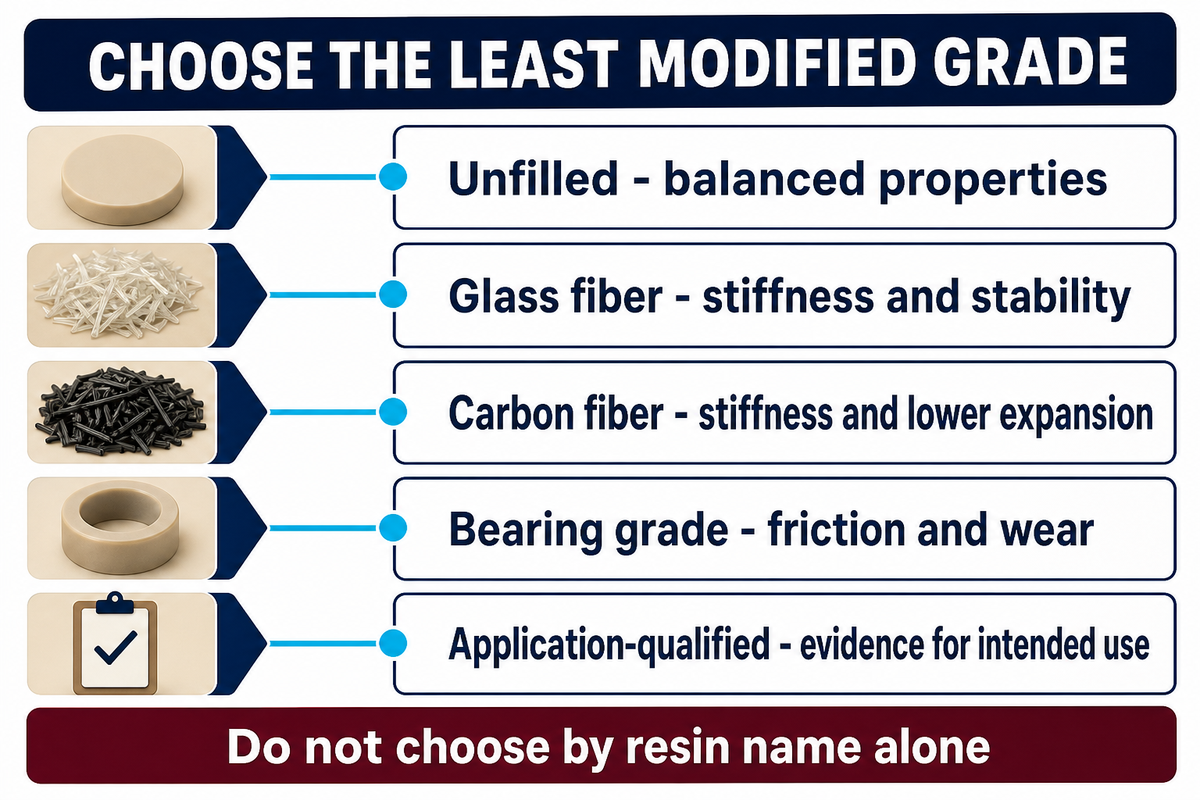
Start with the failure mode, then choose the least modified grade that passes it. Reinforcement can add stiffness or dimensional control but may reduce ductility, change wear against a mating surface, complicate machining, and alter regulatory status. Don’t choose by resin name alone.
| PEEK type or grade family | Typical reason to consider it | Question to resolve before approval |
|---|---|---|
| Unfilled PEEK | Balanced toughness, chemical resistance, insulation, and machinability | Does the exact grade meet the required purity and compliance scope? |
| Glass-fiber reinforced | Higher stiffness and dimensional stability | Will fiber orientation or mating-surface wear affect the part? |
| Carbon-fiber reinforced | Higher stiffness, lower thermal expansion, or conductivity | Are anisotropy and electrical behavior acceptable? |
| Bearing or wear grade | Lower friction and controlled wear in moving assemblies | Is the formulation compatible with the fluid, counterface, pressure, and speed? |
| Application-qualified grade | Food-contact, medical, aerospace, or other controlled use | Does the certificate cover this grade, color, filler, process, and intended use? |
| High-purity grade | Lower ionic contamination or outgassing for controlled equipment | Which test method and lot certificate prove the required purity? |
| Static-dissipative grade | Controlled electrical behavior around sensitive devices | Is the resistance range stable across geometry and service conditions? |
| Film grade | Thin insulation, diaphragms, or barrier components | Do thickness, pinhole, flex, and dielectric tests match the application? |
| Implant-intended unfilled grade | Device development under a defined quality and regulatory system | Does every formulation, process, and device claim remain inside the evidence scope? |
The forms of PEEK matter too. Pellets support molding and extrusion; rods, plates, and tubes support subtractive machining; PEEK film serves thin electrical or barrier uses; and powder or filament serves specific additive processes. Buyers comparing commercial availability can review PEEK forms and parts from BWPEEK as one supplier example, then independently verify grade identity, traceability, inspection records, and the specifications that apply to their purchase.
Common types of PEEK include unfilled, glass fiber reinforced PEEK, carbon-fiber-reinforced, and wear-modified formulations. The grades of PEEK aren’t interchangeable: a filler that improves stiffness can change abrasion, electrical behavior, processing, and compliance evidence.
How is PEEK processed?
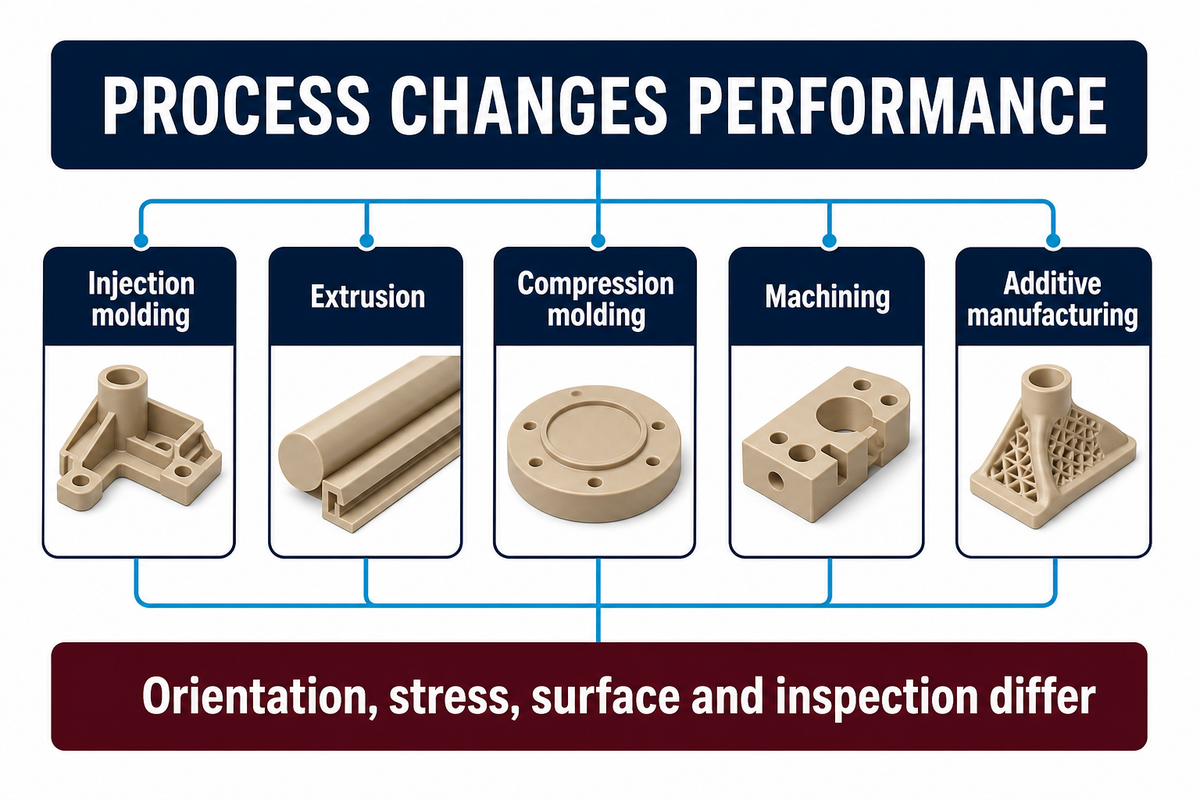
Processors can injection mold, extrude, compression mold, machine, or additively manufacture PEEK. The correct route depends on annual volume, geometry, tolerance, fiber orientation, surface finish, certification needs, and tooling economics. Each route creates different orientation, stress, surface, and inspection constraints.
For injection molding, supplier guidance for Victrex PEEK grades illustrates the demanding process window: drying around 150–160°C (302–320°F) for 2–3 hours to reach less than 0.02% moisture, grade-dependent barrel settings in the 350–400°C (662–752°F) range, and mold temperatures around 170–200°C (338–392°F). These are manufacturer-specific starting conditions, not a recipe for every machine and grade. Residence time, shear, gate design, contamination, and controlled cooling also affect the finished part.
Machining avoids mold cost and is often practical for prototypes or lower volumes, but it introduces its own controls. Stock-shape quality, annealing history, heat generation, fixturing, tool sharpness, and stress-relief strategy can influence flatness and tolerance. Additive manufacturing opens complex geometry, yet layer bonding and directional properties must be validated rather than borrowed from an injection-molded datasheet.
PEEK vs PTFE, PPS, PEI, and polycarbonate: a first-pass screen
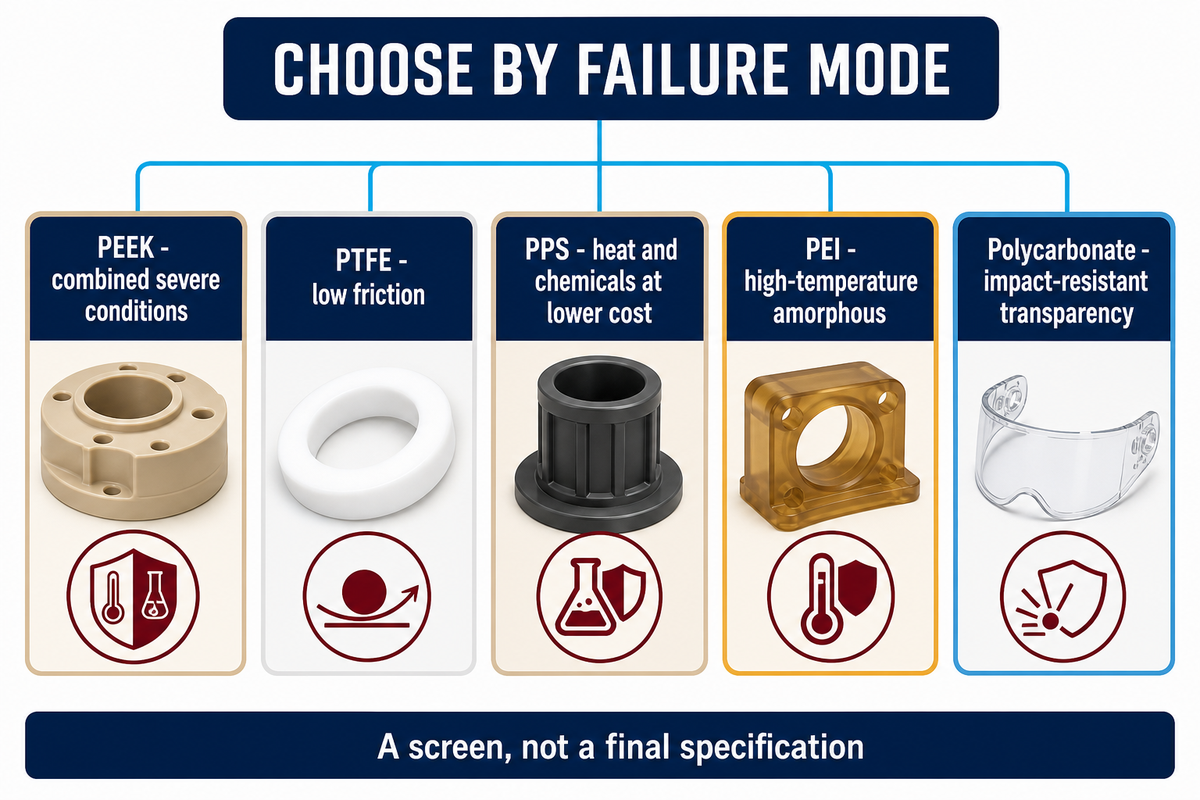
No short comparison can choose a material safely, but Choose by Failure Mode is a useful first-pass screen. The key differences and applications begin with what will make the part unacceptable. Define that failure, then eliminate candidates that can’t meet the condition.
| If the dominant need is… | First material to investigate | Why this is only a screen |
|---|---|---|
| Combined high heat, load retention, wear, and chemical exposure | PEEK | The exact grade and process still control performance. |
| Very low friction or broad chemical inertness with modest structural load | PTFE | Creep, wear grade, and dimensional stability need separate checks. |
| Heat and chemical resistance at a lower material-cost target | PPS | Toughness, temperature, and compliance requirements may change the result. |
| High-temperature amorphous plastic with easier visual inspection | PEI | Chemical exposure and long-term stress can rule it out. |
| Impact-resistant transparent guarding | Polycarbonate | It serves a different thermal and chemical envelope from PEEK. |
| Transparent display, signage, or optical fabrication | Clear acrylic sheet | Clarity and fabrication, rather than extreme heat, drive the choice. |
For transparent fabrication projects, see Turbo Plastic’s acrylic sheet options. For a PEEK component, use this table only to form a shortlist; run the actual load, environment, lifetime, manufacturability, and compliance review before specifying a resin.
Where is PEEK used?
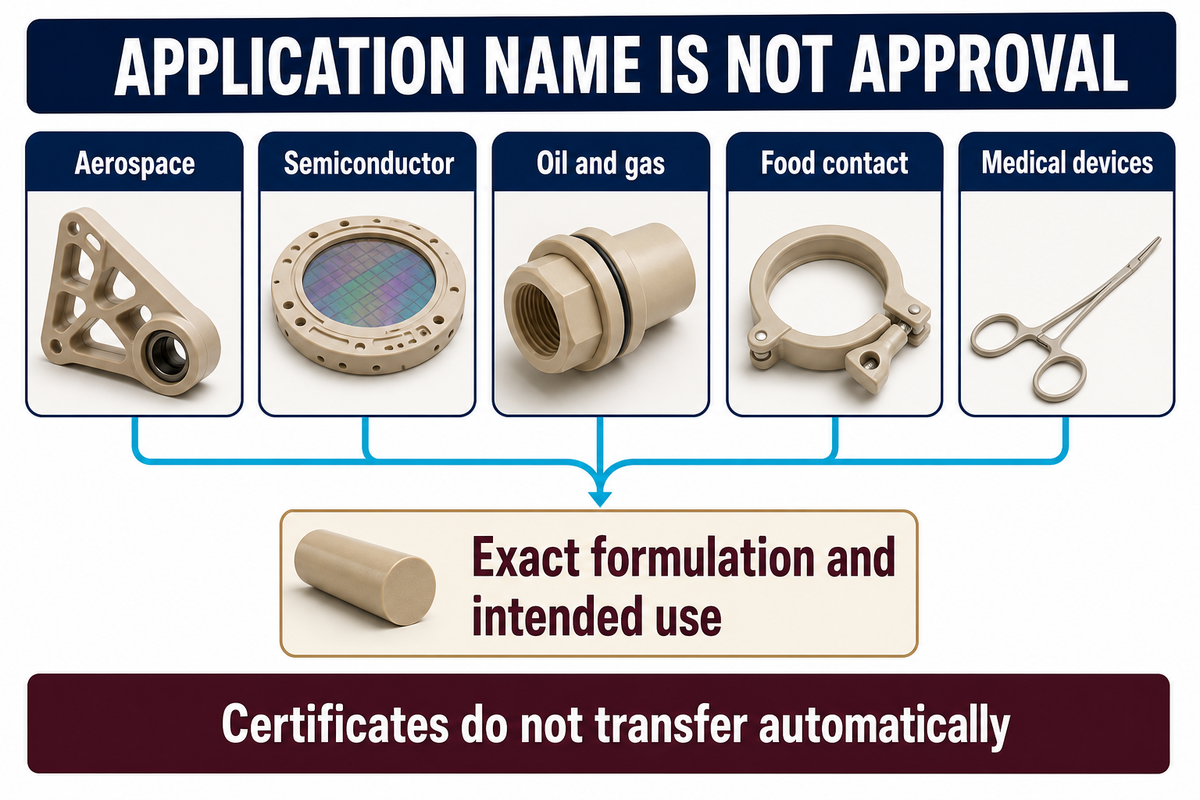
The wide range of applications for PEEK includes aerospace connectors and bushings, semiconductor and electronics fixtures, oil-and-gas seals and backup rings, pumps and valves, analytical instruments, food-processing components made from qualifying grades, and selected medical devices made under application-specific controls. PEEK is also widely used for engineering applications where more than one severe condition overlaps. These industries value different parts of the performance stack, so the industry name alone doesn’t make PEEK the material of choice.
Certification evidence must follow the exact formulation and intended use. Industry labels such as medical, aerospace, or food processing don’t transfer a certificate from one resin or finished part to another.
Medical claims require particular care. Statements that PEEK is “widely used in medical devices” do not qualify an individual resin or device. Research into PEEK additive manufacturing, surface modification, and implant applications is active, but a research paper does not approve a device. The U.S. Food and Drug Administration’s recognized ASTM F2026-23 scope concerns virgin PEEK polymers in specified implant forms and explicitly excludes filled materials, colorants, additives, blends, and reclaimed materials. Device evaluation still depends on intended use, manufacturing, biological risk, and the applicable submission pathway.
Food-contact wording is also conditional. 21 CFR 177.2415 defines qualifying PAEK resins and conditions for repeated-use food-contact articles. It doesn’t make every item advertised as PEEK automatically compliant. Request documentation for the exact resin, additives, color, manufacturing route, and intended food-contact conditions.
The 6-Gate PEEK Spec Check
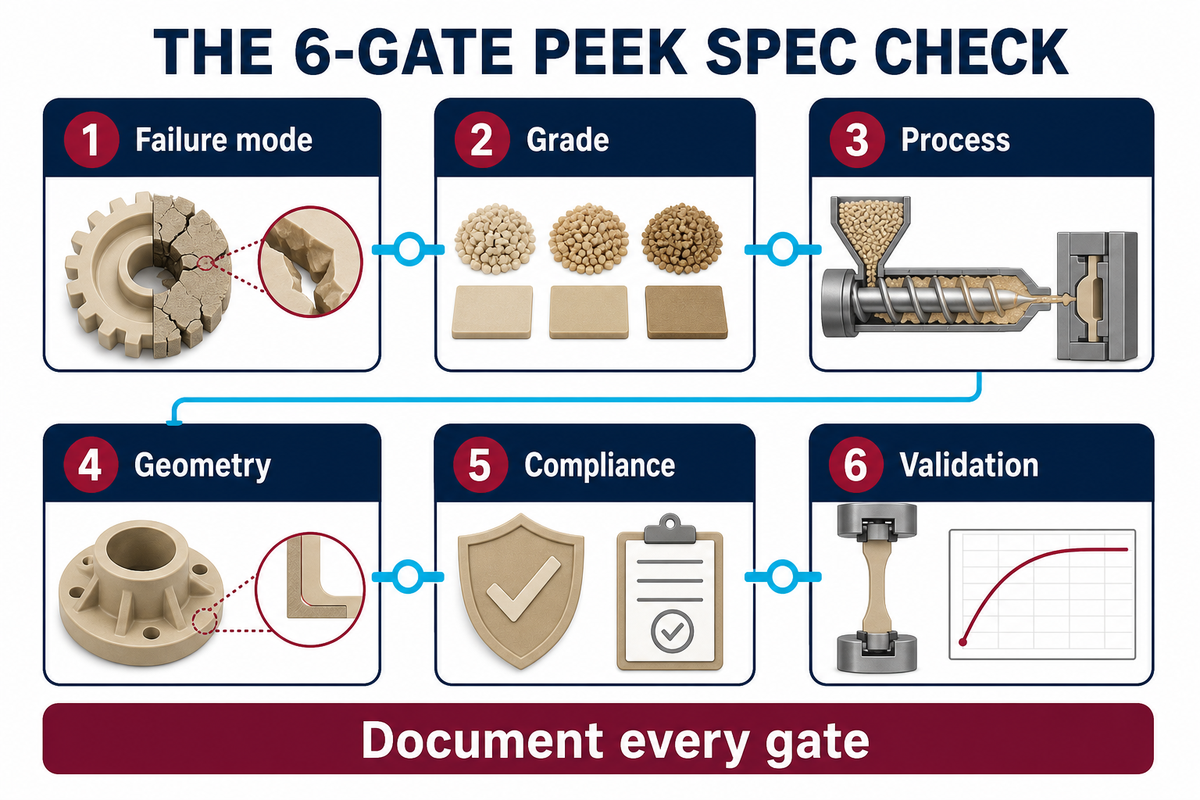
Before approving PEEK, make each gate produce a document, test result, or explicit engineering decision. The generic material name isn’t enough.
| Gate | Decision question | Minimum evidence |
|---|---|---|
| 1. Failure mode | What combination of heat, stress, wear, fluid, and lifetime can cause failure? | Service envelope with normal, peak, and upset conditions |
| 2. Grade | Which exact unfilled or modified formulation meets that envelope? | Current grade datasheet and change-control identity |
| 3. Process | Can the chosen molding, machining, extrusion, or printing route preserve the required properties? | Qualified process window and traceable lot records |
| 4. Geometry | Do wall thickness, radii, fiber direction, tolerances, and mating surfaces create a new risk? | Design review plus representative part inspection |
| 5. Compliance | Does the evidence cover the exact grade, additives, process, and intended use? | Applicable declarations, standards, and test reports |
| 6. Validation | Did the finished part survive the real duty cycle with a suitable margin? | Part-level test plan, acceptance criteria, and results |
This sequence also prevents over-specification. If the first gate shows that the part sees moderate temperature, low load, and a benign fluid, a lower-cost engineering plastic may be the better decision. If several severe conditions overlap, PEEK’s price may be justified by longer life, lower downtime, or the removal of secondary insulation and corrosion controls. Material experts should still challenge the shortlist with the finished-part duty cycle rather than a generic property chart.
What is changing in PEEK technology?
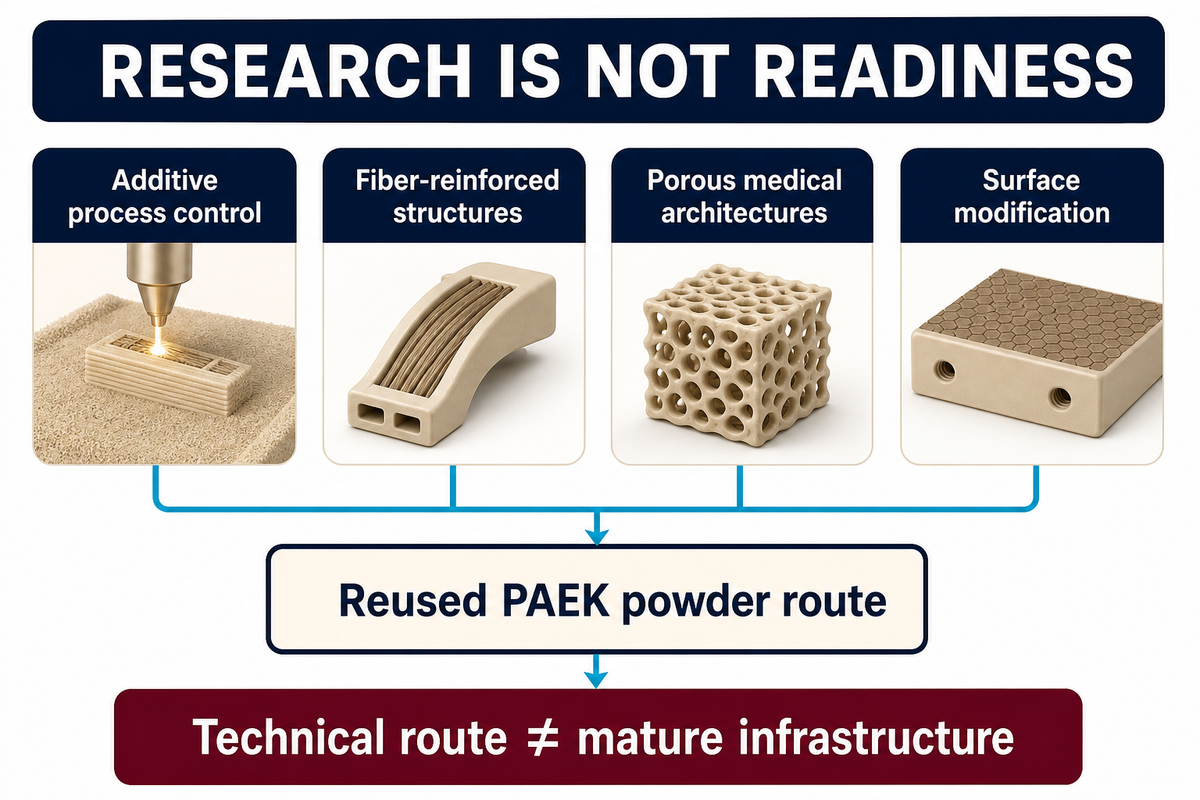
Current research is expanding precision additive-manufacturing process control, fiber-reinforced structures, porous medical architectures, and surface modification. These developments increase design freedom, but they also increase the need for process-specific validation because printed orientation, porosity, thermal history, and post-processing can alter performance.
Recycling work should be described with equal care. Published European patent application EP2788170A1 describes a route involving reused PAEK-family powder in laser sintering. That’s evidence of a technical route, not proof of a mature, general-purpose recycling infrastructure for every PEEK grade and regulated application.
Frequently asked questions about PEEK
What is PEEK used for?
Typical uses include demanding components such as seals, bushings, valve parts, electrical connectors, semiconductor fixtures, aerospace hardware, analytical-instrument parts, and selected food-contact or medical components. The common pattern isn’t a single industry; it’s an operating envelope where heat, load, chemicals, wear, sterilization, or dimensional stability overlap.
The exact grade, process, and finished-part validation still determine whether PEEK is suitable.
Is PEEK a hard plastic?
PEEK is a stiff, strong engineering thermoplastic, but “hard” is too broad for design. Hardness, modulus, impact response, wear, and creep describe different behaviors. Unfilled material won’t behave like a glass-filled, carbon-filled, or bearing-modified grade, and a printed part may be much weaker between layers.
Use the exact grade datasheet and a relevant test method instead of relying on the word “hard.”
Is PEEK the same as PTFE?
No. PEEK and PTFE are different polymer families. PTFE is often considered for very low friction and broad chemical inertness, while PEEK is often considered when structural stiffness, load retention, wear resistance, and high-temperature performance must coexist. Neither is universally better.
Pressure, speed, counterface, creep, chemical exposure, temperature, geometry, and compliance requirements determine which material and grade deserve testing.
Why is PEEK so expensive?
Specialized chemistry, high-temperature production, demanding processing equipment, traceability, and qualification all add cost. The resin may also require hotter barrels and molds, controlled drying, suitable tooling, and processors familiar with crystallinity and contamination risks. Compare the accepted-part price with service life, inspection, maintenance, downtime, replacement labor, and the consequence of failure. A cheaper resin that fails early may create the higher system cost, while an over-specified PEEK part can waste budget without improving reliability. Specification discipline protects that added investment.
Is PEEK FDA approved?
“FDA approved PEEK” is usually an over-broad phrase. U.S. rules and recognized standards apply to defined resin compositions, article conditions, implant forms, devices, or intended uses. Compliance or qualification evidence for one grade does not automatically transfer to a filled formulation or finished device.
Ask for evidence that matches the exact resin, additives, process, article, and application.
Can PEEK be recycled?
Because PEEK is a thermoplastic, technical routes for recovering or reprocessing PAEK-family material exist. However, contamination, molecular degradation, traceability, mixed grades, property retention, and regulated-use restrictions complicate reuse. Laboratory results or patents aren’t evidence that a broad commercial recycling stream is mature.
Treat recycled-content claims as grade- and process-specific and validate the resulting material.
What is PEEK made of?
PEEK’s backbone consists of repeating aromatic units connected by ether and ketone linkages. Commercial grades may contain glass fiber, carbon fiber, colorants, or other modifiers. The exact formulation still matters because the polymer name alone does not identify fillers, colorants, or qualification status.
References and sources
- Electronic Code of Federal Regulations, 21 CFR 177.2415: Polyaryletherketone resins
- U.S. Food and Drug Administration recognition record for ASTM F2026-23
- Mitsubishi Chemical Advanced Materials: Ketron PEEK material properties
- Victrex: Five factors to consider when molding PEEK
- Peer-reviewed study of process parameters and anisotropy in material-extrusion carbon-fiber PEEK
- 2025 peer-reviewed review of biomedical PEEK additive manufacturing and surface modification
- Published European patent application EP2788170A1 on a PAEK powder reuse route for laser sintering