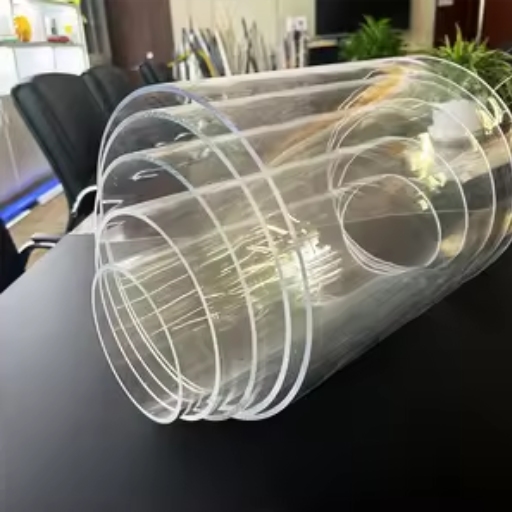

Research labs are areas that are controlled with high regard to level of accuracy and dependability. However, there is one problem that is common with the laboratory and this is the issue of glass test tubes breaking the slightest of touches. The dangers of broken test tubes and glass are that it puts researchers in danger by making them in contact with the more harmful materials that can easily get them infected during their research. This cost businesses a lot of time over unexpected delays as well as possible contamination of critical studies. This is where the glass substitute pills come in. This article would discuss how these new and strong replacements are elevating the research space, offering unmatched support, safety and durability equally. Stay tuned and let’s talk about why unbreakable laboratory test tubes are highly sought after additions to contemporary laboratories and other purposes and at the same time maximise the safety of the user.
Introduction to Glass and Plastic Lab Tubes

The Selection of Appropriate Tube Material
In selecting a laboratory plasticware such as a tube, there are a few essential points which should be taken into consideration. There are glass tubes which have earned their recognition on account of their ability to resist chemicals and clear material properties which makes them ideal for use when in the presence of strong acids, bases and solvents. It is worth noting that plastics tubes are popular because of their plasticity, lightweight and low cost. The development of materials has made both glass and plastic tubes improved materials together with technologies that include the improved borosilicate glass and the advanced polymers which have better resistance to thermal and chemical. This goes as far as checking the purpose of the tube and some conditions its likely to be in like temperature extremes, whether its oily or corrosive materials as well as the likelihood of handling and spilling and hence shattering and selecting a beat material for the intended work.
Glass and Plastic Tubes in Lab Settings
Glass and plastic tubes are two types of materials with different natures that play important roles within laboratories depending on the needs of a specific experiment. Glass, specifically the one that is made from borosilicate, is highly appreciated for its ability to withstand heat making it most convenient for one doing high heat procedures like for the purpose of autoclaving and sterilization by applying heat again. Their chemical resistance is advanced and therefore the tubes are also useful for experiments where one would not like the processes to be hidden behind solids.
An alternative material on the market is plastic tubes which have come because they tend to be lighter, unbreakable and are even easy to manipulate. Relatively expensive polymers, such as polypropylene and polycarbonate, are commonly used in the construction of such tubes because the materials are impact resistant and resistant to the majority of chemical exposure. The potential of the tubes to break is high and hence they are quite effective in the freezing of compounds or due to situations that a break is considered dangerous.
Making a choice between glass and plastic tubes depends on the nature of particular samples, heating requirements, and whether the tubes are to be used only once or several times. Yet, every material has its purpose in the laboratory and choosing apposite material is necessary for ensuring safety and viability of the experiments.
The Advantages of Unbreakable Materials for Laboratory Safety Purposes
The use of shatterproof materials in the lab environment is slowly making accidents caused by destroyed equipment a thing of the past. Thanks to these types of technologies, there are almost no chances of a critical experiment being destroyed following an unprepared breakage, and that the researcher as well as the sample are shielded from the incident. All these issues give the assertion that polycarbonate or acrylic in comparison to glass is not likely to break under high impact unlike traditional glasses. It is also crucial because they do not break into sharp pieces in contrast to the glasses which are most likely to cause injuries and contamination. In addition, these materials exhibit a high resistance to chemicals and extreme temperatures, as a result, they are used in almost all laboratory settings. Glass stability is no cause for concern, with safer work environments, one is able to uphold the precision and trust required for any scientific growth by using shatterproof equipment in the labs.
Comparative Analysis: Glass vs. Plastic Test Tubes

Durability and Resistance to Breaking or Deformation
When durability or resistivity to breaking or deformation is being compared between plastics and glass as test tubes, considering suitable use of the test tubes and these two materials, plastics win convincingly. It is so because it is a plastic that possesses an inherent flexibility and impact strength hence not prone to breakage when it’s accidentally dropped unlike glass. This prevents sharp fragments, which may be a safety hazard in the laboratory. And then again, glassware is more inflexible and inclined more on breaking than being able to withstand boiling temperatures and some corrosive acids. As such, test tubes made of a type of plastic can be more useful in case breaking or cracking chances have to be minimized, this is especially so in an environment of a lot of movement of the equipment.
Testing Performance and Determination of Chemical Compatibility
The selection of material for test tubes is crucial for the test outcome determination in the evaluation of the product’s chemical compatibility with another. Plastic test tubes can withstand reaction with multiple chemicals such as acidic and bases rendering them useful for many biological and chemical purposes. Nevertheless, some types of plastics such as polystyrene or polyethylene may degrade thereby increasing in volume with sone organic solvents. On the contrary, glass test tubes can be applied to a wider spectrum of organic decompositions than mineral ones, such as aggressive solvents. It is this particular characteristic that makes them the most recommended choice in cases where extremely reactive or corrosive chemicals are involved.
Testing process is one of their important criteria for taking decisions. Testing can be performed in test tube made either from glass or plastic materials. Glass is a very popular choice for many people in the laboratory industry as it offers different features such as neutrality and its effects on the contained content as the surface is clean. This means any sample is not adulterated and thus it makes the collection of data more precise and accurate as the surface is inert, perfect for any good and conductivity study. Conversely, although some plastic test tubes may include more impurities and electric charge than the glass test tubes, the use of reinforced plastics has increased the purity of the test tubes significantly, hence allowing its use in many such applications that require accurate testing. In cases when the student has to choose between the two materials (plastic and glass) for the making of the test tube, it is usually for specific experiments, which means that one should consider some aspects of the experiment, such as the resistance of the material to attack, as well as the practical aspects arising from the use of the vessel like its ease in handling.
Affordability of Plastic Tubes
Plastic test tubes have gained much popularity for their wallets friendly price in a test area, more so in a high-throughput lab. This is because, the cost of producing these tubes is much lesser compared to that of the glass tubes hence its use for more batches while using less expenses thus becomes the most preferable for such institutions with those constraints. Also, plastic test tubes are disposed after use hence if had stacks of dirty tubes you will have to clean them and sterilize them which implies cost in terms of human and resource expenditure. The recent advances in polymer technology have also increased the endurance and solvent resistance of the tubes making a cost effective good alternative for various experimental scenarios.
Types of Plastic Tubes for Laboratory Use

Polystyrene and Its Applications in Testing
Users have cited the three characteristics that make Polystyrene so dominated in labs: clearness, simplicity of the design process and operations and this list could obviously be continued. Polystyrene, which is commonly synthesized into clear objects is suitable for optical measurements and their analyses providing a possibility to researchers to see the processes or changes without hindrances. Moreover Polystyrene has also been found to lack problems with chemistry under quite a few parameters, much the case of some advanced solvents and reagents as a consequence. It is often manufactured into plates, petri dishes, and sample cups so as to cater industrial on a largely high scale operations, particularly those that require automation. It’s imperative that cheapness, in that respect, be put into perspective and possible issues, like suitability for certain equipment and organic solvents, heat robustness, which are in fact critical rendering performance, have to be evaluated with regard to other materials, if necessary.
How to Assess the Size of Your Tests that Fits the Purpose
Determination of the correct size of the raw materials used for experimentation is paramount to accurate and replicable results. Applicaion of such factors as the volume required, compatibility of the sizes with specific equipment, and the quality of the necessary measurements gives clarity. For instance, where small sizes might be focused on, in cases of micro-scale experiments requiring a high level of accuracy and less amount of reagents, the most favorable sizes would be the least sizes for very minimal reactions or initial pilot abilities. Understanding which size to go to its experimental direction and what type to choose generally more than enough size of the material helps to address challenges resisting the materials selected, in this way optimization of efficiency and validity of the study scholars works best.
First Things First: Making Your Own Custom Plastic Tubes
In my own personal way of making these tubes, I specifically conduct a search from a catalog and decide on the type of plastic that is best for the situation being designed or this would require me to build them. As an example, with strength and flexibility, I would likely consider either PVC or even polyethylene. These are common hence cheap and friendly for DIY home improvements. I would also make sure that I have the basic equipment I will need to carry out the activity which includes a heat gun, moulds and clamps to style and hold the plastic in place. Determining how intricate the device will be, I might order a slight tabletop extruder in addition to the basic tools, which will help in forming a specific length or shape of the plastic.
First, I will cut the plastic into the required dimensions with a fine tooth saw or a sharp utility knife. Then, I would dampen the plastic by subjecting it to a controlled heated source such as a heat gun that produces consistent levels of heat, to avoid overheating it. Subsequently, I will attempt to bend this warmed sheet to conform to a desired shape or perform this task using ‘clamps’ while fitting it to the circular object that the plastic is essentially held in ensuring the tube remains even. This allows the plastic to cool and retain its shape, consequently allowing me to remove the pliable object from the block. For a more perfected effect, I refine the surface with a file or a sand paper eliminating any raw or rough parts. Should it be necessary, I can also extend the details on a tube, and thereby color the tube with safe plastics, or even attach various connectors, for example, into the tube for applications when irrigation systems or construction of laboratory installations are needed. This process is very flexible, and in about half the cases, several attempts were necessary to achieve the creation of such tubes to CAR them for different purposes. This way of work is most efficient and eco-friendly because it allows for utilizing waste plastic with the help of simple tools.
Handling and Maintenance of Plastic Test Tubes

Best Practices for Cleaning and Sterilizing
If a plastic test tube is expected to serve its purpose over a long time, it justifies cleaning and sterilization. Simply wash the test tubes in warm water as soon as possible after use to prevent the accumulation of residues. In order to clean the glassware used, low-level detergent and light brush cleaning is acceptable, abrasive cleaning tools that can cause scratches or damage to plastic should be avoided. For sterilising reasons, plastic test tubes can be immersed in a diluted solution of bleach (usually that which is fit for surface disinfection) or use a chemical disinfectant that is safe for plastics. In a different light, some plastic test tubes are able to be put in autoclave systems—that material should be checked whether it can be subjected to elevated temperatures. Such test tubes should be rinsed with distilled water to remove any cleaning solution upon cleaning and sterilization, and then be dried at room temperature. The procedures are all followed to ensure that basic hygenic practices are upheld while the plastic part is not absolved of the responsibility of maintaining itself, for additional usage.
Tips On How To Maintain Longevity of Plastic Test Tubes
The aim of prolonging the service life of plastic test tubes and storage, in particular, requires proper conditions of storage. When it comes to storage facilities, make sure that the test tubes are stored away from bright lights in a cool and dry place, to avoid exposure of the plastic to harmful UV rays until it decays. To further caution against contamination, carry the test tubes in transported clean containers or special racks for laboratory equipments. Arrange the test tubes in groups to reduce movement, or indexes of, getting mixed up with the wrong group/tests. Moreover, if you are using any storage cabinets, ensure a range of desiccant be attended to them to check the moisture levels from getting out of control. These simple practices help to keep your plastic test tubes for a longer time while they are still in working condition/storage.
Common Mistakes in Using Plastic Test Tubes
In handling plastic test tubes, there are a number of lapses that can greatly water down the usefulness and durability. One of these frequently encountered downsides presents itself as the component of the tests tubes being exposed to high temperatures for an extended period which can shrink or even destroy the tubes and their structural strength as well. The exposure to high temperature for a long period of time may also alter/mechanically oppress the test be accepted. Cleaning test tubes immediately after removing the samples is also the common mistake that leads to high linear density test tubes being overly loaded, or racks being unevenly stacked, or the hot upper sphere weighing on the lower one and producing mechanical stress weakening the whole setup. Moreover, many people overlook inspecting test tubes with their eyes to see if there are any defects, cracks, etc., and instead, engage in the actual experiment, which can harm the results due to contamination or test distortion. Always keeping track of these widely known oversights will help you in the successful operation and preservation of modified help plastic test tubes before it gets damaged.
Future Trends in Lab Tube Materials

Revolutionizing the Game with Unbreakable Tubing Technologies
The upsurge in the development of unbreakable tubing technologies has taken an exponential curve over the last decade as of the demand to look for safer, stable, and long-lasting material in laboratory settings. Among the most outstanding of all is the development of composites that utilize plastic materials that are quite stiff as well as complex and further, use them with additives that are uniquely responsible for the improvement of flexibility and impact strength as well as resistance to chemicals. Thus, these are the materials capable of withstanding chemicals and temperature fluctuations to an extreme extent, and yet again retains its original design without shearing or loss of transparency.
To integrate nanotechnology into the tubes during its manufacturing process can also be considered as a breakthrough in the development of tubes. Factory workers achieved enhanced wear resistance and decreased diffusion in the tubes by depositing a cluster of nanoparticles in the materials of the tubes. It helps to increase the life of the tube. Also, tubes can also suddenly explode under extreme conditions, requiring the fabrication of crash-resistant till remains virtually unbreakable can be made through 3D printing and additive manufacturing technologies which are employed to synthesize such tubes whose designs are adaptable to the particular experiments’ needs with very precise and environmentally sustainable attainments. These types of inventions are changing the way how people in laboratory perform their tasks and with reduced number of hazards and wastes and more use in various laboratory applications, provides optimized performance. It is an impressing part of this revolution in the field of lab equipments because it has allowed for more research and development into today’s lab equipments that go beyond the quest of durability and improved functioning.
Maintaining Sustainability in Laboratory Instruments and Appliances
The need for equipment to be sustainable has become a major issue within the present times and especially in the evolution of laboratory equipment, as manufacturers witness eco-designs, and eco-friendly materials coming into use more than before, for the protection of the environment. Laboratories can make a commitment to reduce waste by making sure that they primarily use reuse and recycle materials. Furthermore, the direction of the production processes development has changed, resulting in the creation of quality products which have a long life hence are not substituted frequently. This has also led to the equipment life span and the costs associated with replacements to go down. In reaction, it has been the intent that such changes are also able to make it possible for the enhancement of scientific research while increasing sustainability.
The Evolution of Lab Tubes and What to Expect in The Near Future
How I see it, sustainability is in the minds of all tubes’ producing companies, along with precision and possibility. Since traditional plastics are no longer so high-performing or ecologically friendly, the eco-friendly bio-degradable and bio recyclable tubes are likely to be developed. Multiple tube manufacturers are in the process of substituting the conventional plastic materials with plant-based polymers or bioglass containing new compounds that enhance strength and cleanliness without emitting harmful effects to the environment. And these new designs are green in a sense that they do not promote adverse developments and pollutions. Such aspects as sustainability are becoming top-priority and are compelling companies to have such designs as mentioned above.
Moreover, in the near future it will be feasible for laboratory tubes to adopt new technology. In the laboratory of tomorrow, thanks to the advancements in micro-electronics and sensors, tubes may be anticipated to contain systems for tracking samples digitally, to monitor their conditions on the spot for example in measuring temperature, measure the levels of pH, or even check the contamination. Surprisingly, this degree of specificity would contribute greatly to the effectiveness of data collection by ensuring the minimized occurrence of errors and increasing the size of the sample sets when compared with traditional methods. Also, in the future, the items could have a modular construction, which would let them have adaptable structures to be used in various experiments making it more convenient and cheaper.
Future improvements in 3D printing techniques are most likely focused on the ability to tailor-make lab tubes that are useful for a specific purpose. By the own efforts of a research team, the possibilities of introducing custom-made tubes of certain dimensions and objectives will be accentuated to the maximum extent, obviating the need for waiting for their order to be produced and delivered. More than that, such development would be expected to help significantly reduce the cost of output in the sector of scientific research by facilitating the existing hierarchical systems. In the end, the proposed picture of the lab tubes-to-be in the next decade is that of highly innovative tools which have a large environmental focus, much intelligence and ability to be modified about, which would be those serving well modern labs.
Reference Sources
Experimental Organic Chemistry
This book discusses the use of non-glass materials in laboratory equipment, highlighting their advantages over traditional glassware.
Understanding the In Vitro Dissolution Rate of Glasses with Respect to Future Clinical Applications
Research on the properties of glass and its alternatives, focusing on their potential applications in clinical and laboratory settings.
Low-Cost Experimental Techniques for Science Education
A guide exploring cost-effective and safer alternatives to traditional lab equipment, including non-glass materials.
Frequently Asked Questions (FAQs)
Which one is more heat resistant, shatterproof glass tube or borosilicate tube?
There are some options provided in case of borosilicate as well as shatterproof alternatives such as polymerization and they are effective but not as much as borosilicate glass or even quartz glass. For reaction and other procedures that are performed under high temperatures and require heating and cooling, borosilicate or pyrex glassware are used due to their low coefficient of thermal expansion and high quality of construction. However, for failure induced uplicked temperatures, quartz glass should be still considered. On the other hand, in most cases, little effort will be necessary to allow the use high temperatures in any type of laboratory procedure with the exception maybe in very unusual case of shatterproof tubes specifically designed for such activities. Make sure to review as well as respect vendor’s recommended levels of heat and associated air conditioning with the intended use. If extremely high temperatures or ISO level acknowledgement is essential, opt for laboratory glassware and quartz tubing.
What sizes in inches are found on the market of unbreakable sample test tubes?
Utensils in unbreakable forms are available in a variety of thicknesses and dimensions to fit the common needs of a laboratory, starting from very small amounts used in micro scale reactions and ending with containers used for samples storage that are bulky. Typical sizing mentions id, od, and volumetric units in ml to help you identify the tube or test tube to replace the glass tubing. Many manufacturers offer tube and screwcaps, rubber or teflon septa, headsace manifolds for multiple tubes, additional external drain tubes, and port left wings. Measure accurate dimensions and volumes in millimeters, or for some sample testing, in milliliters, beforehand. If you require any sizes to match a kit or API test, before you order, be certain your labware has the dimensions for such tools in advance.
Can I use shatterproof tubes in times of clinical blood collection or biological sample?
While Shatterproof tubes have their place and use under some clinical and laboratory settings like alternatives to glass, blood collection it self has very strict ISO and other requirements which are bias for glass bottles or special blood collection tubes. Re-usable shatterproof tubes on the other hand might suit for cross-matching due to their malleability and absence of harmful elements, especially when complemented with secure lids and other fitting components. Verify that the shatterproof tube material is resistant to the liquid, reagents, and temperature gradients that might be used in this specific clinical procedure to avert any chances of cross-contamination. Yet in case when you anticipate making some crucial diagnostic work or needing to reach high validation values, contact customer service or your quality folks and find proper clauses there. Useful as this material is but do not lose sight of the exceptional glass free policy that should be used only on demonstration of the actual performance followed by a procurement process that calls for performance evaluation and compliance review.
How well do shatterproof materials do with regards to chemical stability against lab-grade glasses like borosilicate?
Shattetproof materials have also different chemical resistance capabilities; while in some polymers it is significantly higher to acids and bases, in others, there is a risk for expansion or some residuals will get washed away, such as in case of borosilicate glass. As for the chemistry, make it a rule to study the compatibility sheets or own information on the substances contained in each polymer and see whether these have been tested and truly work with the reagents and solvents in question. However practical and perfect these might sound, the levels of persistence offered for different applications by the glass containers along with the general laboratory glass ware will still remain the norm. For those conducting experiments, collecting samples or for shipping purposes, unbreakable sample vials are practical to use and less expensive due to the absence of spillages. Do not forget to also carry out the sample testing on a smaller portion and determine the nature of the impact of the liquid remaining, in the course of use of the container.
May someone please direct me to some screw or tube caps and accessories that are considered hip and suitable for labware?
Many vendors that offer shatterproof tubes also provide an array of accessories such as screw caps, stoppers, gaskets and spare parts to match the available glass tubing accommodated by the laboratory. Caps are used to prevent samples from getting lost in transit as the vials get locked resulting into lowering of the thickness of the blisters particularly during the analysis with the help of a weight or in-pulse for volatile substances. Online platforms like Amazon also have this information handy along with the scientific supplies and equipment. Checks are also conducted to see if the caps are fit by regarding the correct dimensions of your tubes that are the outer and inner diameters and wall thickness. Finally, polite and understanding staff who can provide the measurements of male and female of the caps, reproductive needs for one cap, then he will then how such cap.
What are the relative merits and drawbacks of getting shatterproof tubes instead of regular glass types?
Sharking out improved safety through being less prone to breakage, materials shattering alternatives also typify field use easier when compared to rigid materials. Also, In most cases replacing the tubes are much cheaper because of their breakages. They allow quicker sequential sampling and low maintenance costs especially to the laboratories arising from material property or cleaning requirements. On the other hand, other limitations involve weaker resistance in terms of heat as compared to borosilicate or quartz tubes, additional chemical hazards, and restrictions on the use of high temperatures – or – on the storage of certain samples for a long duration. Take a closer look at the profile of your laboratory such as precision, ISO norms and appellations like glassy procedures one should follow. And this will facilitate minimizing the cost of the laboratory operations by establishing where a shatter proof tube is better for your procedure.