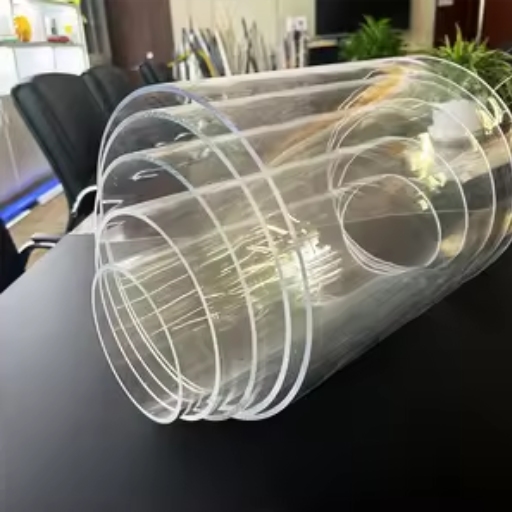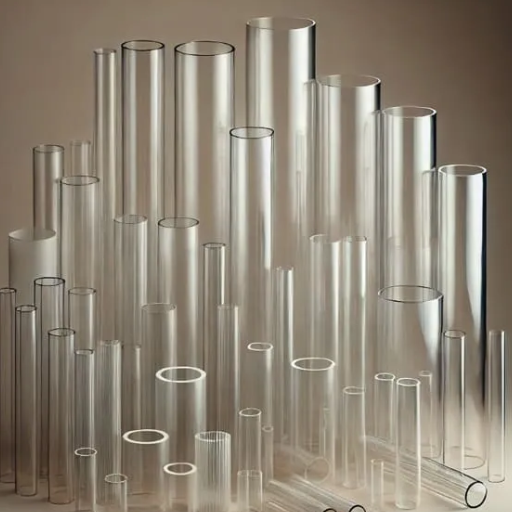

When it comes to materials for use in applications involving clarity, durability, and precision engineering, PMMA acrylic tubes take a strong advantage. Their optical properties are excellent; these are more impact resistant than cast acrylic; you can find it pretty much anywhere, though, since these clear tubes are used in a wide variety of applications: construction and manufacturing and, design.
This paper, therefore, explores the basic characteristics of PMMA acrylic tubes, focusing on what makes them different from other materials and share why they continue to be a top-rated alternative for both functional and aesthetic uses. This guide can offer you the exposure to enough know-how you might want to finalize, knowing that you need them for prototyping, industrial purposes, or experiments with designs.
Key Takeaway
PMMA tubes serve as a lightweight, shatterproof, and UV-resistant alternative to glass, offering 92% light transmittance for superior optical clarity in industrial and scientific settings.
Introduction to PMMA Tubes
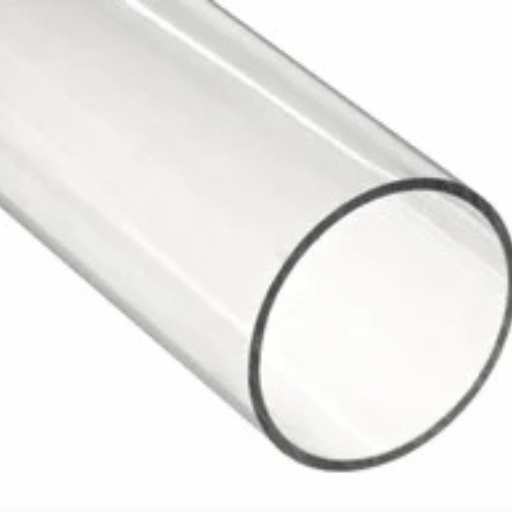
Polymethyl methacrylate (PMMA) tubes are lightweight, durable, and highly transparent cylindrical components for diverse applications. They offer optical clarity which enables them to transmit light effectively; they can compete with glass. Again, they are highly resistant to impact.
The PMMA tubes are resistant to UV radiation and weathering; therefore, they can be used indoors and outdoors alike. They are easy to machine as well as extremely easy to personalize, as a result. They find applications in displays, both functional as well as decorative lighting fixtures, and industrial equipment. The aesthetics as well as the functionability of this material make it become the high preference in comprehensive applications.
What are PMMA Tubes?
A PMMA tube is a tube made up of polymethyl methacrylate, which is a cylindrical piece made from a totally transparent thermoplastic polymer. They are recognized for their optical clarity, thereby providing an extremely light and shatterproof substitute for glass.
Consequently, it finds immense utility besides its optical function in industries doing business for shelter, automotive, lighting, and medical equipment, being it a weather-resistant, UV-stabilized, and easily workable item. Maintaining clarity and integrity under various conditions gives the tube the support each industry requires.
Properties of Polymethylmethacrylate
Polymethylmethacrylate (PMMA) displays a comprehensive range of properties rendering it an ideal material for numerous technical applications. PMMA gives high optical clarity since it has a light transmittance of about 92%, which provides the high degree of transparency. Besides, this is light in weight, the density being about 1.18 g/cm³—considerably lighter than glass.
Light transmittance of PMMA, surpassing many types of glass.
It has outstanding resistance to weather and UV brightness, and will continue to keep the appearance and structural integrity while being subjected to harmful environmental factors. Apart from this, PMMA is thermoplastic and can be readily shaped and fabricated. The impact strength is reduced as compared to polycarbonate, but it is still good enough to suit many practical applications.
Furthermore, PMMA is extraordinarily enduring, is scratch resistant until any chemical solution is put into it, and has a moderate-temperature range as well. These multidimensional properties enable PMMA’s wide use in demanding areas such as the aerospace industry, medical technology, and optical technologies.
Advantages of Using Clear Acrylic Tubes
Clear acrylic tubes provide several advantages which render them an ideal material in a variety of industries:
- ✓
Unmatched Optical Clarity: Allows light to pass through at a rate of up to 92%. - ✓
Lightweight Strength: Provides easy handling while remaining very sturdy. - ✓
Weather Resistance: High resistance to UV radiation for long-lasting outdoor use. - ✓
Machinability: Easy to cut, drill, and bond for custom solutions.
Material Properties of PMMA

Polymethylmethacrylate (PMMA) is a versatile thermoplastic material that is durable and lightweight. It offers superb optical clarity, transmitting up to 92% of visible light, making it a good rival to glass. PMMA is resistant to UV radiation, weathering, and chemicals so that it shows long-term durability in outdoor as well as industrial situations.
Having a low density also increases its viability in bulk weight-sensitive use. PMMA has good tensile strength and impact resistance while remaining malleable in its capability of being cut, formed, and molded into different shapes. All of these together indeed justify PMMA as a versatile and reliable material for numerous applications.
Durability and Strength
PMMA is highly durable and one of the most tensile polymers, hence used in the most arduous of conditions. It seals the surface tight against fading and other superficial reactions, like abrasion, thus doing a satisfactory resistance to UV radiation, weathering, and general damages.
This high modulus, strength, and impact resistance mean PMMA will not tear despite considerable loads and, because it is light, it is easy to handle and beneficial in terms of fabrication. These qualities ensure that PMMA is established as the most suitable polymer to deal with the ruggedness and strength needed in many industries.
Chemical Resistance
PMMA extends outstanding chemical resistance across a broad range of materials that can be taken as diluted bases, acids, or oils, which adds greater utility across the board.
⚠️ Important Note
Some solvents such as acetone, benzene, and alcohols pose a risk to PMMA, potentially leading to surface degradation or tensile cracking. Always verify chemical compatibility before application.
Cost-Effectiveness of PMMA Tubes
Manufactured by cast methacrylate polymer across coextrusion technology EP, PMMA tubes are generally cost-effective due to their discerning balance of affordability, durability, and optical clarity. PMMA is much lighter than glass and results in lower manufacturing expenses but maintains great transparency and weather resistance.
Their ease of fabrication and machinability further streamline production costs, making them kind of a tube of choice in the construction, automotive, and lighting industries. Their long life availability and low maintenance requirement ensure financial rewards, especially during applications demanding performance over a long period of time.
Applications of Acrylic Tubes in Laboratories

Acrylic tubes are extensively used in laboratory settings due to their transparency, chemical resistance, and unyielding safety. They are commonly used in the construction of flow systems where transparent materials are necessary for viewing fluid dynamics. For this reason, their resistance to various chemicals will come in handy, which will make them most ideal for accommodating non-corrosive solutions in any experiment or process.
Acrylic tubes are used for protection cases, aspiration instruments, and custom devices. They have been employed as a sturdy but lightweight alternative to glass. Note that flexibility and cost-effectiveness indicate they can function in diverse scientific applications.
Common Uses in Scientific Research
In applying acrylic tubes for flow visualization systems like constructing wind tunnels and water channels, optical clarity and strength are among the major benefits. In laboratory-scale reactors and samplers using the material, one can expect excellent resistance under slight chemical circumstances and very accurate dimensional control.
Moreover, spectroscopy applications underscore the necessity of transparency and very low light distortion. Hence, a variety of applications acts as proof of their intrinsic operation in executing experiment and design across different scientific disciplines.
Industry-Specific Applications
These materials are used for superior performance in challenging setting, as for example, in pharmaceutical applications for chemical resistance and precision of a reactor. Likewise, in the semiconductor industry, a very low risk of contamination and thermal stability have made them indispensable in the production of vital manufacturing processes.
Maliculary speaking, the optical industry benefits from its high transparency and minimal distortion in relation to advanced imaging and laser systems, while the environmental industry utilizes their long-term durability and excellent compatibility with various sensing technologies in monitoring equipment. They are an addition because of their distinct properties in precision, reliability, and high efficiency.
Innovative Uses of PMMA in Modern Labs
PMMA, or polymethyl methacrylate, is a material that is becoming increasingly likely to be found in modern day experiments because of its versatile nature and robust performance. Its optical clarity allows for perfect visualization thus ideal for microfluidic devices.
In this part of laboratory work, PMMA has found considerable application in the formation of biosensors, due to its having solid biocompatibility as well as chemical resistance. Also, PMMA’s substrates are needed for lithography, where nanoscale patterns need to be created by the researchers. These functions explain PMMA’s capability to deal with modern lab environments, thereby supporting advanced scientific research with every bit of required accuracy and efficiency.
Comparison with Other Materials
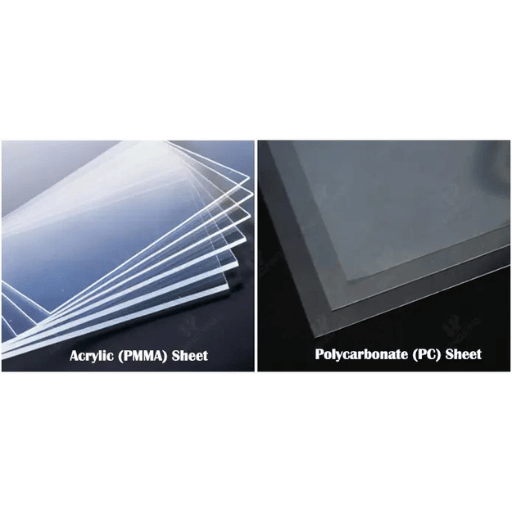
Compared with glass, acrylic (PMMA) has superior impact resistance and significantly reduced weight, making it easier to handle and less likely to crack on impact. Unlike polycarbonate, acrylic has superior optical quality and UV stability, although polycarbonate slightly overcoats it with less toughness and heat resistance.
Acrylic is optically more transparent than PVC and is technically more stable but less flexible and more hostile to certain organic solvents. These differences make acrylic an excellent choice for applications that require good clarity, longevity, and fabrication ease in relatively non-critical stresses.
PMMA vs. Polycarbonate (PC)
| Feature | PMMA (Acrylic) | Polycarbonate (PC) |
|---|---|---|
| Optical Clarity | Excellent (92%) | Good (88%) |
| Impact Resistance | Moderate | Very High |
| UV Stability | Naturally High | Requires Coating |
| Cost | Lower | Higher |
When choosing between PMMA and PC, it comes down to the application’s specific circumstances. PMMA excels on optical clarity, UV resistance, and surface hardness, making it in demand for displays and signage. PC is better suited for high-impact optics with better tear resistance, suitable for safety equipment and automotive uses.
Performance Comparison with Other Plastics
Polycarbonate (PC) exhibits superior mechanical strength, due to strength and impact resistance, over several plastics, including acrylic and polyethylene. Compared to acrylic assessed, higher ductility and toughness under stress make PC very attractive for stress-intense applications.
Polyethylene, which is low cost and characterized by chemical resistance, lacks the clarity, rigidity, and heat resistance properties that are peculiar to PC. Furthermore, PVC may have some good chemical restivity and cost advantages, but stiffness and transparency are found to be lacking at high temperature. Thereby, PC has more characteristics in combined modes, especially in critical applications requiring durability and optical clarity, even if at a little cost.
When to Choose PMMA Over Other Options
PMMA or acrylic is the preferred choice for situations necessitating excellent optical clarity, UV resistance, and light weight properties. Its excellent light transmission capability and weatherability lend it to outdoor signage, display cases, and automotive lighting components.
While PMMA offers low impact resistance when compared to that of PC and no malleability compared to PE, price and ease of fabricating these beats are in favor for non-mechanical stress-loaded application. Choose PMMA when you need to consider aesthetics, transparency, and resistance to climbing environmental factors.
Selecting the Right PMMA Tube
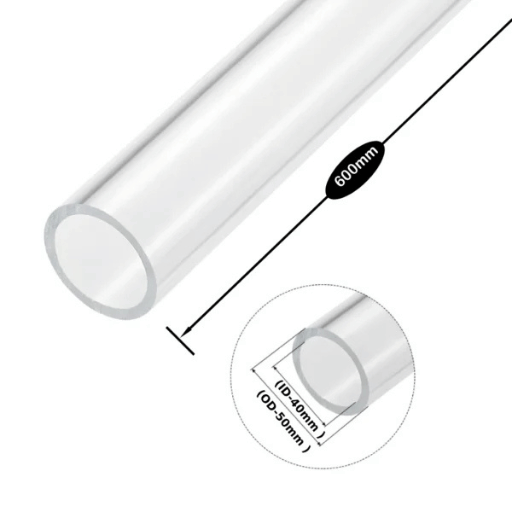
Consider the specific requirements of your application when selecting a PMMA tube. Key factors to evaluate include the tube’s diameter, wall thickness, and length ensuring proper fit and functionality. Ensure that optical clarity is advanced for the specific project at hand.
PMMA is excellent at transmitting light and its transparency. For applications involving light mechanical stress, the lightweight, durable properties of PMMA tubes are an obvious choice. Also, check thermal performance during consideration concerning compatibility with temperature range. And keep in mind that the only way to guarantee the material is PMMA is by sourcing tubes from a reliable manufacturer.
Determining the Appropriate Diameter
A decision must be made about the best diameter for a PMMA tube depending on the functional requirements of your particular application. Such factors to consider include the flow capacity size of the fluid or substance, strength of structure when load is applied, and space around the operational environment.
Smaller-diameter tubes are ideal for the precise regulation needed when only small flow rates are required; however, when larger flow rates are needed, it is better to use larger diameter tubes for structural stability methods. All measurements should be adjusted to the tolerances and specifications that are relevant to the particular project so that the equipment runs efficiently and operational blunders are erased.
Factors to Consider for Specific Applications
Selecting tube diameters for a specific application is a critical task as numerous important factors must be considered at the outset:
- •
Fluid Dynamics: Flow rate and pressure must be tested for safe mixing. - •
Material Compatibility: Check for chemical corrosion, thermal conductivity, and mechanical strength. - •
Dimensional Requirements: Ensure the tube fits perfectly into the system layout. - •
Statutory Standards: Adhere to quality and safety requirements for optimized efficiency.
Cutting and Customizing PMMA Tubes
In order to work correctly, PMMA tubing should be cut carefully and trimmed to sharply defined tolerances and best practice measures. It is advisable to make use of some special tools devised for plastics like laser cutters and a real fine-toothed saw to keep those ends of your PMMA tube clean and neat apart from the hazards of cracking.
For edges, if highly polished surface is required without fogging up, flame beveling and a high-purity fine abrasive finish may well suit the clear material. The use of specialised equipment like CNC machines should be considered in order to sustain tougher tolerances and repeatable accuracy. It is important to anticipate the inevitable expansion effect of PMMA as a function of temperature, especially when subjected to operational conditions. Good handling, in conjunction with mastery of processing methods, would ensure topnotch performance consistent with application-specific requirements.
💡
Pro Tip
When machining PMMA, use high-speed air or liquid cooling to prevent localized overheating, which can lead to stress crazing or melting of the plastic.
Reference Sources
- Goodfellow: Present PMMA tubes for fluid-dynamics research and optical experiments.
- PMC Article: Explains novel reusable PMMA/paper hybrid devices for low-cost detection.
- Goodfellow (Polymers): PMMA for optical engineering and biomedical device prototyping.
Frequently Asked Questions (FAQs)
What is clear PMMA tubes?Clear PMMA (Polymethyl Methacrylate) tubes are transparent, lightweight, and durable tubes commonly used in laboratory and research applications.
What are the advantages of lab use of PMMA tube?PMMA tubes are great looking, chemically resistant, and robust. These are suitable for a fluidic application and different kinds of liquid for tests.
What would be the common applications for clear PMMA tubes in labs?They can be applied in fluid mechanics research, optical experiments, microfluidics, and as protective covers for fragile apparatus.
Compared to glass tubes, what is the significance on PMMA tubes?PMMA tubes are lighter, more impact resistant, and easier to handle than glass tubes, though heat-resistance might be comparatively low for PMMA tubes.
Are PMMA tubes chemically resistant?Yes, PMMA tubes are resistant to a wide range of chemicals, but individual compatibility needs to be checked for any substance.