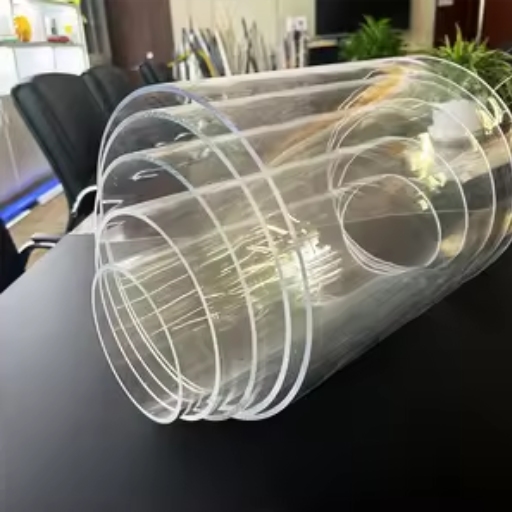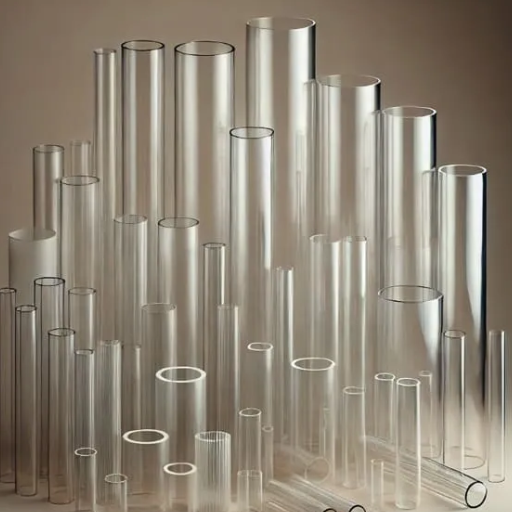

With the advent of modern design and manufacturing, acrylics are the most versatile materials of this era, infinitely capable of applications both practical and creative. If you are a DIY-er, a working designer, or just an inquisitive mind about the environment, it is essential to know about the kinds of acrylic. This guide reviews clear acrylic, cast acrylic, and other forms, throwing light on their properties, merits, and quest possibilities. From how these materials vary down to their tips for your next project, this writing aims to arm you with useful knowledge in making the right choices. Ready to have it all: everything about this intriguing substance in simple words just for you!
Understanding Acrylic Rods
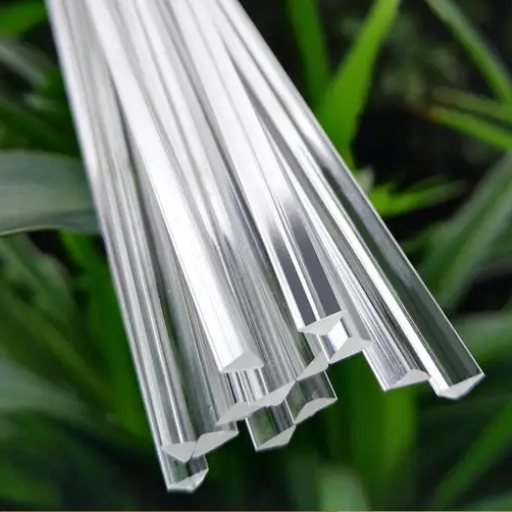
Acrylic rods are the cylindrical pieces fabricated from acrylic, which is a transparent and durable plastic. Known for their clarity and light weight, these rods find usage in display stands, architectural applications, and ornamental projects. They come in different sizes and can be clear or colored to suit various applications and aesthetic preferences. Weathering, as well as UV rays, are not detrimental to these rods, which allows their usage both indoors and outdoors. Leading “The Ultimate Guide to Acrylic Rods” manufacturer in China.
What are Acrylic Rods?
Acrylic rods are perhaps the most versatile cylindrical pieces in the construction industry, having innumerable applications in various fields. Being a strong yet lightweight thermoplastic material, this one is artfully known as ‘acrylic’ or plexiglass. Their crystal-clear optical quality, equivalent to glass but with only one-half of its weight, lends to the demand for them in varying industries with numerous benefits. Acrylic rods come in two types: extruded and cast. Cast acrylic generally enjoys better optical and mechanical properties owing to a better manufacturing process.”
Older data tell us about the appreciation great acrylic rods enjoy for being highly resistant to impact: approximately ten times more than glass. In addition to carorage, weather-tightness, and the ability to resist UV rays, indoor and outdoor applications come to great advantage. Sectors like construction, retail, and interior design make favorable use of acrylic rods for furniture parts, signage supports, and art installations. It is an ideal setup for lighting wherein the rods IOS transmit light and diffuse it smoothly as pethe r requirement of the creative applications.”
It is easy to machine, cut, and shape acrylic rods and fit them for custom project requirements. They come in myriad sizes, diameters, and colors and may even approximate finishes such as frosted or fluorescent for aesthetic appeal. In addition, there is another environmental angle to the latest development in acrylic sustainability, where some manufacturers are trying to come up with recycling programs that recycle acrylic waste back into new products, thereby mitigating the environmental impact.
Types of Acrylic Rods
According to production methods, appearance, and uses, acrylic rods can be categorized into several types. The main types of acrylic rods available are:
1. Cast Acrylic Rods
A cast acrylic rod is created by pouring liquid acrylic into a mold, resulting in a high-quality product with superior optical clarity and strength. Such rods are going to be chosen in projects which require precision and durability: architectural designs, display stands for art, and artistic sculptures. They are available in diverse sizes and finishes: clear, frosted, and custom-colored options. One notable advantage of cast acrylic rods is that it is highly resistant to scratches and weathering when compared to the other types of acrylic.
2. Extruded Acrylic Rods
Extruded rods are formed by pushing molten acrylic through a die mold, which makes them less costly than cast rods. Being just a bit less durable and optically clear, extruded rods are excellent candidates for high-volume projects with tight budgets. They are often used for signage, lighting fixtures, and other applications that demand exact dimensions with minimal waste of material.
3. Clear Acrylic Rods
Clear acrylic rods are the most commonly used, with diverse applications because of their high light transmission properties similar to glass but much lighter in weight. They are generally used in interior design, retail stands, and engineering projects. From the point of light diffusion or transparent design item, clear rods transmit around 92 percent of light.
4. Colored Acrylic Rods
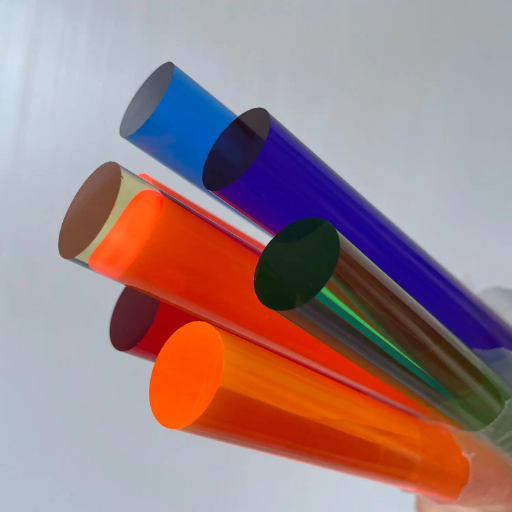
Colored acrylic rods provide seemingly endless design possibilities since they come in colors ranging from vibrant to translucent to opaque. With great design possibilities, decorative and branding projects for designers can include these rods to create spectacular visual effects. Some are even available in UV-stabilized formulations to guarantee longevity for outdoor use.
5. Textured or Frosted Acrylic Rods
Textured or frosted acrylic rods stopped being popular for their beauty and gave way to a style that gently diffuses light, suitable for modern light architecture creations. The frosted finish keeps glare at bay, plus it offers architectural and retail interiors a classy glow.
6. Specialty Acrylic Rods
There are acrylic rods designed for certain objectives; for example, UV-protected ones are for outdoor exposure, heat-resistant rods for application under high heat, and fluorescent ones which glow under black light. This makes the specialty range tremendously versatile with regard to its uses throughout sciences to theatrical props.
According to 2023 trends, the global demand for acrylics and their derivatives, which include rods, is anticipated to grow by roughly 6.5% per annum, bolstered by increased deployment in construction, automobile, and advertisement sectors. Eco-friendly production has also given rise to the development of recyclable acrylics marrying the ethos of sustainability with a promise of keeping materials to the highest standards of quality. This enters the imaginative canvas of designers and industries, making the use of an acrylic rod a delightful experience without compromising on the environment.
Clear Acrylic Rods
A clear acrylic rod is a versatile and durable product with wide industrial applications. The rods are made of polymethyl methacrylate (PMMA), which is a thermoplastic resin usually transparent with excellent optical clarity, weather-resistant, and UV-resistant. With about 92% of light transmission, the rods are considered an upgrade against the glass as they are rather hard to impact and easy to fabricate.
Key Specifications:
Transparency: 92% light transmission.
Density: Approximate specific density of 1.19 g/cm³, therefore lightweight.
Thermal resistance: It softens at around 100°C and can endure heat ranges between -40°C and 85°C.
Impact Strength: Broken 10-17 times more than normal glass, capable of resisting impact.
Industrial Applications:
Construction and Architecture: For lighting installations, railings, and decorative treatments, where it imparts a very modern and polished look.
Automotive: For use in headlight covers, interior components, and aerodynamic support structures where strength and light weight are paramount.
Retail Displays and Advertising: Signage and displays for point-of-purchase, and product displays where clarity and aesthetics are important.
Market Growth and Trends:
Current data indicates that the global acrylic rod market size is valued at around $1.3 billion in 2022 and should be hitting $2 billion by 2030, growing at a CAGR of roughly 5.6%. The increasing demand for energy-efficient materials in construction and customizable solutions in automotive design is fueling this growth. Further, developments in recyclable acrylics have promoted eco-friendly use, portraying a positive outlook for the market.
Clear acrylic rods have continued to provide innovative solutions for functionalities and decorations, thus highlighting their importance in modern industrial and design landscapes.
Applications of Acrylic Rods
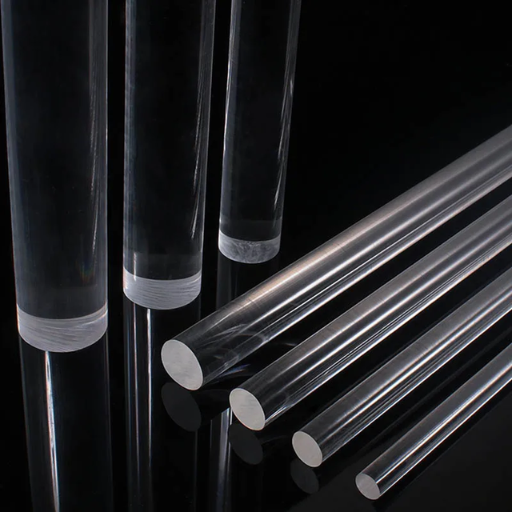
Acrylic rods remain popular and are consumed in varied quantities throughout industries mainly for their abrasive implementation in durability, functionality, and transparency. Some uses are as follows:
Construction: Architectural designs and treatment elements due to their strength and elegance.
The Designing Industry: Mostly for decorative trims and light fixtures.
Retail Displays: Acrylics probably make signs, shelves, and very fine design touches.
Medical Devices: Used for the manufacturing of devices that require sterilizable and durable materials.
Art and Craft: They enjoy their uses in sculpture and other prospective creative projects owing to easy machinability.
Thus, this versatility makes them relevant for both functional and decorative applications.
Construction and Manufacturing Uses
Its unique properties of strength, durability, and versatility have made acrylic widely applicable in construction and manufacturing. Given its great impact resistance and anti-shattering qualities, it is utilized widely as an alternative to glass in such things as windows, skylights, and partitions. According to recent data, the global acrylic sheet market size was valued at approximately USD 5.5 billion in 2022 and is expected to increase at a CAGR of around 5.7% from 2023 to 2030, with growth attributed to demand for energy-efficient building materials and slick contemporary designs that require acrylic for transparency and versatility.
Acrylic finds ways in manufacturing to be a major consideration in the production of items such as machine guards, safety barriers, and clear equipment panels. Its machinability affords manufacturers the capability to cut, shape, and mold acrylic to very precise measurements for either mass production or custom sets. Technological advancements in laser cutting and 3D printing allow acrylic to be worked within these manufacturing processes in new and enhanced ways. This means acrylic will continue to be the material of choice in a wide variety of industries looking for a tough yet cost-effective material to work with.
Design and Aesthetic Applications
Due to its versatility and clear nature, acrylic is one of the most important materials of the modern design and aesthetics sphere. Offering a glass-like finish, it is half the weight of glass but still retains the properties of strength, so it does not lose in terms of appearance. It can be dyed or frosted or textured to help designers design some brilliant and colorful projects in any field.
Furniture design is an important working area for acrylic. Transparent and tinted acrylic chair, table, and shelf installations bring an elegant, minimalist aura to contemporary interiors. It is also important in the realm of lighting, with the high optical clarity of acrylic providing superb diffusion of light in lampshades and LED panels.
Architectural Interventions commonly feature the material for decorative wall panels or dramatic exterior facades, and the properties of weather resistance and UV stability make acrylic great for outdoor installations. A recent market study suggests the global acrylic sheet market size is forecast to grow at a CAGR above 5.5% from 2023 to 2030, owing to increasing demand from architecture, retail display, and signage.
Talking about signage, acrylic is the material of choice due to its perfectly polished smooth surface and easy laser etching or printing. Custom acrylics are used by businesses to craft flashy logos, point of-sale displays, and exhibition stands. Digital printing advancements also provide high-definition customization onto large acrylic panels and therefore extend its application in creative projects.
Acrylic has such an aesthetic array that it has become common in the domains of art installations, awards, and decorative elements. Whether it is part of a sculpture, trophies, or custom home décor, acrylic’s flexibility guarantees that it continues to be an essential facet of open-ended and stylish design.
DIY Projects and Home Improvement
Acrylic is one of the most favorite materials for DIY practitioners and home makeover projects owing to its versatility, durability, and affordability. Acrylic, being lightweight and easy to cut and shape, offers unending possibilities for functional and decorative objects.
Some favorite DIY projects are custom acrylic shelves, so choose wisely-they carry the aesthete while holding good weight. For example, many organizers nowadays essentially utilize clear acrylic paneling for the one simple minimalist look to exhibit collectibles or books. According to Google Trends, there has been a steady rise in search interest in the term “acrylic furniture DIY,” hence giving an impression that more people have a choice for this multipurpose home decor material.
For acrylic, it can also be used to make statement pieces such as photo frames, custom tabletops, or even window replacements for greenhouses. With the properties of acrylic that mimic glass, yet are safer in case of a break, it is perfect for these functions. Acrylic sheets come in many colors and finishes, such as frosted colors and mirrored colors, just to name a few; certainly, the possibilities for creation are limitless.
On the other hand, where kitchen and bathroom splashbacks are concerned, acrylic is increasingly being chosen for its stylish looks combined with moisture resistance. For example, an acrylic backsplash in the kitchen might go for $50 to $150 per panel, hence making it an affordable alternative to tile work, plus it’s easier to clean and maintain.
Combining acrylic beauty with practicality makes this media a favorite of homeowners and artists. Whether you are a dry novitiate or an old-hand DIYer, acrylic incorporation in any further project will seriously lift the style and utility of any home.
Advantages of Using Acrylic Rods
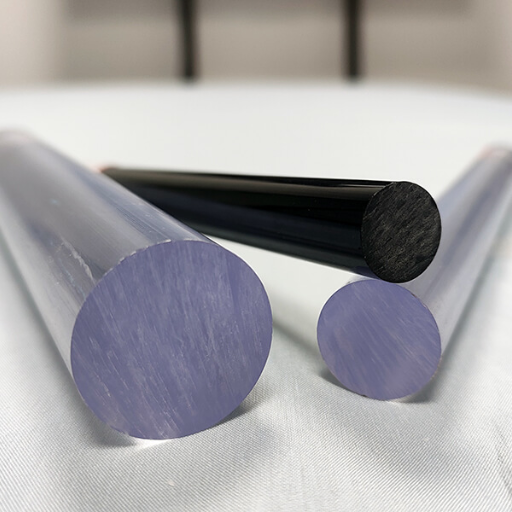
Durability: High on impact resistance and durability, acrylic rods guarantee that they will remain useful over time in several applications.
Lightweight: Acrylic rods, being strong, are lightweight and therefore easy to handle and transport.
Versatility: Due to their high adaptability, they find use in a wide array of projects, such as interior design, displays, and structural applications.
Clarity: Glass-like optical clarity from acrylic rods increases their aesthetic value.
Weather Resistance: Sunlight and other climatic factors rarely degrade the rods.
Easy to Work With: Easy to cut, shape, and join, acrylic rods are preferred by DIYers and professionals alike.
Durability and Longevity
Acrylic rods are synonymous with durability and long life, thus rendering them an all-weather choice for numerous applications. In contrast to glass, acrylic holds an excellent reputation for being impact-resistant; a claim of almost 17 times as much must be taken at par. This quality ensures that acrylic rods will hold up if subjected to slight impacts, unlike glass, which may crack or shatter on contact. This becomes a huge advantage where accidental bumps are expected. Applying today because of weather and UV degradation offers another choice in his application. According to recent advances in material sciences, modern acrylic can retain the acrylic’s appearance for a good 10+ years, provided the acrylic has been well taken care of, and exposure to sunlight does not cause it to yellow or turn brittle. Meanwhile, in resisting moisture and chemicals alike, they would do well in hard environments like marine applications or industrial settings.
Moreover, acrylic rods require minimal maintenance, the very trait that increases their longevity. Unlike some materials that demand frequent treatments or replacements in order to stay functional, acrylic requires only occasional cleaning to keep up its clarity and functional performance. With prices weighed against functional longevity, acrylic is a harmony between price and sustainability. From reliable data, then, it can be concluded that the use of acrylic-based materials is on the rise in the construction, signage, and automotive designing industries, which only shows that it is a practical option with long-term performance.
Lightweight Properties
Lightweight properties of acrylic rods are enormous; hence, they are promoted over other heavier materials by several industries. Acrylic has a respective density listed at around 1.18 g/cm³, meaning that it is roughly half as heavy as glass; thus significantly reducing the weight. This property is highly cherished in the transportation and aerospace sectors as a reduction in weight can directly translate into enhancements in fuel efficiency and performance.
Current data indicate that lightweight construction materials can be used to reduce cash spent on installation and transportation, and so do policies applying to coating materials. A recent study sponsored by the National Institute of Standards and Technology (NIST) shows that lightweight polymer materials are considered important in sustainability pathways by reducing energy consumption in their manufacture and use. Thus, with this modern insight and with its inherent qualities of low price and use, acrylic stands as an important material in industries all over the world where innovation takes charge.
Cost-effectiveness Compared to Other Materials
Acrylic is sometimes considered to be one of the most inexpensive materials vis-à-vis glass, polycarbonate, or metals. It is cheap because it has a longer life as well as requires minimum maintenance. In laser-cut and large-scale applications such as glazing, signages, or retail displays, acrylic cuts a good figure for the job because its sheets cost up to 35-50% less to produce than tempered glass. In addition, acrylic sheets being lighter by nearly 20-40% reduce transportation and handling costs when compared with heavier materials such as metals or glass.
While with higher impact resistance offers, polycarbonate, in most instances, is not necessarily a material of choice in price considerations. This means acrylic ends up being the cheaper option if extreme durability is not a must. Developments in manufacturing techniques have also improved upon the production of acrylic in such a way that waste has been reduced and costs lowered even further.
The qualities of acrylic contribute not only to versatility but also to the availability of many kinds of finishes and forms, thereby making it an ideal medium in industries where performance is placed alongside constraints of budget. The cost-effectiveness of acrylic ensures that it will always be relevant in various arenas ranging from construction to automotive design to household goods.
Working with Acrylic Rods
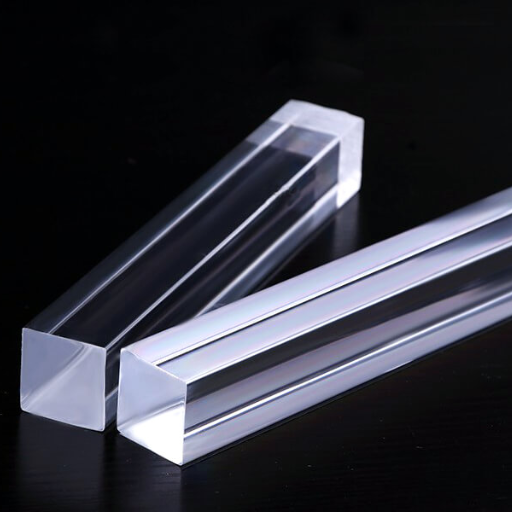
When it comes to acrylic rods, using the right tools and techniques ensures you have everything done just perfectly. For cutting in acrylic, a fine-toothed saw or a laser cutter might give clean edges. These edges could then be sanded with sandpaper or polished smooth. In bending acrylic rods, even application of heat from a heat gun enables the acrylic to be bent or curved to desired shapes. Always make sure you work in a well-ventilated area and protect yourself from dangerous fumes and sharp edges. These few precautions make working with acrylic rods both safe and effective.
Cutting and Shaping Acrylic Rods
Acrylic rods enjoy ample usage in different industries for various applications due to enhanicing durability, versatility, and beauty. The cutting and shaping of these rods require special techniques or safety precautions to safeguard good results.
Cutting Acrylic Rods
For maximum precision, laser cutting is usually the best option. Market analysts assert that the availability of laser cutters of superior precision has risen over 15% in the last five years; this therefore makes laser cutters quite accessible and convenient for use by both professionals and hobbyists. For manual operation, fine-toothed saws such as coping saws and hacksaws work satisfactorily. Always mark the cutting lines clearly with a grease pencil or masking tape to serve as guides on making your cuts and minimizing errors.
Shaping Acrylic Rods
During the application process of shaping acrylic rods, a smooth bend or curve is paramount along with the application of heat in a controlled manner. Temperature-adjustable heat guns are seeing popularity according to new recommendations, probably because such heat guns allow users to heat the rods evenly and repel cracking or forming of weak spots. Infrared thermometers can be used to monitor temperature adequately. On the other hand, industrial ovens score highest in providing uniform heat for large-scale shaping.
Important Considerations
The cutting or heating procedures potentially release fumes; hence, always work in a well-ventilated area. Concerning environmental safety standards, it is stated that adequate aeration can minimize the vapor concentration by 30-50%. Do not forget to put on safety gear such as goggles and gloves to reduce any risks associated with sharp edges or burning. Working with these contemporary procedures will ensure safety and professionalism in your working area.
Keeping oneself abreast of the new tools and techniques thus made cutting and shaping acrylic rods an easier and more efficient task, with results guaranteed on a higher standard.
Drilling Techniques for Acrylic
Drilling acrylic sheets or rods is a precise occupation, requiring adequate tools to ensure the material neither cracks nor chips. Using a drilling bit designed for plastics, like a brad-point or a modified twist drill bit, will give you neat holes. The normal metal drill bits tend to melt or crack the acrylic due to the heat generation. Always remember: Go slow and do not put much pressure in the drill.
Another option is to stick masking tape at the drilling site; in this way, it helps prevent cracking and serves as better gripping for the drill bit. Supporting the acrylic sheet atop a flat-hardened surface adds more to its stability. For big holes down ¼ inch, it is good to start drilling with a pilot hole, which is enlarged slowly to the diameter required. This helps prevent cracking.
Lubrication keeps the material somewhat cool and afresh from heat damage. Just smearing a little bit of water or plastic-safe cutting fluid during the drilling process is great. The latest findings suggest the drill speed may vary from 500 RPM to 1,000 RPM, depending on the thickness of the acrylic, giving perfect results with minimal burrs.
Last but not least, secure the acrylic well so it doesn’t move during drilling; this ensures better precision and safety. Using these techniques, based upon the best practices and recent research, will make acrylic-related work easier and more productive.
Guide to Gluing Acrylic Together
Gluing acrylic will require precision and the right tools to provide strong and seamless bonds. Since acrylic has its peculiarities, ordinary adhesives won’t work; solvent adhesives or special acrylic glues such as Weld-On or Acrifix must be used. These adhesives chemically bond the pieces of acrylic together by slightly melting the surface of the acrylic and fusing it as the adhesive sets.
Step 1: Preparation
Make certain that the acrylic surfaces are cleaned of dust, grease, or dirt. With a soft lint-free cloth, wipe the acrylic using isopropyl alcohol to remove any contaminants. This is especially important when the edges of the acrylic are straight and even; irregularities may lead to weak bonds. Grind or sand the edges very lightly with fine grit sandpaper (around 400-600 grit) to achieve smoothness if needed.
Step 2: Positioning
Before gluing, align the pieces carefully in position. Use clamps, weld tape, or jigs to secure the pieces firmly. Precision is of utmost importance since solvent adhesives start forming bonds quickly and give very little time for any adjustments.
Step 3: Applying the Glue
Use an applicator bottle or a syringe having a fine needle tip to dispense the glue in small amounts along the joint. For solvent-based glues, by capillary action, the glue will saturate the joint to form a strong bond. Glued excessively, it will spill out and do more harm to the polished surfaces of the acrylic.
Step 4: Curing and Finishing
After applying the adhesive, let the piece sit undisturbed whilst the bond is curing. The curing times will vary depending on the adhesive, but usually, a strong bond is achieved in 24-48 hours. During this period, avoid shaking or stressing the bond. After curing, gently scrape off any residues using a plastic scraper or rub with a cloth.
Tips for Best Results
Work wherever good ventilation exists since solvent adhesives emanate strong fumes.
Use gloves and safety glasses as protection against the adhesive.
Try out a test application on scrap acrylic, both for practice and to ensure the compatibility.
For large pieces or display quality, consider using an anti-static cleaner to maintain immaculate surfaces.
With due diligence, gluing acrylic can produce clear bonds that are nearly invisible, strong, and pleasing to the eye. Follow the above steps with precision, employ modern adhesives, and prepare adequately for professional results suitable for all grades of acrylic projects like aquariums, display boxes, and custom designs.
Maintenance and Care for Acrylic Rods
Maintenance and preservation of acrylic rods include:
Cleaning: Dust rods off with a single soft cloth. In order to cleanse, one should use nothing better than warm water with a little soap, then rinse. Do not apply abrasive cleaners or scrubbers/materials where they can scratch the smooth surface of the acrylic.
Storage: The room or cellar must be ever so cool and dry, and away from direct sunlight to ensure that the rods would not be warped or discolored.
Handling: Always hold with utmost care to prevent dropping or application of drastically heavy pressure.
Scratch Protection: When transporting or storing, the rods require covering or wrapping to prevent surface scratches.
Inspection: Conduct thorough inspections often for any sign of wear or damage. Always address immediately to maintain them in good condition.
If handled correctly, they go on to remain clear and functional for a very long period.
Cleaning and Polishing Tips
Use Mild Soap and Water: Wash the rods with a solution of mild soap and lukewarm water, avoiding any harsh chemical cleaners that could be detrimental to the acrylic surface. Gently wipe the rods using a soft cloth that is lint-free, to dislodge any dirt and grime.
Avoid Abrasive Materials: For cleaning, always use soft materials like microfiber cloths. Abrasive sponges and brushes would scratch the surface and lessen its clarity and smoothness.
Use Acrylic-Safe Polishing Products: To bring back clarity and shine, polish with products formulated for acrylic. Use a clean microfiber cloth and polish in a circular motion, spreading evenly.
Dry Completely to Avoid Water Spots: Once clean, dry the rods completely with a clean, dry lint-free cloth. This will keep water deposits or streaking from forming; therefore, the surface stays clean and polished.
Protect Against Dust Accumulation: To lessen dust deposit, consider applying an antistatic cleaner for acrylic; dust-repelling drops of static electricity get reduced on the rod surface.
Storage Guidelines
Appropriate storage of acrylic rods is imperative to preserve clarity, durability, and good overall quality. Some important guidelines can be followed to ensure great storage conditions:
Keep in a Cool, Dry Area: Acrylic rods should be kept in an area with controlled temperature and low humidity. Too much heat or direct sunlight will cause warping and yellowing over time. Therefore, temperature should ideally be between 50°F (10°C) and 85°F (29°C).
Avoid Direct Sunlight: The UV rays can damage acrylic due to yellowing and brittleness. They should be blocked from UV rays while storing, maybe with shading or protective covers.
Store Vertically Whenever Possible: Vertically storing these longer or thicker rods will conserve the bending and distortion rates. Implement padded vertical racks to keep them upright and spaced apart so they do not scratch.
Protect from Dust and Debris: Acrylic attracts dust because of static electricity. Go for dust covers or place them in a sealed container or cabinet. Furthermore, wrapping in a soft lint-free cloth will prevent them from being scratched.
Avoid Chemicals: Ensure that chemicals and strong solvents are not stored in the same area as these rods and don’t let any fumes accumulate. These will physically eat away at the acrylic surface over time. Materials like PVC or rubber also react with acrylic, so avoid direct contact of these substances.
Label and Store: When several sizes or types of acrylic rods are in use, label each storage bin or compartment for quick entrance. Consider applying color-coding or an inventory system as well to fast-track organizing and identification.
Adhering to the storage recommendations will appreciably increase the lifespan and look of acrylic rods-as well as helping assure that they stay transparent and relatively useful down the line.
Dealing with UV Damage
Though acrylic rods are strong and versatile materials, they are susceptible to UV damage when subjected to long periods of direct sunlight. Depending on the exposure, UV radiation causes discoloration, making them brittle or the formation of the faintest of cracks, thereby compromising the acrylic’s aesthetics and structural integrity. Several such measures and insights to curb and reduce UV damage can be considered.
Use UV-Resistant Acrylic
Using UV-resistant acrylic can greatly reduce UV exposure. Such treated acrylic cases are specifically manufactured to block harmful UV radiation, which goes a long way in preventing discoloration and degradation. Some studies have shown these treated acrylics to withstand the wear of sunlight 5 to 10 times longer than their regular counterparts, thus making them well suited for outdoor applications.
Apply UV Protective Coatings
The other solution can be to block UV rays by coating. This clear coating forms a UV-blocking barrier on the surface of the acrylic to inhibit UV radiation from passing through the acrylic. UV coatings can help an acrylic application last up to 50% longer when applied properly.
Regular Cleaning and Maintenance
The dirt and debris present on acrylic create intensified UV exposure points. Cleaning with non-abrasive cleaning agents and microfiber cloths maintains the acrylic rods’ clarity and prevents the formation of micro-scratches place where UV damage can begin.
Limit Direct Sunlight Exposure
Reducing the exposure to sunlight can be achieved by the installation of shade structures, application of UV-blocking layer to the windows, or by even positioning the acrylic components indoors with limited UV light exposure. Especially for the outdoor venues, this goes a long way.
Monitor and Replace Damaged Sections
By inspecting the acrylic rods regularly, one may spot the early signs of damage by UV rays such as yellowing or small-scale fractures. Replacing the damaged sections immediately will avert further damages and assure the structural safety of the application.
In conjunction with innovative protective materials, these methods can do a great deal in protecting acrylic rods from further sabotage by UV exposure. When acrylics are supposed to be used outdoors or where the sun is light, the application of these safeguards promotes the durability and maintains the aesthetics and functional quality of the material.
Reference Sources
1. California Institute of Technology: Working with Acrylic
Contains excellent and very detailed references on the handling, shaping, and processing of materials made of acrylic, including rods.
2. University of New Mexico: Acrylic Attenuation Measurements for the MiniCLEAN Dark Matter Experiment
This paper deals with the use of acrylic light guides and properties for scientific applications.
3. Eastern Illinois University: Acrylic Sheet in Combination with Other Plastics as a Structural Material
Essentially deals with a mechanical approach to the use of acrylic materials in structural applications.
Frequently Asked Questions (FAQs)
What is the Ultimate Guide to Acrylic Rods?
The ultimate guide to acrylic rods provides comprehensive information on the properties, uses, and benefits of acrylic rods. These transparent plastic rods are often used in various applications due to their lightweight nature, impact resistance, and optical clarity. This guide will help you understand how to choose the right acrylic rod for your project, whether it be for decorative purposes, DIY projects, or industrial applications.
How do I glue acrylic together using adhesives?
Gluing acrylic together requires special adhesives, as traditional glue may not work effectively. A guide to gluing acrylic suggests using solvent-based adhesives or specific acrylic glues that create a strong bond. Ensure the surfaces are clean and free of dust for the best results. Applying the glue evenly will help avoid chips and ensure a seamless finish.
What are the differences between cast acrylic and extruded acrylic?
Cast acrylic is produced by pouring liquid acrylic into a mold, resulting in thicker sheets with better optical clarity and durability. Extruded acrylic, on the other hand, is made by forcing acrylic through a die, creating thinner sheets that are more affordable but may have lower impact resistance. Understanding acrylic vs. cast acrylic will help you choose the right material for your needs.
What size of acrylic rod should I use for my project?
The size of the acrylic rod you choose depends on the specific requirements of your project. Acrylic rods come in various diameters, typically ranging from 1/8 inch to several inches in diameter. Consider the strength, flexibility, and aesthetic you want to achieve when selecting the appropriate size for your application.
Can I machine acrylic rods for custom shapes?
Yes, machining acrylic rods is a common practice to create custom shapes and sizes. You can drill, cut, and shape the acrylic using appropriate tools and techniques. Using a drill bit designed for acrylic will help prevent micro-cracks and ensure a clean finish. Always follow a step-by-step approach to achieve the best results in your machining process.
What makes UV acrylic different from regular acrylic?
UV acrylic is designed to resist yellowing from sunlight exposure, making it ideal for outdoor applications. It maintains its clarity and durability even when exposed to UV light, whereas regular acrylic may become discolored over time. When selecting materials for signage or outdoor projects, consider using UV acrylic for enhanced longevity.
How do I ensure the optical clarity of my acrylic sheet?
To ensure the optical clarity of your acrylic sheet, it’s essential to handle it carefully and keep it clean. Avoid using abrasive cleaners that can scratch the surface. If machining or cutting is involved, use proper techniques to minimize the risk of chips or imperfections, ensuring that the acrylic maintains its transparent properties.
What are some related products to acrylic rods?
Related products to acrylic rods include acrylic sheets, acrylic tubes, and other forms of acrylic such as cast acrylic and extruded acrylic. These materials can be used in conjunction to create a variety of projects, from decorative displays to functional components in automotive and fiber optic applications.