
Modern scientific research and industrial processing place high demands on separation and purification from complex mixtures with great precision and efficiency. Liquid chromatography has need of acrylic chromatographic columns due to the incredible power of acryl material itself. The most versatile and reliable solutions to their application, these advanced columns are deployed as a powerful solution to meet the requirements of high-resolution separations and high technical performance supporting pharmaceutical development, biochemical research, and production-scale separation processes. This review aims to throw light on the features, advantages, and applications of acrylic chromatography columns and demonstrate why it is regarded as a superior choice by scientists and engineers around the world. Starting from bead material advantages upward to practical applications, this article brings forth the aerosol of superlatives for columns to progress in innovation and propel the chromatography process.
Key Takeaway
Acrylic chromatography columns provide a unique combination of optical clarity, chemical resistance, and lightweight durability, making them an essential tool for high-resolution biomolecule purification and industrial-scale processing.
Introduction to Acrylic Chromatography Columns
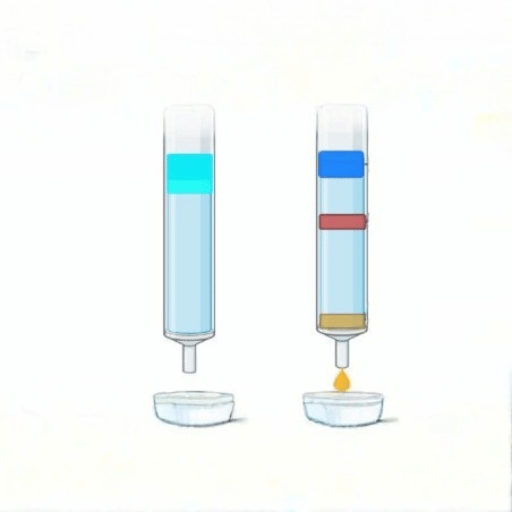
Acrylic chromatography columns represent highly specialized tools dedicated to more elaborated procedures in the chromatographic analysis, owing to their design. Being built out of acrylic offering considerable chemical resistance, transparency, and minuscule plastic weight, with the aid of these, specialists move ahead in countless endeavours, either towards the purifying of proteins or their chemical analysis. Acrylic columns are laboratory and industrial favorites among cremedelacreme where performance, easy cleaning, and precision are crucial; their performance can be observed within several systems of chromatography, and many scientific and engineering projects can be performed with the aid of chromtouring.
What is Liquid Chromatography?
Liquid chromatography represents an analytical technique that enables the separation, identification, and quantification of components from a mixture. It works by passing liquid solvent carrying the sample mixture through a column packed with stationary phase material. Components of the mixture are absorbed to different extents by the stationary phase in which a separation of the components is enacted. Highly efficient and immensely selective, it is indispensable for the pharmaceutical, biotechnological, and chemical industry for drug development, quality control, and analysis of complex mixtures.
Overview of Acrylic Chromatography
Acrylic chemistry offers a unique chromatography resolution albeit on an acrylic-based stationary phase. For, among its many attributes, it delivers quite high resolving power and specificity. It is well-received in separation of biomolecules including proteins, enzymes, and antibodies. Acrylic phases have virgin chemical stability, they are scaled well, can are easily adaptable in the sense f tunability of their surface properties that allow potentiated interaction with the target analyte of choice. The relevance of this method in bioprocessing stems from consistent performance displays over a changed spectrum of operational conditions, especially in places where a fungus in cropping up for increased purity and reproducibility.
Benefits of Using Acrylic Columns
It is noteworthy that the acrylic columns are invaluable when looking for unsurpassable chemical and mechanical stability for the bioprocessing applications which are much more extensive and rough. These can be surface chemistries which can be adjusted allowing for controlled binding and release of biomolecules, an essential facet that ensures fine-tuned separation processes that may exist today. Moreover, again, excellent is the money-spinning scalability acrylic columns have to offer; they grow from assay to production scales with no droop in performance. Ultimately, it feels good to state that their failure under various pH and thermal conditions assures dependable and predictable output on which products with high purity and intense reproducibility only can be made in industries like pharmacy and biotechnology.
💡
Pro Tip
Utilize the optical transparency of acrylic columns to visually monitor bed packing quality and the progression of colored sample bands during the separation process.
Applications of Liquid Chromatography Columns
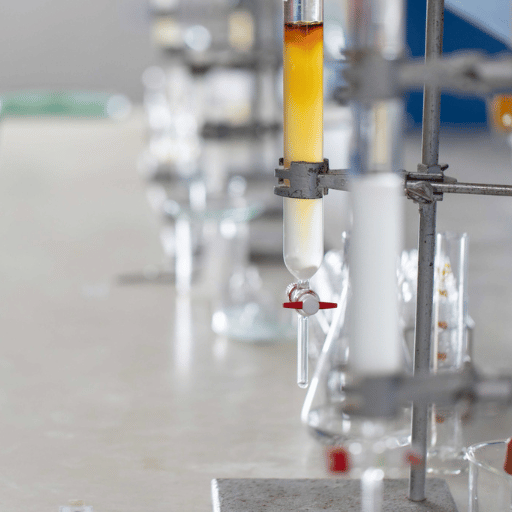
Liquid chromatography columns are vital in many applications across the scientific and industrial disciplines. It plays a significant role in preclinical pharmaceutical cohnodrug development and quality monitoring. Owing to the columns, which are used to find contaminants, for quality insurance in the food and drinks industry, the environmental column chromatography is commonly employed when searching for pollutants in water, insecticides and dust samples. Otherwise, the columns provide the necessary tools in biochemical research to separate and purify proteins, nucleic acids, and other bio-organic substances. This wide-ranging application indicates the importance of these columns in guaranteeing accuracy and reliability in any analytical process.
Research and Development
Chromatography columns and division research and development focus on enhancement of efficiency of separation, consistency in reproducibility, and life of columns consistent with analytical demands, which keep getting more complex trendwise. Introducing new stationary phases that are advanced, packing technologies with extra enhancements, and micro-columns as small column formats meant for high-throughput and niche-market applications are primary innovations. With different fields celebrating the requirement for more accuracy, all are tools that will not give way in cutting-edge environments for maintenance and operations in science and industry.
Process-Scale Applications
Process-scale applications stand as the pivotal link to bridge laboratory-scale research and full-blown production and permit the confirmation of scalability under industrial conditions. This invariably will deploy large structures of chromatography columns and imprinted media such that product uniformity, throughput levels (both, as high as possible), enter an extremely cost-effective platform. In implementing solutions on pressure handling, flow distribution, packing stabilization, etc., the process-scale capacities will enable the actual production of biopharmaceuticals, chemicals, and advanced materials at commercially realistic time scales while following strict requirements of the regulatory authorities.
Industry-Specific Uses
Chromatography at the industrial scale is one of the indispensable stages in the processing chain. In biopharmaceuticals manufacturing, the technologies used for efficient and highly selective purification of monoclonal antibodies, vaccines, and recombinant proteins comply with Good Manufacturing Practices (GMP). Essentially, in most tolerance-based environments, the chemical industry employs chromatography to yield separation and purification of high-value chemicals and intermediates; ensuring consistent product quality and reduced impurity levels. Moreover, chromatography is implemented in catalysts such that advanced compounds and materials are synthesized for a variety of purposes in nanomaterials and polymers from the unique perspective. As the systems are designed to comply with all peculiar regulatory demands of the respective sectors, efficiency and scalability are ensured without any compromises.
Technical Specifications of Acrylic Columns
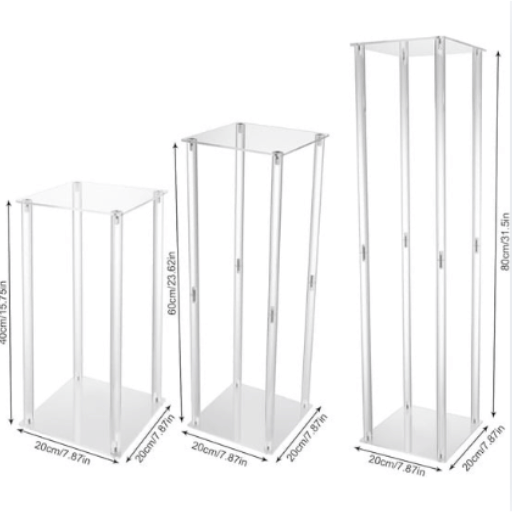
The acrylic columns are a combination of durability, transparency, and chemical resistance towards any number of analytical and industrial applications. There are some key technical specifications:
- •
Material: Constructed with polymethyl methacrylate (PMMA) for optical clarity. - •
Pressure Rating: Optimized for 15 to 30 psi applications. - •
Temperature Range: Operating limits from -20°C to 70°C. - •
Chemical Compatibility: Resists mild acids, bases, and aqueous solutions. - •
Standard Sizes: 10-100 mm in diameter; customizable options available.
Design and Construction
The design and construction of the acrylic columns are most concerned about constructing the column with high-interior strength, a lot of space for an efficient liquid-to-solid interface, low level of fluid turbulence, in-line mixing, and heavy-duty external packing. Most times, acrylic material is preferred for high optical clarity and moderate chemical resistance, and from start to end, acrylic almost remains consistently. The cylindrical structure of the columns helps to give uniform flow distribution, thereby decreasing turbulence and boosting separation efficiency. The given dimensions-for-for cost-customizable-acrylic columns-installed with and some superiorly threaded or welded connections-result in smooth into diverse systems. These design attributes, adhered to with stringent manufacture controls, increase versatility and dependability of acrylic columns for applications within environment-controlled and weakly corrosive conditions.
Pressure Considerations
When discussing pressure considerations in acrylic columns, it is important to consider the tensile strength of the material as well as its susceptibility to stress cracking in high-pressure environments. Acrylic exhibits good optical clarity and resistance to many chemicals, but its maximum allowable operating pressure is rather modest when contrasted with metals or composites. From industry standards, operating pressures must be kept far below the pressure limits of the material; this translates approximately to between 50% and 70% of the maximum rating allowed. This will ensure safety for the teams using the equipment, thereby reducing the chances of structural deficiencies and prolonging equipment service life. Periodic pressure monitoring is crucial, and any and all requisite pressure relief measures are to be taken in furthering modified acrylic columns’ operational integrity.
⚠️ Important Note
Always operate acrylic columns within 50% to 70% of their maximum pressure rating to prevent structural fatigue and stress cracking.
Capacity and Efficiency
There are three main parameters that can affect the capacity of a system using an acrylic column, namely the internal diameter and height of the column and its range of operating pressure. Systems should be designed properly for optimum efficiency and well-controlled flow rate, which in turn reduces turbulence and drop in pressure. A streamlined arrangement of operational parameters, such as critical temperature difference, flow velocity, and pressure distribution, when in proper alignment, help enhance throughput while preventing any stress on the material or thermal expansion. The monitoring of performance on a regular basis and calibration are also central in maintaining efficiency by ensuring against possible bottlenecks or mechanical failures.
Manufacturing and Maintenance of Acrylic Chromatography Columns
Manufacturing Process
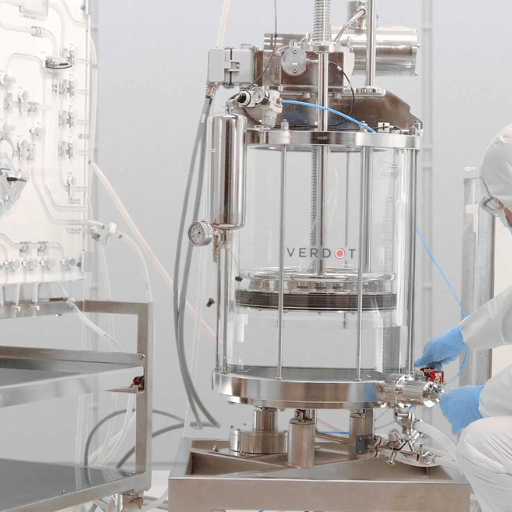
The production of acrylic chromatography columns combines the careful crafting of high durability acrylic material to guaranty against running chances of clarity, strength, and compatibility with different chemicals. Mostly, the columns are made through casting or extrusion of polymeric substances in order to attain exact dimensions plus structural integrity. Key to this is the precision in machining that allows for smooth internal channels to reduce flow resistance and sample adsorption. Seals and connection fittings have been incorporated to maintain leaktight operational modes and compatibility with standard systems. The sealant inspection and connection break testing during autoclave are just few of the stringent QC measures to assure durability and performance at the end of manufacturing stage.
Maintenance Guidelines
Proper care for acrylic chromatographic columns should be taken to ensure the best performance and long life. These columns must be cleaned at regular intervals of time, using suitable cleaning solutions, preferably non-abrasive. This way foul substances and residues are possibly prevented from accumulation. It is really important that the cleaning agent is compatible with both the cleaning and the surfaces (acrylic) over which chemicals are applied so that surface changes may be avoided. Seals and column fittings should be checked for wear and tear, and replacements should be made whenever necessary to ensure the column is tight. For proper storage, the equipment should be stored in a stable environment that does not expose it to too much heat, UV rays, or a host of chemicals that can damage the material.
Manufacturing Processes
The making of acrylic-based columns is precisely engineered for security and optimum performance. First of all, the acrylic materials are sourced and crafted in the form of sheets or molds through a process such as bulk and cell casting. Then, the parts are machined using CNC techniques to create tight tolerances and accurate dimensions. Gluing and assembly are done in specially selected adhesive formulations that are formulated for the best compatibility with the properties of the acrylic material. As a final step of product verification, all quality assurance tests are done to ensure general compliance with the industry standards, confirming the product’s reliability.
Maintenance Tips for Longevity
Regular maintenance is necessary for promoting the longevity and performance of acrylic items. Maintenance can begin with the cleaning of surfaces using a soft lint-free cloth and a mild mild, non-abrasive detergent to avoid any scratch or chemical damage. The onset of excessive heat or harsh solvents can reduce the integrity of the material and make it brittle with time. Inspect bonded seams once in a while for stress or signs of wear. Address minor issues quickly using compatible adhesives to prevent further damage. Products should be stored in a stable environment that controls the temperature and humidity to help check on curvature or cracks. Implementing such practices will ensure enhanced durability and keep the o.pe. level in check.
Common Challenges and Solutions
| Challenge | Solution |
|---|---|
| Material Fatigue | Use Finite Element Analysis (FEA) and appropriate load-bearing materials. |
| Environmental Degradation | Incorporate UV-stable coatings or additives into the acrylic. |
| Bonding Failure | Rigorous surface pretreatment and adhesive strength testing. |
Reference Sources
- ✓
Chromatography Online: Method development for acrylate monomer quantification. - ✓
ScienceDirect: Trends in two-dimensional liquid chromatography (2019-2023). - ✓
E3S Conferences: HPLC methods for acrylate compounds in food contact plastics.
Frequently Asked Questions (FAQs)
What is an acrylic column for liquid chromatography?
An acrylic chromatography system made up of acrylic material is employed to separate and analyze chemical compounds in liquid chromatography systems.
How does the use of an acrylic column benefit liquid chromatography?
Being light, strong, affordable, they also have accompanying awesome visibility for observing the separation.
What businesses adopt the liquid chromatography acrylic columns?
They are widely used in pharmaceuticals, biotechnology, food safety, environment sciences, and chemical analysis.
What are some sort of compounds that can be analyzed?
Various chemical substances such as proteins, DNA/RNA, acrylates, etc. can be assayed.
How does an acrylic column compare with a glass column?
The acrylic column is mainly impact-resistant and light, by contrast with glass columns, albeit its chemical resistance is significantly lower to some solvents.