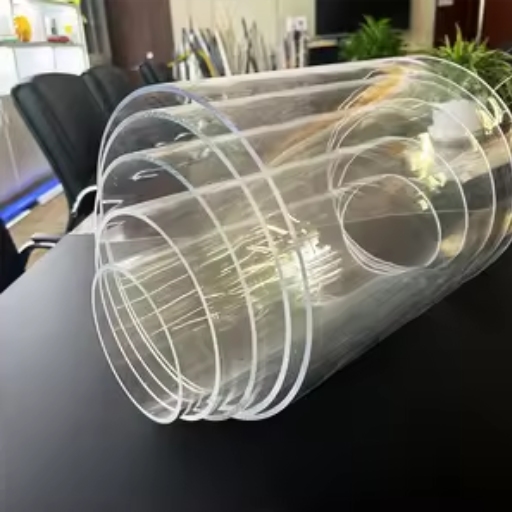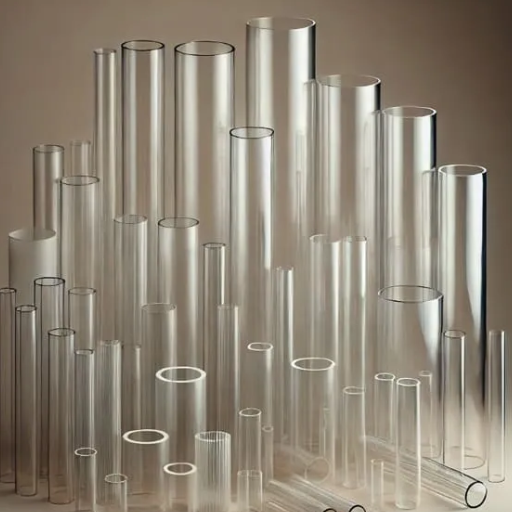

Acrylic tubing—being transparent, strong, and flexible-was a favorite with many industries that undergo adaptations depending upon design needs. It has infinite uses spanning out from activities like creating beautiful designs, fabricating functional parts, and so forth. However, quite an intriguing occurrence in its tubing applications is working with one which needs the intersection of both arts and sciences: bending this acrylic tubing into beautiful custom shapes. This blog post gives a glimpse of the world of acrylic tubing, enlightens you about its unique properties, and demystifies the art of bending it with a great deal of care and precision. It covers the tools and heat sources needed as well as the best practices to follow in order to sustain its clarity and avoid cracking so that you will be fully equipped. By the conclusion, you’ll have been armed with enough knowledge to approach any acrylic tubing project with confidence, be it for artistic or practical purposes.
Understanding Acrylic Tubing
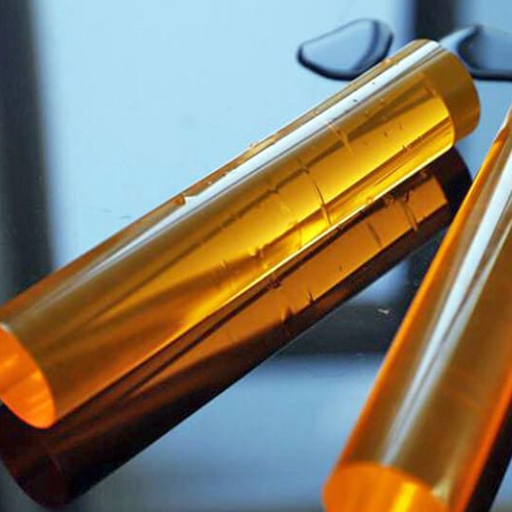
Thin and lightweight acrylic tubing is made from polymethyl methacrylate (PMMA). Although recognized for its clarity and strength against impact, it is popular in a greater number of applications ranging from display cabinets to aquariums and engineering projects. This acrylic tubing is available in various shapes, sizes, and thicknesses, giving flexibility to be used both decoratively and functionally. It is UV resistant, perfect for outdoor areas; and is easy to cut, shape, and bend with the right tools and techniques. Therefore, the combination of strength, transparency, and versatility makes this an ideal choice in many industries.
What is Acrylic?
Given the advances of the last century, Acrylic, also called PMMA (Polymethyl methacrylate), has been touted as the world’s most transparent thermoplastic with other qualities such as durability and being multipurpose. Essentially comprised of processes for synthesizing, prompting its birth in the early 20th century, to now being introduced and marketed as several brand names such as Plexiglas, Lucite, Acrylite, and so forth, the making of acrylic has changed several industries with its lightweight and extraordinary properties.”
Acrylic has several distinct benefits, one of them being high optical transparency, transmitting about 92% of visible light, which is even better than the normal glass. But, it is 17 times stronger than glass and thus more impact resistant. Hence, acrylic keeps the transparency and gives a safer alternative in places where strength is needed.
Acrylic holds a great reputation for admirable weatherability. It does not turn yellow or develop any defect under prolonged exposure to the sun or UV radiation. This makes it very convenient for outdoor applications-sonic signage, windows, and greenhouse panels. It does not favor water, even, and most chemicals make it another feather in its versatility.
With newer fabrication processes, acrylic has penetrated newer industries, including construction, automotive, aerospace, and fashion. Apart from sheets, rods, and tubes, acrylic sheets can be easily laser cut, milled, and thermoformed into custom shapes. Anti-reflective or scratch-resistant coatings have introduced new applications for the material and have created a huge demand for it.
From an industrial perspective, it is also susceptible to a secondary market in recycling because a large majority of PMMA forms can be recycled back into equivalent products, thereby aiding sustainability goals. Bottom line: strength, adaptability, and environmental advantages are what put acrylic into the class of materials for the modern age.
Properties of Acrylic Tubes
There are several properties that give acrylic tubes immense versatility in applications. Let us view the key features and their related data:
Transparency and Optical Clarity
Acrylic tubes can transmit light. They can transmit about 92% of visible light. Such light transmission is needed when clear vision must be granted, for example, for aquariums, display boxes, or LED light enclosures.
The question on the street is if there is any glass stain on it in any form- if so, then it is lighter in weight compared to glass but has higher impact resistance. In essence, they resist impact forces about 10 times better compared to ordinary glass, thus greatly minimizing the danger of falling shattered pieces and being highly durable.
Temperature Resistance
Acrylic tubes have their own good performance within a certain range of temperatures. The allowable maximum temperature, according to some manufacturers, is usually between 160°F and 190°F (71°C–87°C), thus perfect for some industrial processes and any climatic condition outdoors, but moderate.
Chemical Resistance
Acrylic tubes, for the most part, resist minor acids and bases and even mineral oils, although they may be sensitive to those solvent types containing alcohol, ketones, or hydrocarbons; therefore, that should be kept in mind during their handling.
Lightweight and Easy to Fabricate
Acrylic weighs less than half as much as glass, so it is much easier to carry and install. It is highly versatile for some customized requirements, as it can be fashioned by using common tools and techniques for cutting and gluing.
Weather Resistance and UV Stability
Acrylic tubes would not yellow when exposed to sunlight and will not degrade from UV radiation compared to some plastics. This essentially translates to a lengthy working life under severe outdoor conditions.
Environment-Friendly
Recent developments in technology have improved the recycling of acrylic. PMMA, which is the primary component in acrylic tubes, can be recycled into new products, providing a sustainable life for the material.
Thickness and Dimensional Consistency
Acrylic tubes are manufactured in a wide range of diameters and wall thicknesses. Acrylic tube tolerances are so stringent that their dimensional stability is indeed secured. Such an exact description is of a lot of importance to technical and engineering applications.
For a range of specific uses, acrylic tubes are a highly preferred product in industries of construction, automobile, advertising, and healthcare, etc., owing to their adaptive nature and expressly stated properties, which are still being enhanced through research and improving manufacturing techniques for better functionality and performance.
Advantages of Using Acrylic Over Other Plastics
Clarity and Transparency
Acrylic has outstanding optical clarity, transmitting 92% of visible light; therefore, it is regarded as one of the clearest plastics. Offering unscrupulous clarity is paramount for display cases, aquariums, and windows. The good thing that differentiates it from glass is that acrylic weighs less and is more impact-resistant, thus providing better safety while retaining transparency.
Durability and Weather Resistance
Acrylic offers excellent weathering resistance, including from UV rays and moisture, making it very durable when used outdoors. All property signs and outdoor lights that are made from acrylic keep their appearances and retain their structural integrity even after being battered for years under harsh environments.
Lightweight and Easy to Fabricate
Being half the weight of glass, acrylic offers easy and cheap ways of transportation, installation, and practicality. Besides, acrylic is easy to machine, cut, and shape in ways that would contradict highly complicated designs offered by other plastics or materials. Such flexibility has enabled its use in products ranging from medical devices to customized furniture.
Chemical Resistance
For a good comparison with other plastics, acrylic is very well resistant to a broad spectrum of chemicals, including acids and alkalis. Because of this, it finds use for laboratory tools and industrial machinery where chemical exposure is intoxicatingly frequent.
Cost-Effectiveness
Acrylic may cost more than some plastics like polyvinyl chloride (PVC), but it maintains its usefulness for a long time. The durability of acrylic reduces otherwise frequent replacements needed, which cuts down the cost of the product in the long run as far as businesses and consumers are concerned.
Eco-Friendly Properties
The recyclability of acrylic has been established. In conjunction with this manufacturing, some manufacturers have made the process more environmentally respectful. Some methods have also been presented to reuse reclaimed acrylic, thereby decreasing waste.
Wide-Ranging Applications
Its unique properties make acrylic a material of choice over a vast array of industries. For example:
Medical Equipment: Due to its biocompatibility, it is also suitable for surgical instruments and laboratory equipment.
Automotive: It is used in automotive window glazing, sunroofs, and headlight lenses because it is lightweight.
Construction: Usually acrylic sheets are considered to be the best alternative for use instead of glass in roofing, light panels, and protective barriers.
Such benefits make acrylic an eminent contender relative to other plastics, such as polycarbonate or PVC. Hence, it will undoubtedly succeed in our innovative solutions and new technologies.
Types of Acrylic Tubes
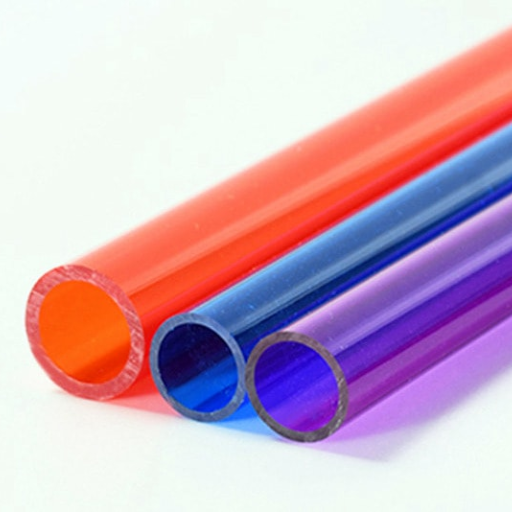
There are various types of acrylic tubes to cater to different requirements:
Cast Acrylic Tubes: Known for their graceful optical clarity and strength, these tubes are put to use mostly in decorative, artistic, and display applications.
Extruded Acrylic Tubes: These are cost-effective and versatile tools that can be used in any setting where the wall thickness has to be kept constant.
Clear Acrylic Tubes: These transparent tubes are meant for situations where visibility comes first, such as aquariums or viewing ports.
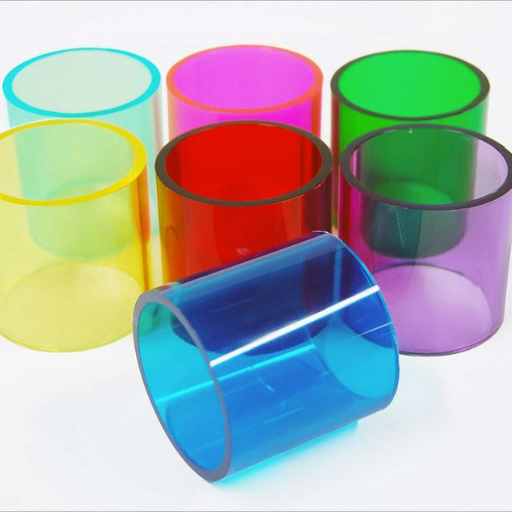
Colored Acrylic Tubes: These tubes come in a variety of colors. They are used for signage, artistic applications, and creative designs.
All types have their specific applications that enable them to be used across the industrialized spectrum.
Clear vs. Colored Acrylic Tubes
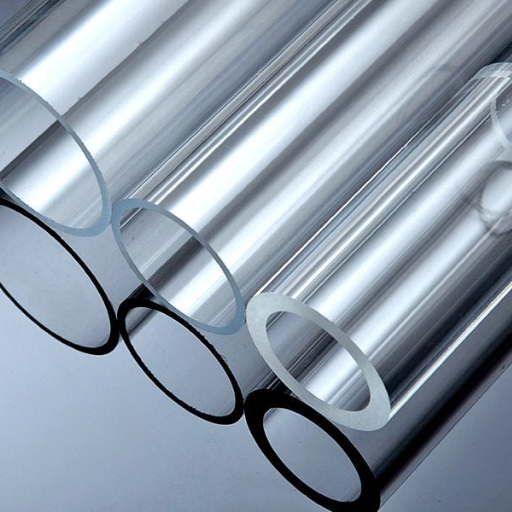
Clear acrylic tubes are usually preferred for any process requiring clear visibility since they practically provide full visibility to the object in question. They are usually found in scientific instruments, display cases, and even aquatic displays, where the observation of the contents inside is indispensable. These tubes transmit light to an impressive 92%, being even clearer than glass and are substantially lighter and impact-resistant.
Colored acrylic tubes, in contrast, are designed to infuse vivid colors while keeping the firmness of durability and versatility. They find their way into decorative lighting, architectural features, and custom signage. Some colored acrylics can even be customized for desired light transmission properties, providing creative solutions in spaces requiring light control. For example, translucent colored tubes are commonly used in backlit designs to yield distinct visual effects.
Key differentiating factors when selecting between clear and colored acrylic tubes include the desired look and feel, practical requirements, and environmental considerations. Clear tubes rank above every other choice when visibility or light consistency needs are considered, whereas colored fasteners offer expansive creativity and branding possibilities. Both types can be customized in all possible ways to accommodate the size, wall thickness, and length requirements for any industrial or artistic purposes.
By merging their apt physical characteristics with far-reaching application possibilities, colored and clear acrylic tubes continue as key materials over various disciplines along the bridge from functional applications down to the elevation of creative design.
Standard vs. Custom Acrylic Tubing
Standard acrylic tubing is generally made in standard sizes for various purposes. These tubes are said to be commonly available, affordable, and acceptable for uses in industries such as construction, retail displays, and DIY projects. Standard tubing may be based on industry dimension and tolerance practices so that it fits commonly available fittings and parts.
Custom acrylic tubing is something for specialized requirements. Customization allows for the exact dimension, wall thickness, color, and finish to be changed. Aerospace, medical, and advanced manufacturing industries heavily depend on such customized solutions to meet exaggerating technical requirements or unique design specifications. Recent data indicate that companies using custom tubing have increased performance and efficiency, showing the value of this option when high precision and adaptability are required. For example, industrial reports suggest that customization of tubing for fluid transportation systems has led to waste reduction of up to 15 percent.
Moreover, manufacturing methods have undergone improvements to now smoothly handle intricate designs at a faster lead time. Customization in this regard is more feasible than ever. Standard tubing might be enough for simple projects; however, for more precise needs of the complicated or rather niche applications, custom tubing focuses mostly on performance and some aesthetics, while balancing durability, innovation, and practicality.
Common Sizes and Shapes of Acrylic Tubes
The tubes can be produced in literally hundreds of sizes and shapes to satisfy all sorts of project requirements. These tubes mostly come in both standard and custom sizes and specs to fit the particular applications. In terms of basic sizing, acrylic tubes are known to have outer diameters anywhere from 0.25 in. to well over 6 in., while the wall thicknesses will vary according to the needed strength and durability.
The three most common acrylic tube shapes are: round, square, and rectangular. Round acrylic tubes are best for smooth flow/luster aesthetic applications such as aquariums or display cases. Square and rectangular tubes are used mostly for structural applications or design work, where angles and stability are desired.
Recent developments in the tooling have made it possible to manufacture custom-made acrylic tubes in odd or standard shapes. Such tubes can be found in oval, polygonal, and triangular cross-sectional shapes, many of which have applications in niche industries. Also, the transparency and lightness of acrylic have made these tubes most favorable in the medical, industrial, and architectural domains.
Modern fabrication also ensures tight tolerances, suitable for critical applications. Recent references indicate that standard acrylic tubes can withstand temperatures from -30° F to 190° F, but are 17 times as impact resistant as glass, putting up extraordinarily durable under varying environmental conditions. Leading “The Ultimate Guide To Acrylic Tube ” manufacturer in China.
Applications of Acrylic Tubing
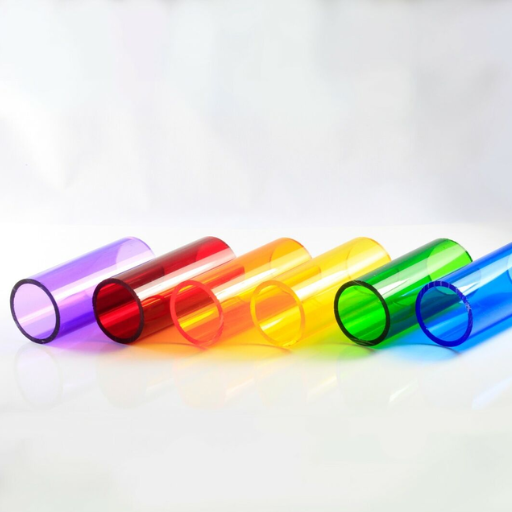
Commonly found across many industries would include acrylic tubing due to its strength, clarity, and versatility. It might include:
Medical Device Applications: Fluid transfer machinery, respiratory devices, and lab equipment, due to its biocompatibility and transparency.
Industrial Applications: Sightflow indicators, containers, casings, and piping systems, because acrylic tubing is considered and holds up well against impact.
Architectural Applications: Extensively being used for display cases, decorative elements, and coverings for unusual atmospherics.
Aquariums and Terrariums: Tanks, viewing windows, and enclosures-the very definition of optical clarity and pressure resistance.
Lighting and Signage: Great for LED light diffusion and illuminated signage.
With these attributes, acrylic tubing is reliable whenever durability, transparency, and adaptability are required.
Industrial Uses of Acrylic Tubes
Basically, acrylic tubes have been employed in industries across the world as they possess an uncommon blend of strength, versatility, and optical clarity. Below are some of the industrial applications:
Manufacturing and Fabrication: Acrylic tubes are important in manufacturing processes, being used for custom parts, protective covers, and machine components. They can be easily machined and are less prone to shatter as compared to glass, making them a safer option in an industrial environment.
Chemicals and Pharmaceuticals: Acrylic tubes are preferred in chemical processing equipment due to their superior chemical resistance. They are also capable of handling extreme environmental conditions, thus earning their extensive use in the pharmaceutical sector in relation to pipettes, bioreactor vessels, and precise fluid-handling systems.
Aerospace and Automotive: Aerospace and automotive engineers choose acrylic tubing for air ducts and display panels that require lightweight and durable materials. Due to its impact resistance and UV stability, acrylic ensures that these components can sustain the rigors of adverse conditions without losing their structural integrity.
Construction and Architecture: Transparent and colored acrylic tubing is used extensively in architectural designs for handrails, columns, and decorative items. Acrylic tubes increase the value of any construction due to resistance to weather conditions and immense aesthetic versatility.
Medical Devices: Acrylic tubes for medical purposes are widely used in the healthcare sector. Immersible fluid conduits, surgical equipment, and imaging systems are typical applications. Acrylics are non-toxic and possess extraordinary optical clarity; they may be sterilized, and these properties make them suitable for sensitive use.
Data and Statistics:
Acrylic materials were projected to exceed demand for 6.3 million tons worldwide as of 2022, of which ascertaining the acrylic tubing application industries, including healthcare and construction.
With growth in industrial areas due to innovation and use, the acrylic market is expected to grow at a CAGR of 5.8% by 2030.
With such flexibility and growing demand, acrylic tubes become indispensable in modern industry for a wide range of applications. Continued development will make them more efficient and sustainable in the years to come.
DIY Projects Involving Acrylic Tubing
With a wealth of applications for DIY projects, acrylic tubing stands in fact as a versatile product due to parameters like durability, clarity, and easy modification. Let us now look at some trending and innovative DIY ideas entailing acrylic tubing with supporting current data and trends:
Custom Home Lighting Fixtures
Acrylic tubing is an element that enables modern and attractive lighting design. Personal lighting solutions are currently in demand, as the decorative lighting market finds its valuation set at $40.9 billion by 2027. Acrylic tubes, clear or colored, can be combined with LED lighting to produce elegant pendant lights, artistic chandeliers, or illuminated desks.
Aquariums and Terrariums
Acrylic tubing is increasingly in use among DIYers to make custom aquarium or terrarium accessories such as air diffusers, aquarium bridges, or tubes for their filter systems. This application stands because acrylic is water-resistant, making it a dependable and highly durable choice under submersion. The search interest in the term “DIY aquascaping” as well as in similar projects is up straight in the last five years, which signals the forging of a craft community around these projects.
Storage and Organizational Solutions
Storage solutions such as holders for pens or brushes for cosmetics or organizers for kitchen utensils are another functional avenue for acrylic tubing. Google search trend data reveals increased interest in minimalist solutions for organization, with searches for “DIY organization hacks” having jumped some 20% in the last year. In a way, acrylic tubing strikes a balance between aesthetic appeal and functional organization for crafters.
Garden Water-FEatures
Garden cavaliers are employing the acrylic tube to design water features such as fountains or irrigation systems, owing to the excellent weather-resistant properties of acrylic. This great flexibility of acrylic tubing makes it suitable for outdoor installations where style is coupled with function. Interest in water features as part of landscaping and garden projects has spiked by 15%, thereby giving a further impetus to outdoor space enhancement.
Art Installations and Decorative Projects
Artists and crafters use acrylic tubing in sculpture, contemporary furniture, and wall decor projects. Its lightness and durability make it an asset for contemporary art installations. For instance, Pinterest searches for “DIY acrylic art projects” have risen sharply by 25% in the past year, indicating its growing popularity in the creative community.
These are only a handful of trends reflecting the enormous potential of acrylic tubing in DIY projects. Acrylic tubing advances the innovative spirit of people across many domains, be it for functional or art designs. From a sustained growth track paving the way for increased accessibility, acrylic tubing is an apt avenue for any project, thereby encouraging sustainable development.
Creative Applications: Art and Home Decor
Acrylic tubing is now the artists’ and home decorators’ choice of material because of its versatility and excellent visual appeal. Designers and artists often use this material to develop contemporary sculptures, light installations, and bespoke furniture. The interest in acrylic tubing for home decor has risen by 30% in the last five years, as per the recent Google search trends, with its slick style and durability being an advantageous factor.
Acrylic tubing is a great medium for artists wishing to create bright, dynamic works. Combined with LED lights, it can produce marvelous visual effects, which makes it a favorite option in gallery exhibitions. It is also modified by the creators with different shapes, colors, and finishes.
Acrylic tubing has become popular with home decor people who want practical yet lovely uses for it. From unique shelving systems to refined fancy flower vases, building with acrylic tubing is like working with elegance and beauty due to its properties of being lightweight and clear. Examples include black acrylic tubing used in modern chandeliers and acrylic tubing for room partitions’ structural elements. Above all, along with beauty, it is durable and wear-resistant, sealing in the long life of a project that could be erected indoors or outdoors.
These trends show that acrylic tubing is becoming more and more appreciated as a medium gritty with function and art. Its versatility itself is starting to open new avenues for creativity, selling way for artists and even homeowners to realize their creative thoughts.
Bending Acrylic Tubes
Applying heat to bend the acrylic must be done carefully so that the shaping appears smooth and precise, without damage to the material. To bend an acrylic tube:
Heat the Tube Evenly – Use a heat gun or strip heater to warm the portion that is to be bent. Do not overheat the acrylic; that will form bubbles or cause warpage.
Shape the Tube – When the tube is just pliable enough, gently guide the tube into the shape needed. Using a mold or jig can ensure the correct angles are made.
Allow to Cool – While cooling, the bend should be held firmly in place so that it sets well.
Safety procedures are paramount when doing this work. Should gloves be suggested during the handling? Working in a ventilation-involving area is highly advised to refrain from exposure to any sanitizing fumes.
Techniques for Bending Acrylic
Bending acrylic involves different techniques depending on the desired outcome and project specifications. Here are some frequently used methods, along with further explanation and considerations:
Strip Heating
Strip heater heating deals with heating a certain strip of acrylic by using a strip heater or other heating element. This method works best for straight-line, clean bends. Steps involved are:
The bending line is marked on the acrylic.
The acrylic is held over the strip heater to expose the marked line evenly to heat. In general, acrylic softens at about 320°F (160°C).
After heating and making it pliable, gently bend the acrylic along the heated line, then clamp it or hold it in a jig until cool.
Oven Heating
Oven heating will allow all the acrylic in the sheet to soften uniformly, particularly when dealing with larger or more complex bends. The main steps are:
Setting the oven temperature to about 300°F to 350°F (150°C to 175°C) based upon acrylic thickness.
Put the acrylic sheet on top of a heat-resistant mold or bending form.
Keep close watch during the process to avoid overheating, which can lead to bubble formation or scorching.
Once soft enough, put the acrylic in its desired shape and let it cool fully while secured in that position.
Heat Gun Method
This method makes it possible to target specific spots or keep it flexible if you want to bend unusual curves:
Keep the heat gun 6-8 inches away from the acrylic, moving it steadily back and forth.
Do not let it heat one spot too long as it will melt or change colors.
When it softens, use gloved hands to mold or a premade mold to hold the shape until stiff.
Boiling Water or Hot Oil Bath
Both these baths can provide gentle, even heat for thin acrylic sheets or smaller-scale projects:
Drop the acrylic piece in boiling water or hot oil heated just a little below the softening point of acrylic.
After the acrylic has softened, take it out of the bath using tongs and quickly shape it since it starts cooling immediately.
Additional Considerations
Acrylic Thickness: Thicker sheets will need more heat and a longer time for heat exposure. Always test on a scrap piece before working on your actual project.
Safety: Wear protective gloves, safety goggles, and work in a well-ventilated area to minimize risks from heat and fumes.
Temperature Control: Investing in equipment with precise temperature settings, such as digital ovens or adjustable heat guns, can significantly improve results and prevent damage to the acrylic.
These techniques provide a mixture of precision and creativity that enables you to bend acrylic for all kinds of applications, ranging from display stands to artistic sculptures.
Tools and Equipment for Bending Acrylic Tubing
This is an overview of the items widely used and some information on their applications and advantages:
Heat Source
One solid heat source is vital to soften the acrylic tube before bending. The preferred ones are:
Heat Guns: Usually portable and adjustable; it can be a very cheap method of heating the target area of the tube.
Strip Heaters: Ideal for the even heating of a straight length of tubing and mostly applied to controlled bends.
Ovens: Digital ovens with temperature controls offer a slow and steady heating process, preventing overheating and blistering.
Infrared Heaters (top end): Providing a highly consistent heating pattern all over the acrylic, it safeguards deformation.
Forming Molds or Jigs
Molds or jigs ensure accuracy and consistency during the forming process. They can be made of wood, metal, or silicone and are shaped to accommodate custom designs or standard curves.
Tube Benders
A manual or automated tube bender will provide better control, especially for tight-radius bends. For acrylic projects, flexible spring insert benders are often used to avoid collapsing or warping of the tubing.
Protective Gear
In the interest of safety, heat-resistant gloves should be used when handling the tubing, and eye protection is a good idea against any injury from tools or heated materials.
Temperature Measuring Tools
With the help of an infrared thermometer or thermal imaging tools, consistent temperatures can be kept throughout the material, resulting in a great finish.
Cool Down Setup
A cooling jig or a compressed air cooling system can promptly stabilize the bend so it will maintain its shape without inducing extra stress or deformation.
Investing in quality equipment specific to acrylic tubing projects makes the work easier and yields more durable, professional results.
Tips for Achieving Smooth Bends
Maintain Optimal Heat Levels
Keep the acrylic tube to be bent heated uniformly until an ideal bending temperature of normally 280°F to 350°F. If a section heats unevenly, scorch marks or warping could develop.
Use a Forming Jig
A form or jig according to the desired bend angle gives precise and reproducible results. Once in place, the tube must be well held in the jig to avoid deformation during the bending.
Go Slow and Steady
Slight pressures are applied to the heated tubing while bending the same. Too fast may create creases and cracks, while steady pressing gives some smooth curvature.
Prevent Air Bubbles
Prior to bending, make sure that the tubing has no trapped air or impurities. Air bubbles will cause weak points in the resin and will break down the integrity of the bend.
Cool Down Properly
When the tubing is bent, it should then be allowed to cool in the bent form, preferably by using a cooling jig or a steady stream of air, while speedy cooling locks in the material and the shape intended without distortion.
Customization Options for Acrylic Products
Cut-to-Size Options
Acrylic sheets are made to particular sizes to suit specific project needs.
Color Variants
Straight from painting to printing, the prices vary as widely as the processes do; colors may include transparent, translucent, or opaque.
Surface Textures
Surface types can be chosen from high-gloss, matte-finished, and frosted. It just gives more freedom.
Engraving and Printing
Engraving and printing are possible with acryl-gates; it may be anything from logos to pictures.
Shaping and Forming
It is possible to thermoform or bend acrylic into almost any shape to fulfill an artistic or functional requirement.
Cutting and Shaping Acrylic Tubes
Precision and the right tools are required to cut and shape acrylic tubes cleanly and accurately. For the cutting procedure, they employ circular saws fitted with fine tooth blades, or laser cutters, to ensure smooth edges without cracking. Before cutting, lubricants or masking tapes may be applied to reduce the chance of chipping. For smaller, less complicated jobs, one may use hand tools such as hack saws, but will have to sand most of the time for that finish.
For shaping, an acrylic tube is considerably versatile since acrylic tubes can be thermoformed into various shapes. If heated uniformly to the forming temperature (typically in the range of 300°F to 375°F), this acrylic becomes pliable. When the sheet is pliable, molds and jigs can be used to shape it into the desired angles and curves. After shaping, slow cooling will help alleviate stresses and prevent stress cracking.
Laser cutting nowadays offers the highest precision in the industry, with tolerances within an order of ±0.005 inches, making it ideal for intricate or high-accuracy work. With CNC capability, modern machines are also extensively used on complicated designs, permitting manufacturers to produce repeatable and consistent outputs.
Use must be made of all relevant safety equipment, such as goggles and gloves, and cutting or heating operations should be well ventilated to avoid inhaling the acrylic fumes.
Coloring Options for Acrylic Tubing
Colors are endless for acrylic tubing, addressing both functional and aesthetic demands. These options cover the entire spectrum, from clear and translucent finishes to opaque and custom colors. We can discuss the coloring procedures and choices available in detail:
Transparent Tubing
Acrylic tubing is clear and commonly used anywhere crystal-clear visibility is desired- in aquariums, laboratories, decorative lighting, etc. A very high light transmittance is maintained by the tube, yes perdendently 92 percent++, thereby being similar to any other glass but much stronger.
Translucent Options
Translucent acrylic tubing gives the frost or diffusion effect. The transmission of light occurs through this tubing, while viewing through it is obstructed. These are made to diffuse rays emanating from LEDs or in an artistic view of design to address all elements of privacy. The translucent kind is available in various shades that grant the colors nice opportunity for a bit of light control all of itself.
Opaque Tubing
Opaque acrylic tubing restricts light and is used in industrial or decorative applications where concealment from view or striking and solid colors are desired. Produced in shades of black, white, colored, or tinted to stand out or contrast where needed.
Custom Colors & UV-Reactive Options
Highly customizable coloring can be applied thanks to the modern technologies of fabrication. Acrylic tubing can be colored according to specific design requirements; colors can be custom-made to suit such things as brand colors, or color themes that are determined by some set of parameters. Further, popular applications have emerged for UV reactive and glow-in-the-dark acrylic tubing in the areas of signage, party decoration, and funky art crafts.
Metallic and Gradient Effects
Another way of adding a handsome touch to acrylic tubing indicates metallic finishes or gradient effects. This classy or dynamic style finds treatment in interior design applications of the high order.
When deciding on a color option for acrylic tubing system, light transmittance, usage, and general environment have to be considered. For instance, a UV-protected acrylic is an utmost consideration in outdoor applications, as in the course of time, without a UV guarantee, the acrylic shall fade or discolor. Several manufacturers can offer this UV guarantee option, mainly because it improved the durability of acrylic that is sun-exposed.
So, overall, are all these coloring options plus the wide gamut, leaving acrylic tubing quite adaptable for industrial, commercial, and artistic applications.
Combining Acrylic Tubes with Other Materials
Looking into other things in various industries, acrylic tubes are combined with other materials to come up with innovative and functional solutions. The introduction of aluminum or stainless steel with acrylic may enhance its structural integrity while maintaining a high aesthetic elegance. There are many areas where architectural design merges with light fixtures and display cases, which serve the purposes of strength and transparency.
Next up in the matter of integration is acrylic tubes with LED technology. Acrylic tubes have the best properties for the diffusion of light, which allows LED light to evenly distribute and create efficient yet stylish lighting solutions. This method of lighting finds favor in homes, offices, and automobile lighting.
Finally, these might even work in sealing and fluid systems alongside silicone or rubber gaskets. When placing together acrylic’s rigidity and its chemical resistance, with silicone’s flexibility, there result designs that are secure and leak-proof for use in industrial and medical systems. One of the examples best showcases medical instruments, where these materials are used for transparent tubing that is hygienic as well as durable.
Acrylic composites appear to be implementing the trends and may deserve attention from the market data sources. A study by last reports says that from 2018 till 2030, the global demand for acrylic materials and complementary materials, such as LEDs, would be increasing at an average of 5.2% per annum, with renewable and sustainable energy systems and infrastructures playing the role of the catalyst.
By commingling acrylic tubing with these materials and technologies, designers and engineers unleash opportunities in both practical and aesthetic applications. Such developments serve to underscore acrylics’ undeniable versatility, employing smart partnerships with other substances to quickly rise to evolving industry standards.
Reference Sources
- California Institute of Technology: Working with Acrylic
This includes detailed handling of acrylic materials, safety precautions, and processing techniques.
- Cleveland Institute of Art: How to Glue Acrylic
Explains the techniques involving gluing acrylics on acrylic tubes and other forms.
- Eastern Illinois University: Acrylic Sheet in Combination with Other Plastics as a Structural Material
Discusses mechanical methods and applications of acrylic materials in structural applications.
Frequently Asked Questions (FAQs)
What are the types of acrylic tubes available?
There are several types of acrylic tubes available, including those with different wall thicknesses and diameters. Common options include standard acrylic tubes with outer diameters of 12 mm and inner diameters of 10 mm. You can also find custom acrylic tubes designed to fit specific applications.
How do you bend acrylic tubing?
Bending acrylic tubing involves using a heat gun to soften the material before carefully bending it to the desired shape. It’s important to heat the tube evenly and bend it slowly to avoid cracking. For more intricate designs, you may want to use a jig to guide the bending process.
What tools do I need to work with acrylic tubes?
To work with acrylic tubes, you will need basic tools such as a heat gun for bending, a saw for cutting, and bitspower fittings for connecting the tubes. A chamfer tool can also be useful for smoothing the edges of cut acrylic tubes.
Can you use acrylic tubes for custom projects?
Yes, acrylic tubes are versatile and can be used for a wide range of custom projects. Whether you’re creating a display, a water cooling system, or artistic installations, acrylic tubes can be adapted to fit your design needs.
What are the advantages of using acrylic over other plastics?
Acrylic has superior clarity and is more resistant to UV light than many other plastics. It is also lighter than glass, making it easier to work with while maintaining durability. These properties make acrylic an ideal choice for many applications, including tubing and custom acrylic products.
How do you buy your acrylic tubing?
You can buy your acrylic tubing from various suppliers, both online and in physical stores. When purchasing, ensure you check the specifications such as inner diameter, outer diameter, and wall thickness to find the right fit for your project.
Are there any alternatives to acrylic tubing?
Yes, polycarbonate tubes are a common alternative to acrylic tubing. They offer increased impact resistance and can be a good choice for applications requiring higher durability. However, acrylic tubing is generally more affordable and easier to work with for most DIY projects.
What is the best way to connect acrylic tubes?
The best way to connect acrylic tubes is by using bitspower fittings, which provide a secure and leak-free connection. You can also use silicone tubes to connect acrylic tubes to other components if flexibility is required.