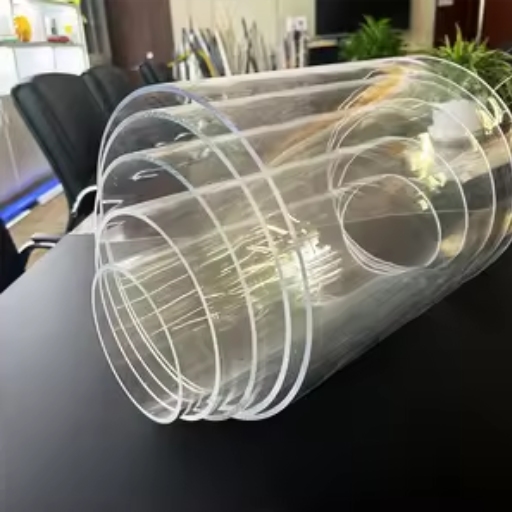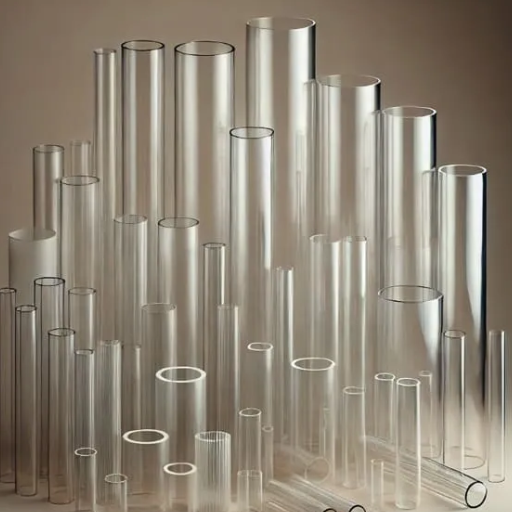

Introduction to Acrylic Tubes in Wind Tunnel Experiments
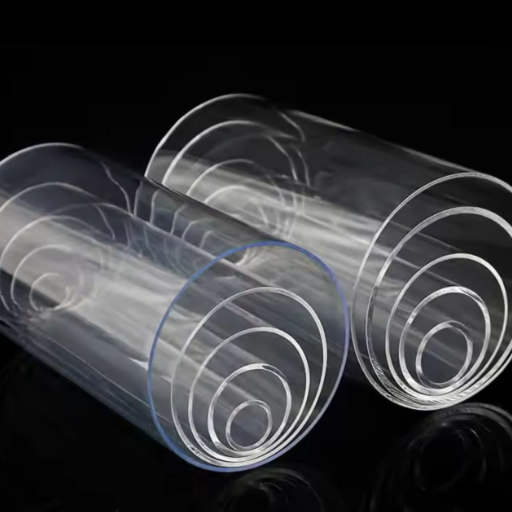
Material Definition and Quality
您能否提供更多有關其中材料問題的資訊?丙烯酸透明圓柱體是由丙烯酸製成的容器,丙烯酸是一種耐用的塑膠材料,具有適合熱塑性目的的透明品質。它具有硬度和強度特性,可以給出清晰的圖像,而不會出現任何困難。這些容器很狡猾,尺寸精確,週邊大多數(如果不是全部)點厚度固定,因此在進行需要正確觀察流體流過的研究時至關重要。因為它們幾乎完全透明,因此可以讓人們在不變形的情況下看到圓柱體內部正在發生的事情。在風洞實驗中,這一方面派上用場,其中說明氣流和由此產生的壓力變化對於研究空氣動力學原理非常重要。此外,丙烯酸圓柱體在陽光下不會分解,在抵抗任何殘餘力時也不易受到影響,因此可以應用於任何類型的測試,而無需全年進行天氣保護。.
Importance of Acrylic in Aerodynamic Studies
Acrylic has added more to the field of aerodynamics mainly where the aircraft section is concerned. How? thanks to its very incredible qualities which are long lived, transparent and versatile. The material is particularly clear when looking at it as applied in flow visualizations of air with the help of its advanced imaging diagnostic tools or in the release of smoke used in visualizing the flow. This helps aerodynamic researchers gauge the effectiveness of their designs without tampering with the quality of information that is observed. Withal, it decreases the time needed to fabricate the wind tunnel models and the pressure testing. Since light, it does not distort the shape 9f the test model while maintaining optimal performance – the pressure change that tested with different value sometimes. As a material not only found in wind tunnel and other models but also for prolonged experiments, it lingers on resistant to harmful effects of the weather including waster and ultraviolet light. These points ease explicating the commanding influence exerted by acrylic for contemporary gas dynamics development.
Applications of Clear Acrylic Tubing in Wind Tunnels
The application of clear acrylic pipes and tubing in the wind tunnel facility appears to play an essential role in the subject field due to the unique properties of acrylic which includes toughness, optical clarity and flexibility. In this case, transparent acrylic acts as the best material for use in experimental wind tunnels as it allows investigators to study flow patterns that are happening in real time, thus implying proper and accurate data interpretation and measurements. Tubing produced from acrylic has several positive attributes such as ease of handling, lightweight and strong also with outstanding acceptance of very high pressures while being able to withstand these very high pressures as well. Acrylic tubing is largely free from environmental effects such as temperature rises and exposure to ultraviolet light which enhance its operational capacity over significant periods of tests. The incorporation of acrylic tubes which are transparent in wind tunnels is beneficial because it improves the quality of experimental and applied research which leads to the advancement of numerous fields, mainly engineering and design aids.
使用透明壓克力管的好處
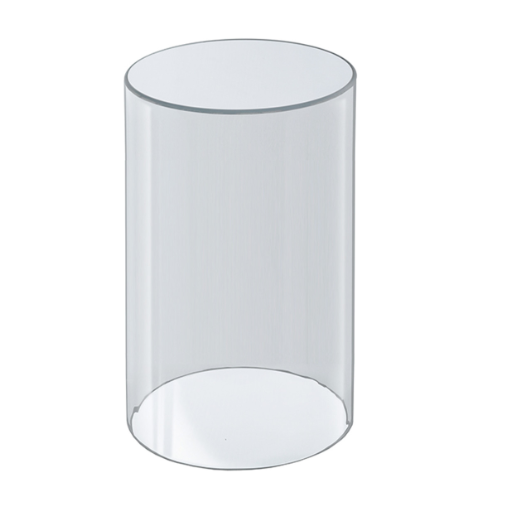
Undetectable and perspective in surveys
One major advantage that people engaging in experimental research have is the ability to see all that is happening in closed systems. Experiments provide a view that is not only clear, but also presents the velocity of fluid dynamics, particle movement or even airflow, and makes assessment much better since there is less abstraction. The ability to see what causes the phenomenon entails the correct data collection for the probability of errors. Such clarity is very crucial in providing descriptions and obtaining results that can be further affected without using general conclusions of the people and makes pictures and diagrams in that a reality. It’s optical properties therefore make it an indispensible tool in assessing the suitability or changing experimental settings or procedures in a particular configuration.
Gravitational Properties of Acrylic
Flexible yet hard, plastic does not only have a tensile strength, but it also has a “low density” which is beneficial to many sectors. This ensures that the material is easy to move, transport and set up, further proving that it can be put into great use within the construction industry, as well as sectors such as aerospace et cetera, where the issue of mass is at its peak. Plastic has the qualities of being light in weight yet it is very strong and can maintain its shape just as well. There are also no compromises in quality despite the light weight as it resists the impact and other physical changes over a long period. This hardwearing feature of acrylic is in place to meet the requirements of high performance. Furthermore, the way it maintains these properties while being see-through as well extends the barriers of this material especially in pharmaceutical and engineering areas. These attributes make acrylic one of the most versatile materials for the present, and even the future, technological innovation and art applications.
Tailoring and Personalization Aim
Special feature of acrylic is its capability of tailoring as a material to many industries. Given the improvement in processing technologies, above all acrylic raw material can also be specified in the form and dimensions that is exactly suitable for the required area which is termed as cut-to-size. This flexibility of the features also includes a multitude of textures, hues, and measurements which aiming to subtlety mix the needed usage and design purposes. Being able to break conventions based on the requirements without hurting the strength and longevity of the expressiveness acrylic push a lot of newness in ideas in building sciences to the art horizons of highly sophisticated use.
Choosing the Right Size and Type of Acrylic Cylinder
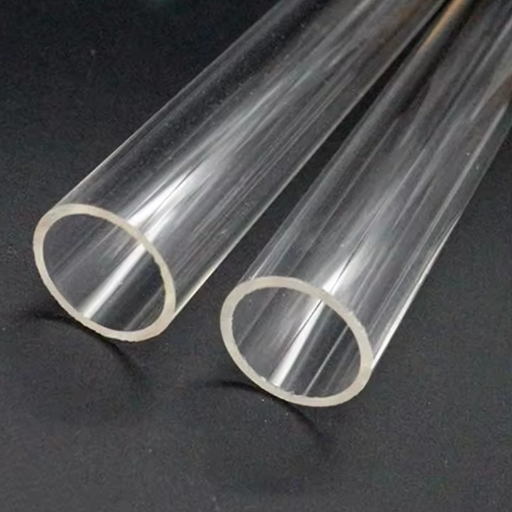
Acquiring knowledge on the Diameter and Wall Thickness
The appropriate selection of an acrylic cylinder can be achieved with a competent understanding of the cylinder’s Diameter and Wall Thickness. Specifically, the diameter implies the extent of the circumference, and this is what invites the question of how crippled the cylinder is inside. This consideration escalates greatly in cases of dimensions of parts, fluid architectures or even in artistic representations that must account for exact values. The wall thickness provides a range of strength, life span and mass of the cylinder. A much thicker wall is better when it comes to defying force and preventing freeform deformations, so one would look for it mostly in an industry project or in a very demanding one. On the other hand, one would dislike the ring being so thick in other cases like in lightweight loading wherein one would like to appreciate some visual jewelry of the ring without too many obstructing bars. The right choice of an acrylic cylinder that best fit development objectives can thus be met by carefully adjusting every single portion of these requirements.
| Acrylic Variant | Key Characteristic |
|---|---|
| 透明丙烯酸 | Superior clarity and maximum light transmission. |
| 透明丙烯酸 | Permits light with custom finishes/hues. |
| Colored Plastic | Vibrant hues and fluorescent glowing options. |
The Exceedance and Wind Tunnel Conditions
Measurement of the performance of an aircraft in a wind tunnel or the validation of computational models requires the most accurate data. Several important aspects require strict observation, so that valid data is obtained. First and foremost is, the sensors such as pressure transducers and load cells capture the results. If the results are not specific to a certain area, there should be no reason why a point in a given space, region, of the full device should not also measure the same thing or reach a similar value. Moreover, provisional adjustments appear sufficient and permissible considering the time frame. Furthermore, permissible sensor positions may be completely compatible with the ASTM D 4166 – 86. Also called the method of fixity, it is with commendable clean-sweep precision that we gladly announce that the All-Terrain Martian has been established. Other than the aforementioned base conditions (velocity and perhaps angle of the incoming flow), environmental conditions within the heat sink facility such as: laboratory temperature, humidity condition, and the degree of uniformity of the flow, also affect the pressure gradients within the control volumes and therefore the flow rate. Establishing the extent of the influence of the boundary layer and providing the guidelines for a safe distance for the operating control of the real wind tunnel is essential. Therefore, the introduction of various data acquisition technologies and online monitoring are now the essential contributors towards the improvement of the testing and reducing the percentage of errors in obtaining data regarding the wind tunnel research. The use of the latest technological advancement and tools contributes to in-depth analysis and design in a range of engineering projects.
DIY Projects with Clear Acrylic Tubing
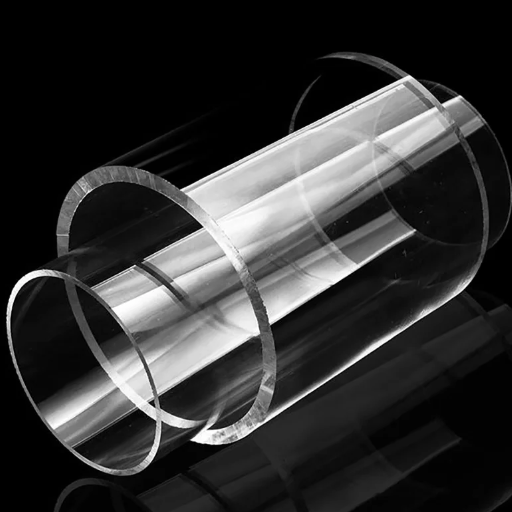
How to Construct a Homemade Wind Tunnel out of Acrylic
Constructing a wind tunnel made out of clear acrylic is both fun and exhilarating, incorporating essential competence in such fields as aerodynamics and science research and development. Also, you need to prepare certain working materials in advance, like an 丙烯酸管, a fan and ventilator units, a standing frame, and a smoke or coloring matter set up for enabling studying how the airflow occurs. After that you will find all what is left is to do is prepare a wind tunnel designing it in such a way as to cater for your needs in terms of size and how much airflow is to be generated. In such cases, use of an acrylic tube based on rectangular or cylindrical cross section is suitable as it helps in better visual representation and also easy construction. Once you’ve connected everything correctly, built a wooden or sheet metal frame to tightly hold the acrylic round sections and attach the fan to one side to create a flow. Make sure that it is fixed on a vibration-free material in order to achieve a smooth operation of machine over the course of time. Smooth out the air using the grid or honeycomb within the tunnel so that it’s laminar. Finally create at the next points, the modules where objects like models and prototypes can be displayed. Please, take note on the need of such a place that has removable and is also inclusive of smoke or dye for flow visualization. Furthermore, please test the wind tunnel’s efficiency at steady output of air pressure. If necessary, adjust the fan’s speed or correct the components like straighteners. Also, the use of a data collection equipment such as, pitot tubes or anemometers, sharpens the presentation of the results even more. In covering the subject of Linear Systems, either an Engineering Student or a Physics student or a Scientist building a wind tunnel out of acrylic tubing would be a most effective practice of the studied principles and the applications of the knowledge.
Cutting and Gluing of Acrylic Cylinders for Laboratory Tests
When it comes to plasticwoorking with acrylic tubes, meticulous attention needs to be given to their preparation in order for the results to be on point.from rollupalene First measure the tubes accurately in a permanent marker or adhesive tape missed out markers arcsn such a whichever fault usage is discouraged. A fine boe saw or laser cutters are most appropriate for cutting purposes as it provides clean edges of the planes as well as restricts the occurrence of cracks. Moreover, especially young organic stone is hard to work with, a little enthusiasm to finish the job too quickly or on time might results in zerp work. Equally, when performimg make sure that you cut slowly while maintaining pressure, to avoid leaving the scored lines over the material or end up destroying it. Polishing the acrylic tubes is a requirement right after cutting. You may need to use varying grits of sandpaper, starting with the coarser ones, in order to give the edges a smooth finish. Moreover, flame polishing can also be adopted if a transparent edge is wanted but it has to be approached with caution and ensure that the acrylic does not get deformed. Wash the Base at the end of cutting and polishing. Then the next step is to link your experimental setup with the treated acrylic tubes in an appropriate manner. The best method for the attachment of the tubes is undoubtedly by using Acrylic adhesive or epoxy glue, as this help to join the tubes tightly with no air leaks. Qualitative comfort should be however ensured as it is important to stretch and give enough break for the curing process of the adhesive before any load or gas flow application is done. The correct installation prevents the leakage, the weakening of the experiment, and the help in collecting values to in the subsequent experiments.
How to clean and secure acrylic structures
When acrylic structures are maintained and cleaned well, their transparency and durability are enhanced. The method to be applied is advised in the use of a simple soap and water solution, and a light dusting of a lint-free cloth to the surface rather than that of any of those ammonium based cleaner tones as they may ruin the material. Any persistent dirt or stains may call for some acrylic specific polished finishes which protect against abrasion and polish the material. Be careful when handling acrylic materials to avoid any marks or cracks in them and make sure that the substance is not exposed to moisture or sun rays which may cause bending and scorching in the course of time. It is finally, suggested the tnew any visible cracks or wearing and the repairs should be done within the most appropriate time in particular when other elements such as the beam may be compromised so that the processor and the structural integrity could be preserved.
Future of Acrylic Tubes in Aerodynamic Research
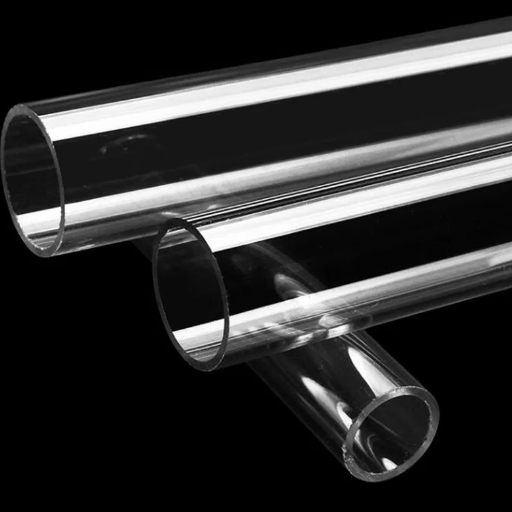
Industrial Processes and Technological Advances in Acrylics
In the last few decades, one cannot deny the tremendous strides that have been made in producing and applying acrylic materials. Quite a few new manufacturing methods have emerged which range from advanced polymerization allowing a more controlled property of the clarity, strength, and flexibility of acrylic. The techniques are also making it possible to fabricate acrylic tubing that possesses not only high durability but also resistance levels considerably higher and different form the usual that is particularly helpful for the purposes of aerodynamic studies to accelerate the flowr. In addition, the use of nanocoatings has made it possible for higher scratch, UV damage and chemical resistance in acrylic than ever and as long as the conditions are very challenging acrylic would still serve the purpose for a longer period without wearing off. One of my most preferred aspects is how sustainability is integrated into the production process. Currently, reprocessing of acrylic waste into usable plastic components of high quality has been made possible by the advancement in waste treatment techniques. Such an approach to minimizing the impacts of acrylic is much stronger and less toxic. The range of biobased compounds for free-radical polymerization, as well, gives hope for a ‘green’ future. In particular, these materials maintain the mechanical and thermal properties needed for technical applications without compromising developmental benefits. Due to such developments, it is apparent that the use of acrylics, in terms of aerodynamics and other high end industries, is indeed an interesting platform in the near future. Developments now equip this material with even more strength, cleanliness and coming out of it even less environmental contamination and making it a far more important resource in the cutting edge projects which would have been unattainable otherwise by the researchers or designing engineers. I am certain that the above-mentioned advances will progress and open new frontiers for the uses of acrylic.
Potential Uses In Structures Beyond Wind Tunnel
Acrylic can be applied in various areas apart from the construction industry such as wind tunnels because of its numerous beneficial attributes. For example, it is commonly used in the medical sector to make items like incubators, surgical tools and dental devices because of its lightweight and shatter resistant properties for acrylic such materials. The presence of a substance that has minimal refraction can be made into certain optics such as protective glasses that has lesser deformation due to the presence of other laboratory materials. On the other hand, the aircraft industry also uses acrylic in the manufacture of cockpit canopies, aircraft windows, and cabin partitions because acrylic does not wear out easily under any climatic conditions. In addition, this content flexibility also exists when using acrylic in building, which has skylights, curtain wall and other such features that are for decorative purposes and the whole building as well. Acrylic could also be used in many applications in the future.
The Role of Acrylic in Advancing Aerodynamic Studies
Acrylic greatly assist the cause of the aerodynamics by the fact that it can be transformed into various convenient shapes for use in the construction of models for research, in the manufacture of patterns for prototype trials, fabricating of aerodynamic surfaces etc. Its smooth and colorless outer layer, at the same time, allows researchers to focus on the study of airflow regimes and turbulence in the most effective ways, thus allowing accurate readings of the behavior under observation. In addition to these, acrylic is even lighter in weight yet maintains tough resiliency, which has made it more suitable for designing equipment for the purpose of the experiment, which will prevent any structural formations beyond the permissible limits due to the high speeds used for experiments. In addition, thanks to the possibilities that it opens, all this progress was achieved in the development of the generation and testing of aerospace equipment, which in turn has allowed rational application of vehicles resources and increase of the quality of their operation. It has helped substantially when it comes to both functionality and strength while pursing forefront innovations in aero dynamics, opines from many sources thus far covered.
參考來源
-
Design and Development of Low-Cost Wind Tunnel for Educational Purpose
Discusses the use of transparent materials, like acrylic, in wind tunnel working sections for better visualization. -
Alternative Methods for Producing Wind Tunnel Models for Student Projects in Fluid Mechanics
Explores the use of cylinders and other models in wind tunnel experiments, focusing on educational and research applications. -
Wind Tunnel Test Section Design Active Flow Control Implementation
Examines the use of acrylic inserts and tubing in wind tunnel test sections for airflow control and visualization.
常見問題(常見問題)
What is the advantage of acrylic over polycarbonate in a wind tunnel test section for a clear acrylic cylinder?
Transparent acrylic is known for its excellent clarity which allows unobstructed vision for flow patterns and particle dispensing. Not only that the acrylic apart from being lighter also has an advantage in terms of fabrication into clear plastic cylinder/tube and clear acrylic round shapes compared to this polycarbonate material. Although more impact resistant, polycarbonate and polycarbonate tubes also tend to maintain always some amounts of optical distortions. For which, it often requires the use of acrylic sheets and extruded clear tubes instead, in such applications. You can also get large acryllic sheets as well as machinable 丙烯酸棒 in custom sizes (inch OD and various IDs) from which to make the wind tunnel test section. Remember, polycarbonate tubes are designed to absorb more beating including suction incidence so the choice will depend on the type of blower and the flow conditions.
如何為層流實驗的透明塑膠圓柱體選擇正確的 OD 和 ID?
您需要知道外部 (OD) 和內部 (ID) 的直徑,因為可以在層流實驗中給定流速值和指定雷諾數的必要線圈部分面積的範圍內進行工作與圓形截面的通常平衡不同,涉及其他事項,例如較大的直徑,這將決定由於相同速度下不同的雷諾數而可能從層流過渡到湍流,因此風扇或抽吸系統端口可提高建議的流體速度用於直接通道設計。現在,即使嘗試在家中建造風洞,也應購買一些透明管道和一些更透明的橡膠軟管,並且它們的外部必須沒有不必要的空腔,以便於安裝和密封配件。優化的透明管道,甚至由具有特定直徑的聚合物或玻璃擠出的透明管道,都適合下面列出的連接。也要考慮管子應如何支撐任何壁厚,以及由於正真空壓力或負真空壓力,這應該會改變管子的形狀。.
是否有可能獲得透明有機玻璃或 壓克力板 要創建一個可以用於風洞演示的客製化丙烯酸圓柱體?
當然,可以採購a 透明有機玻璃或壓克力板 並搭建一個圓柱體,這就是為什麼許多愛好者和實驗室使用自製的丙烯酸程序來建立實驗裝置,其中風洞是其中的一部分。您要么需要以一定角度加熱和粘合丙烯酸片材,要么考慮用丙烯酸生產圓柱形管,這是外徑和內徑的刻值。透明管和油管可以按照已指定的外徑和內徑購買,但對於相當寬的丙烯酸管,可以利用液體丙烯酸或允許的丙烯酸片擠出技術來製造主體。應該指出的是,與玻璃相比,丙烯酸被認為強十倍,但在衝擊情況下比聚碳酸酯屏蔽更容易破碎。對於資料收集,同時確保層流,就測試部分而言,佈置和密封間隙非常重要。.
您認為擠壓透明管材和模壓丙烯酸樹脂之間的差異會對流量視覺化和測量誤差產生影響嗎?
有時,滴頭透明管可能具有更好的操作質量,例如壁厚均勻,從而可以準確測量平均內徑和外徑。這最大限度地減少了對流動可視化的機械影響並提高測量的精度。同時,此類管子也有一些缺點。用片材製造該管子會在壁上形成接縫(如果有),這可能會扭曲流動可視化的技術和功效,特別是對於粒子影像測速等技術。丙烯酸圓形原料和透明管的使用通常消除了後續步驟浪費時間的程序,例如將部分粘合在一起以用於工業或教育測試部分等實驗。對於這些類型的仔細測量,包括在層流狀態下計算雷諾數,採取預防措施以盡量減少光學和機械變形的概念至關重要。當您需要這些時,您應該認識到聚碳酸酯比有機玻璃更硬,並且在應變時不易受到衝擊和破裂的影響,但材料可能會表現出一些不同的光學性能。在選擇聚碳酸酯或有機玻璃時,此類程序可能會增加萎縮觀察的風險及其不良影響。.
有哪些措施可以防止透明塑膠管的塑膠風洞磨損和變形,或者如何按時增加風洞的井數?
應使用柔軟、無絨毛的衣服或由透明塑膠或有機玻璃丙烯酸友好材料製成的衣服來清潔此類表面,以防止刮傷或其他損壞。不應使用任何觸發或導致丙烯酸有機玻璃材料應力開裂的傳統溶劑,也不應使用任何可能刮傷透明丙烯酸的磨料清潔墊。如果需要使用鼓風機或抽吸系統,請確保不會出現過多的壓力差,最終可能導致管變形或管彈性變形。特別是,對於較大的丙烯酸圓柱體來說,此類措施通常包括合併的增強材料或增加的壁厚。定期檢查裂紋或小裂紋等缺點的重要性怎麼強調也不為過,尤其是在撞擊後或重型演示的情況下。將透明管保持在輕密封容器中也將有助於隨著時間的推移保持材料的透明度和強度,因為它不會受到紫外線的影響。.