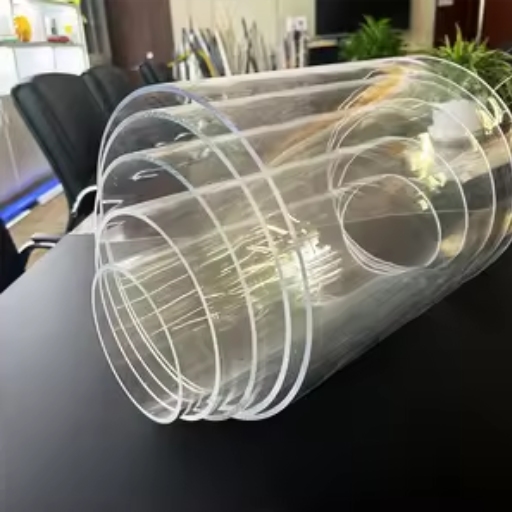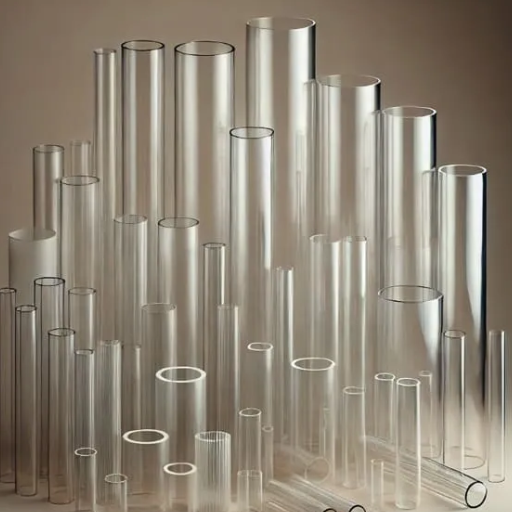

Banyak langkah telah diambil dalam sains dan teknologi setakat tenaga lestari, dan ini terutamanya dalam bidang tenaga angin. Satu faktor penting dalam kemajuan adalah ujian model turbin angin yang tepat dan boleh dipercayai, yang sangat membantu dalam usaha untuk menghapuskan kesilapan dalam reka bentuk dan aspek penambahbaikan. Pada asasnya, dalam prosedur menjalankan ujian, tiub akrilik telah disyorkan secara positif kerana ia membantu mensimulasikan pergerakan udara dengan cara yang lebih baik dan juga mengukur faedah turbin. Teks ini memperincikan keperluan tiub ini untuk tujuan penyelidikan tenaga boleh diperbaharui dan bagaimana sifat fizikalnya memainkan peranan dalam membantu menghasilkan sistem penjanaan kuasa angin yang lebih dipertingkatkan. Jika anda melihat lebih lanjut tentang bagaimana model turbin angin tersebut telah memenangi pembuat penaakulan saintifik atau kaedah inovatif baharu untuk menjalankan penyelidikan, artikel ini adalah perkara yang perlu anda cari untuk memahami bagaimana tenaga esok dibentuk berkat penggunaan tiub akrilik.
Introduction to Wind Turbine Models
The Importance of Testing in Relation to Wind Turbines cannot be Overemphasized
Wind turbine testing is the progress in the technology energy of the twentieth century. It is mainly aimed at making wind turbine designs efficient, robust and adaptive to different operating conditions. The provision of test result on several key tests would enable an engineer to evaluate durable performance under loads such as aerodynamic load. For instance, the rate of orientation of the turbine and the wind speed at which it is operated, the distance between two such devices etc., are such factors. Turbine dimensions and the performance (profile) of the turbine are normally determined through wind tunnel tests, it helps determine the required specifications of the turbine components. These would help in optimizing blade dimensions and materials, glass suitable for metallic surfaces, which will also reduce costs of production. With time, and the corresponding changes in testing procedures, it becomes possible to make the turbines more efficient, in turn giving the long range perspective in the quest of developing a solution to the universal energy crisis.
History of Measuring wind flow in and around a wind turbine with wind tunnels.
Wind tunnel testing has been recently remarkably improved thanks to the technological advancements that are now available in the simulation of real-world aerodynamic conditions. These improved wind tunnel technologies incorporate the use of computational fluid dynamics (CFD) in models and physical wind tunnel testing in which the testing with the highest research quality is achieved. They make it possible to study exactly the airflow pattern in terms of structure, the distribution of pressure in space and how much force a turbine model is induces under controlled conditions. The most advanced facilities implement sophisticated tools like laser Doppler velocimetry and PIV (particle image velocimetry) to monitor and present the subtlest alterations within air streams. Furthermore, new structures are being built of high quality materials and by employing the 3D printing, for example, which allows conducting a comprehensive damage free model test without the expensive full scale prototyping. Also, new data gathering tools allow the user to make more preferred or even realtime high end experiments which make more possible rapid actions and analysis. With the help of these innovative tools, the practice of wind tunnel testing continues to be quite beneficial because it helps reduce material and energy consumption and enhances the designs of aircraft, wind farms and other constructions and their components.
The Advantages of Acrylic Tubes in Laboratory Experiments
In the implementation of complex experimental installations, be it by design or by necessity, the use of acrylic tubes solves many issues thanks to their high transparency, resistance to wear and light weight. It is worth noting that thanks to the low reflectivity, the material has qualitative traits which make it possible to record the dynamic processes of the flow of substances, reaction rates, and the interaction of objects with minimal distortion, making the tubes highly appreciated from the point of view of visual information gathering. Acrylic allows for harsh environments as it is not susceptible to chemicals and can also be employed in preferably corrosive conditions like underwater usage, enabling scientists to reuse their equipment without the need for reparations. In addition acrylic tubes can be heeded into and cut and formed in almost any imaginable shapes, making them most apt in various parameters and designs particularly in aeronautics, liquid studies and also chemical aspects among other fields. With the array produced, these acrylic tubes bring in efficiency and reality to the biological experimentation mechanisms which play a central role to extending the life of acrylic and incorporating its use in remembered works.
Ciri Utama Tiub Fleksibel untuk Pemantauan Bendalir
Construction and Design of Small-Scale Turbine Models
A small-scale modeling structure of a wind turbine necessitates proper selection of materials for the construction to support enhanced performance, illuminate on accessibility and durability. Many materials that are used include modern lightweight metals such as aluminum and steel limp, strong and weather resistant. Usually, engineers use composite materials such as fiberglass and carbon fiber in constructing model wind turbine blades that improve performance as well as structural stress support. Attribute which is also contended is that 3D-printed interiors most often use plastics like ABS or PLA because they are very malleable and are simply mold thermal. Needless to say, such as bearings made of stainless steel are irreplaceable for smooth rotation. Since proper utilization of these materials is successful, high quality and functional models suitable for research, testing, and training purposes are created. For lessening simplification, actual properties of a miniature wind model, in the present time, can be simulated, say replication of real trajectories with a remarkable precision.
Blade Design – Considerations of Design for Blades
It is known that the efficiency of any wind turbine is basically determined by its construction of blades or types of blades used in it. These are intended for the utilization of wind global or naturally available in the system converting it to an effective rotational energy to drive a shaft. An essential condition for the design of blades is their aerodynamic characteristics. Equally important are materials of construction, length, and mass of the blade. Considering aerodynamic effect, blade shape has the function to reduce drag on the one hand and to increase lift to the blade on the other hand. This balance is important in order to reach the maximum level of energy conversion from the applied design. Another important factor is the choice of materials; most importantly, the designs of blades have to be both light and tough to resist any environmental forces including high speed winds, high temperatures and UV lights. For this reason, they are often composed of advanced composites; some examples are fiberglass and carbon which have high strength in relation to their weight. The blade length is an important factor with longer blades being better at cutting wind energy. However, this must be carefully considered in light of gust loads incurred and the additional material used. Similarly, effective description must also address the likelihood of the resultant stresses in the drive train, which should not be the cause to the equipment falling. With the coherent explanation of these various design factors, it is imperative that the functionalities of the wind turbine are intelligently increased and energy expenditure and maintenance minimised as well as the service life of the blades is increased.
Behold The Power Of The Acrylic Tubing
Smooth and fully shapeable acrylic tubes are the go-to for making aerodynamic improvements in just about every scenario. Slick, aerodynamically boosted surfaces help in lowering drag, and this is particularly of great use for many industries such as those dealing with green energy and movement where every ounce of improvement will be help. It is possible but also easy to do for example, by introducing the aforementioned adhesive tubes in the blades of the wind turbines, redirect the air in such a way that reduces any interference and hence causes an enhanced energy production in the wind turbines. Significantly, the thickness ratio of the tubes, volume, lift, drag, and power needed differ for a wind turbine as compared to an aircraft wing. Equally important, is that it is fatigue resistant and lighter than materials more traditionally used in weight bearing components which also enhances the long life of operation and thereby minimizing wear and tear. The outlined benefits shed light on the potential this type of material has to enhance performance and fuel growth in aerodynamics in the industry.
Pemantauan dan Pengukuran Masa Nyata
Experimental Wind Tunnel Testing Procedures
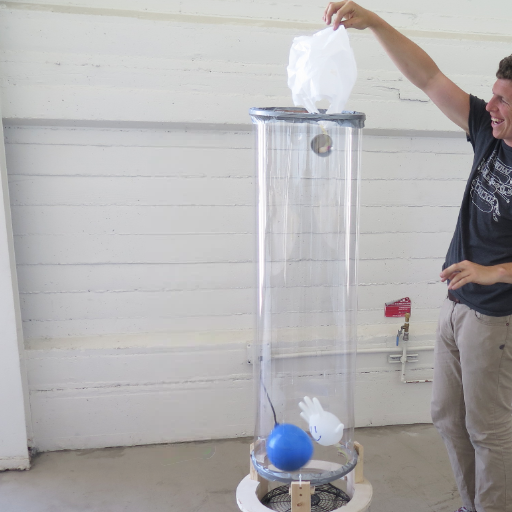
To Configure a Section of a Wind Tunnel One Must Strictly Follow These Steps:
- The process is initiated by making the wind tunnel clean and render free from all dirt and other materials that can interfere with the flow of air.
- After that a test model is mounted on the test section using the necessary mounting system as not to get displaced in the course of testing.
- While ingesting air sample the model should be positioned correctly so as to minimize any bias in the data.
- With the model securely fixed in its place, the next step involves calibration of various sensors and other equipment such as pressure probes, strain gauges or flow visualization equipment.
- The operation and all parts of the wind tunnel such as air supply, fan mechanism angle, and controls need to be tested.
- The speed and disturbance settings can be changed to suit the test requirements, with all velocity measurements and drag coefficients recorded.
Conducting the Development Research with Acrylic Pipes
An important point to bear in mind is that when working with acrylic tubes as part of a research or when conducting a test, you would consider the clearness, resistance to external factors and the deterioration of the acrylic. For its very clarity while in use, one is trained to perceive acrylic tubes as serving the purpose of imparting clear flow of dynamics or airflow systems within the tubes or channels them. It becomes imprecise to place another object onto the acrylic tubes where they are painted with ink as the ink color can fade or peel off the ‘glass’ making it impossible to see any leakage on the acrylic tubes. The incorporation of certain specific equipment like laser-based velocity measurement systems and high-speed cameras contribute to decisive determining factors in the quantification of such variables as the velocity field, pressure field and turbulent flow intensity. Alongside this, the possibility of the fluid used as a test medium or its relevant properties as density or viscosity must be in accordance with the desired outcomes of the experiment. The mere ideological requirement in the form of handling conditions is reserved for regulating elements such as air and test specimen temperature together with humidity and humidity-related aspects in the case of test chamber. The caution in preparing ensures that the respective results from the performance of the tests are accurate, valid and suitable for analysis at later time.
On Techniques for Data Collecting and Processing
Even beginners in data collection methods are ready to do the first step of the experiment – to select the tools and techniques that best suit the objectives. Developed sensors, high speed cameras or spectrophotometers, which are used to provide exact readings, can be used. For logging data, when it has been handled, information is time-stamped, and the validity of data is also ensured. Regardless of protection measures, precautions should also be taken against false information which could be purged by non-unadjusted equipment. To analyze data, relying on statistical models and specific tools help researchers to identify or unravel possible structures, tendencies, and statistical links that may be inherent in the data set. For example depending on the data itself, the kind of analysis that can bring new knowledge could be regression or machine learning operations, Fourier transforms, and many other. The next recourse always would be to verify the proposed solutions through the replication of past reports or existing theories to further validate the reliability of the conclusions made. In addition, visual tools such as charts and 3D illustrations easily control hard data, as a result less confusion and time is when administering such data in statistics. These systematic activities assure that the research results are realistic, and can be utilized in decision making to the concerned individuals.
Metrik Prestasi Tiub Lutsinar
Numerical Simulations in Turbine Model Testing
One of the benefits of computational model testing is the fact that it is much less expensive than loading a physical model into a turbine and then pushing it to the breaking point without knowing what outcome to expect. The interpretation and application of the materials of patterns or models that assist in their understanding help researchers to predict what happens if certain modifications are made as well as to understand the structure of these modifications based on already achieved outcomes. These Mathematical models are able to predict the outcomes of their possible application and thus are important such that they help in the carrying out of experiments without the need of carrying the real research. Also, this does not just reduce the linking cost but also effective as it also allows for the adjustment of test provisions without effecting the set budget. This type of approach assumes that laboratory measurements alone may not be sufficient for assessing the performance of the high loaded turbines and one has to invest some attention-based resources into perfecting the picture.
Experimental Results Compared to Simulated Data
Verifications of numerical methods used in analyses and the corresponding simulations are important, as they form the bedrock upon which all later computational work rests. By comparing the results of simulations to actual measurements of a laboratory experiment in response to a particular set of parameters, scientists create an acceptability range for their models. Some examples may include discrepancies in efficiency of a turbine, so that, some of its design characteristics may require specification of geometric parameters for the analysis in order to improve the accuracy of the simulation. Moreover, computer tools in visual displays allow detailed view of flow patterns and material responses thereby revealing important aspects in terms of performance analysis under different conditions. This process of validating much sooner before a prototype has been built has the advantage of working more with concepts and ideas of the development and looking at what is likely to be the most promising areas of improvement in turbine technology.
Advancements in Computational Fluid Dynamics
Changing gears to more timely issues of the said field, Computational Fluid Dynamics (CFD) had gone through major developments that have great significance in the practices of design and improvement of turbines. Using high-powered computers and sophisticated numerical schemes put in place, CFD analyses of today can reasonably well encompass complex circulation phenomena. Such advances make it possible to more precisely predict the chaotic flow conditions, flows consisting of two different substances at least as well as the flow of heat, and are all obviously of exceptional importance as far as the performance and efficiency of the turbine are concerned. A new trend in engineering software development is called Computational Fluid Dynamics (CFD) which also involves the application of machine learning to enhance the prediction capabilities of the system. These predictions are expected to improve with time since the system has the ability to learn the patterns and algorithms from the presented issues. This combination of methods allows to carry out virtual prototyping that minimizes the necessity of accurate testing. Thus speeding up the development of a product. Most importantly, the ability to emulate the real conditions enables the designers to rectify any potential mistakes in the engineered design while lying down and without wasting materials and time. These improvised solutions within the ‘off-the-shelf’ product development are a big leap in enhancing renewable and energy-efficient turbine systems.
Memilih Produk yang Tepat untuk Keperluan Anda
Applications and Impact on Renewable Energy Research
These advanced methods such as experimental and computational simulations and measurements have allowed us to apply the data we have obtained to actual cases, including those relating to renewable energy technologies. An excellent example is the applications in the designing of wind turbines. By adjusting wind speeds, turbulence, and environmental stresses in the simulation, the turbine blades have benefited as a result of the aerodynamic power generated. These designs enhance the amount of energy that can be produced. This provides an advantage in terms of power generation in situations wherein turbines would otherwise have not been successfully deployed. Accordingly, the deployment of wind energy does not come with heavy complications considering that it is cost competitive to the conventional system. Another key area affected by our studies is in the design and builds of hydro systems. Virtual prototyping helps improve the existing design of the hydroelectric turbines to lessen the losses of energy relative to the water flow as well as avoid abrasion. The implementation of these models is geared towards enhancing the performance of these systems by guaranteeing no interference in the natural environment and also controlling the level of resource utilization. The elements are in consonance with the present day drive for the energy industry to develop more environmentally friendly energy infrastructure. Progressively, outside the renewable energy sector, the information garnered from the tests drives metamorphosis even in aerospace and automobile manufacturing areas. The essence of conceiving and screening under practical conditions is for energy-efficient transport machines, structure or on the contrary, aeronautic machinery that guarantees a reduction in energy consumption. When all is said and done, using results from tests implementation is not only an effective way to promote innovation but is also important to the entrenchment of green economy across different fields.
Impact on Wind Power Generation in the Next Decade
Development in wind power systems technologies is going to change you country’s reliance on hazardous hydrocarbon energy sparingly. With the avant-garde materials and technologies, modern wind generators begin to perform efficiently and endure the unfavorable weather conditions. For example, advanced design and aerodynamic technologies contribute to the increasing of the power output by harnessing the wind energy even at the lower conditions of wind speed. Furthermore, with the advances in technology; the inclusion of smart sensors and machine based learning allows for real time maintenance and accurate monitoring of the wind turbine systems which in return reduces the downtime and operational costs. A number of the studied concepts have their appropriate application areas. The research on the offshore wind energy systems is also advancing due to use of floating turbines, which can be placed in waters where wind is available at higher speeds. These aspects together clearly signify that technology is changing at a much faster rate, and that is being necessitated by increased energy demand and the related attributes.
Joint Research in the Subject
Renewable energy advancements have led to the development of better livelihoods for more people. Universities, private institutions and state organs are engaged in finding solutions and not only how to produce such of a kind of energy. Case in point, there are research groups with international partnerships which are aiming at how to improve renewable energy systems; optimize the integration of renewables into electricity grids and still maintain constancy and efficiency even with fluctuating energy levels. There are also research schemes markers at hydrogen fuel endeavors, which involve utilizing the excess green energy to produce a source of energy that is economical and environmentally friendly. Such partnerships facilitate sharing of resources including technology which is a catalyzing factor for accelerating technological growth, which aims at addressing the sustenance and equity concerns involving global energy demand.
Sumber Rujukan
-
Development of a Scale Model Wind Turbine for Testing of Offshore Floating Wind Turbine Systems
Discusses the design and testing of scale model wind turbines, including components like torque tubes for experimental setups. -
Design, Fabrication, and Testing of a New Small Wind Turbine Blade
Explores the fabrication and testing of wind turbine blades, with references to plastic and tubular components in model testing. -
Local Design, Testing, and Manufacturing of Small Mixed Airfoil Wind Turbine Blades of Glass Fiber Reinforced Plastics
Focuses on the design and testing of wind turbine blades, highlighting the use of plastic materials in experimental research.